Record Information
Version1.0
Creation Date2009-07-21 20:28:00 UTC
Update Date2026-05-14 16:53:46 UTC
Accession NumberCHEM002307
Identification
Common NameAspirin
ClassSmall Molecule
DescriptionAcetylsalicylic acid (acetosal) or aspirin is only found in individuals who have consumed this drug. Acetylsalicylic acid is a drug in the family of salicylates, often used as an analgesic (against minor pains and aches), antipyretic (against fever), and anti-inflammatory. It has also an anticoagulant effect and is used in long-term low-doses to prevent heart attacks and cancer. It was isolated from meadowsweet (Filipendula ulmaria, formerly classified as Spiraea ulmaria) by German researchers in 1839. While their extract was somewhat effective, it also caused digestive problems such as irritated stomach and diarrhoea, and even death when consumed in high doses. In 1853, a French chemist named Charles Frederic Gerhardt neutralized salicylic acid by buffering it with sodium (sodium salicylate) and acetyl chloride, creating acetosalicylic anhydride. Gerhardt's product worked, but he had no desire to market it and abandoned his discovery. In 1897, researcher Arthur Eichengrun and Felix Hoffmann, a research assistant at Friedrich Bayer & Co. in Germany, derivatized one of the hydroxyl functional groups in salicylic acid with an acetyl group (forming the acetyl ester), which greatly reduced the negative effects. This was the first synthetic drug, not a copy of something that existed in nature, and the start of the pharmaceuticals industry. The name 'aspirin' is composed of a- (from the acetyl group) -spir- (from the plant genus Spiraea) and -in (a common ending for drugs at the time). It has also been stated that the name originated by another means. As referring to AcetylSalicylic and 'pir' in reference to one of the scientists who was able to isolate it in crystalline form, Raffaele Piria. Finally 'in' due to the same reasons as stated above. Salicylic acid (which is a naturally occurring substance found in many plants) can be acetylated using acetic anhydride, yielding aspirin and acetic acid as a byproduct. It is a common experiment performed in organic chemistry labs, and generally tends to produce low yields due to the relative difficulty of its extraction from an aqueous state. The trick to getting the reaction to work is to acidify with phosphoric acid and heat the reagents under reflux with a boiling water bath for between 40 minutes and an hour. Aspirin acts as an inhibitor of cyclooxygenase which results in the inhibition of the biosynthesis of prostaglandins. Aspirin also inhibits platelet aggregation and is used in the prevention of arterial and venous thrombosis. (From Martindale, The Extra Pharmacopoeia, 30th ed, p5).
Contaminant Sources
  • Cosmetic Chemicals
  • FooDB Chemicals
  • HMDB Contaminants - Urine
  • HPV EPA Chemicals
  • STOFF IDENT Compounds
  • T3DB toxins
  • ToxCast & Tox21 Chemicals
Contaminant Type
  • Anti-Inflammatory Agent, Non-Steroidal
  • Anticoagulant
  • Antipyretic
  • Cyclooxygenase Inhibitor
  • Drug
  • Ester
  • Fibrinolytic Agent
  • Food Toxin
  • Human Neurotoxin
  • Metabolite
  • Organic Compound
  • Platelet Aggregation Inhibitor
  • Salicylate
  • Synthetic Compound
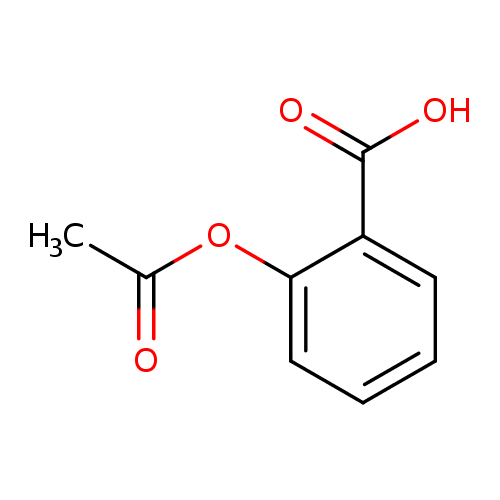
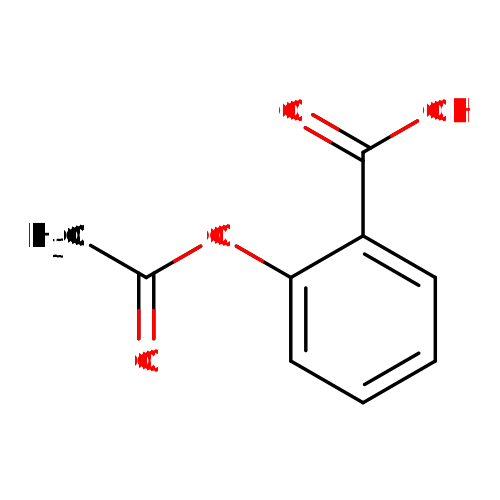
Chemical Structure
Thumb
Synonyms
ValueSource
2-(ACETYLOXY)benzoIC ACIDChEBI
2-Acetoxybenzenecarboxylic acidChEBI
2-Acetoxybenzoic acidChEBI
AcetylsalicylateChEBI
AcetylsalicylsaeureChEBI
Acide 2-(acetyloxy)benzoiqueChEBI
Acide acetylsalicyliqueChEBI
Acido acetilsalicilicoChEBI
Acidum acetylsalicylicumChEBI
ASAChEBI
AzetylsalizylsaeureChEBI
EasprinChEBI
O-Acetoxybenzoic acidChEBI
O-Acetylsalicylic acidChEBI
O-Carboxyphenyl acetateChEBI
Salicylic acid acetateChEBI
Acetylsalicylic acidKegg
AspalonKegg
DurlazaKegg
2-(ACETYLOXY)benzoateGenerator
2-AcetoxybenzenecarboxylateGenerator
2-AcetoxybenzoateGenerator
O-AcetoxybenzoateGenerator
O-AcetylsalicylateGenerator
O-Carboxyphenyl acetic acidGenerator
Salicylate acetateGenerator
Salicylic acid acetic acidGenerator
2-Carboxyphenyl acetateHMDB
AcenterineHMDB
AcetardHMDB
AceticylHMDB
AcetolHMDB
AcetonylHMDB
AcetophenHMDB
AcetosalHMDB
AcetosalinHMDB
AcetylinHMDB
AcetyonylHMDB
AcetysalHMDB, MeSH
Acetysalicylic acidHMDB
AcylpyrinHMDB, MeSH
AsatardHMDB
AspergumHMDB
AspirdropsHMDB
BenaspirHMDB
BialpiriniaHMDB
BufferinHMDB
CaprinHMDB
CardioaspirinaHMDB
EcolenHMDB
EcotrinHMDB, MeSH
EmpirinHMDB
EndosprinHMDB, MeSH
EndydolHMDB
O-(Acetyloxy)benzoateHMDB
O-(Acetyloxy)benzoic acidHMDB
PersistinHMDB
PharmacinHMDB
PolopirynaHMDB, MeSH
PremaspinHMDB
RheumintablettenHMDB
RhodineHMDB
SalcetogenHMDB
SaletinHMDB
SalospirHMDB
SolprinHMDB, MeSH
Solprin acidHMDB
SolpyronHMDB
TasprinHMDB
TemperalHMDB
ToldexHMDB
TriaminicinHMDB
MagnecylMeSH, HMDB
PolopirinMeSH, HMDB
SolupsanMeSH, HMDB
ZorprinMeSH, HMDB
DisprilMeSH, HMDB
AloxiprimumMeSH, HMDB
ColfaritMeSH, HMDB
MicristinMeSH, HMDB
Acid, acetylsalicylicMeSH, HMDB
Chemical FormulaC9H8O4
Average Molecular Mass180.157 g/mol
Monoisotopic Mass180.042 g/mol
CAS Registry Number50-78-2
IUPAC Name2-(acetyloxy)benzoic acid
Traditional Nameaspirin
SMILESCC(=O)OC1=CC=CC=C1C(O)=O
InChI IdentifierInChI=1S/C9H8O4/c1-6(10)13-8-5-3-2-4-7(8)9(11)12/h2-5H,1H3,(H,11,12)
InChI KeyBSYNRYMUTXBXSQ-UHFFFAOYSA-N
Chemical Taxonomy
Description belongs to the class of organic compounds known as acylsalicylic acids. These are o-acylated derivatives of salicylic acid.
KingdomOrganic compounds
Super ClassBenzenoids
ClassBenzene and substituted derivatives
Sub ClassBenzoic acids and derivatives
Direct ParentAcylsalicylic acids
Alternative Parents
Substituents
  • Acylsalicylic acid
  • Phenol ester
  • Benzoic acid
  • Phenoxy compound
  • Benzoyl
  • Dicarboxylic acid or derivatives
  • Carboxylic acid ester
  • Carboxylic acid
  • Carboxylic acid derivative
  • Organic oxygen compound
  • Organic oxide
  • Hydrocarbon derivative
  • Organooxygen compound
  • Carbonyl group
  • Aromatic homomonocyclic compound
Molecular FrameworkAromatic homomonocyclic compounds
External Descriptors
Biological Properties
StatusDetected and Not Quantified
OriginExogenous
Cellular Locations
  • Cytoplasm
  • Extracellular
Biofluid LocationsNot Available
Tissue Locations
  • Platelet
Pathways
NameSMPDB LinkKEGG Link
Acetylsalicylic Acid PathwayNot AvailableNot Available
Applications
Biological Roles
Chemical Roles
Physical Properties
StateSolid
AppearanceWhite powder.
Experimental Properties
PropertyValue
Melting Point135°C
Boiling Point140°C
Solubility4600 mg/L (at 25°C)
Predicted Properties
PropertyValueSource
Water Solubility1.46 g/LALOGPS
logP1.43ALOGPS
logP1.24ChemAxon
logS-2.1ALOGPS
pKa (Strongest Acidic)3.41ChemAxon
pKa (Strongest Basic)-7.1ChemAxon
Physiological Charge-1ChemAxon
Hydrogen Acceptor Count3ChemAxon
Hydrogen Donor Count1ChemAxon
Polar Surface Area63.6 ŲChemAxon
Rotatable Bond Count3ChemAxon
Refractivity44.45 m³·mol⁻¹ChemAxon
Polarizability17.1 ųChemAxon
Number of Rings1ChemAxon
Bioavailability1ChemAxon
Rule of FiveYesChemAxon
Ghose FilterYesChemAxon
Veber's RuleNoChemAxon
MDDR-like RuleNoChemAxon
Spectra
Spectra
Spectrum TypeDescriptionSplash KeyView
GC-MSGC-MS Spectrum - GC-EI-TOF (Pegasus III TOF-MS system, Leco; GC 6890, Agilent Technologies) (Non-derivatized)splash10-014l-2960000000-ffcb8d28ab7e460b0da8Spectrum
GC-MSGC-MS Spectrum - GC-MS (1 TMS)splash10-006w-2910000000-910e8ce2493a05870b33Spectrum
GC-MSGC-MS Spectrum - EI-B (Non-derivatized)splash10-00dl-9400000000-64327d3bef0063cf4fe1Spectrum
GC-MSGC-MS Spectrum - CI-B (Non-derivatized)splash10-00di-0900000000-113943b65024522c1712Spectrum
GC-MSGC-MS Spectrum - EI-B (Non-derivatized)splash10-014i-1590000000-7890c99ca2b0e2c4ff19Spectrum
GC-MSGC-MS Spectrum - GC-EI-TOF (Non-derivatized)splash10-014l-2960000000-ffcb8d28ab7e460b0da8Spectrum
GC-MSGC-MS Spectrum - GC-MS (Non-derivatized)splash10-006w-2910000000-910e8ce2493a05870b33Spectrum
GC-MSGC-MS Spectrum - GC-EI-TOF (Non-derivatized)splash10-006w-2900000000-253eb678a85f77d4ba61Spectrum
Predicted GC-MSPredicted GC-MS Spectrum - GC-MS (Non-derivatized) - 70eV, Positivesplash10-000f-8900000000-760033c820b78b9452edSpectrum
Predicted GC-MSPredicted GC-MS Spectrum - GC-MS (1 TMS) - 70eV, Positivesplash10-00dl-9830000000-b3fcef47ab2b2ba0e7d1Spectrum
Predicted GC-MSPredicted GC-MS Spectrum - GC-MS (Non-derivatized) - 70eV, PositiveNot AvailableSpectrum
LC-MS/MSLC-MS/MS Spectrum - Quattro_QQQ 10V, Positive (Annotated)splash10-00kr-6900000000-324f46e8def1652ed4bfSpectrum
LC-MS/MSLC-MS/MS Spectrum - Quattro_QQQ 25V, Positive (Annotated)splash10-000i-9000000000-cdf64eaf75083da6f355Spectrum
LC-MS/MSLC-MS/MS Spectrum - Quattro_QQQ 40V, Positive (Annotated)splash10-000i-9000000000-ee75806b6fb8a38fd697Spectrum
LC-MS/MSLC-MS/MS Spectrum - EI-B (Unknown) , Positivesplash10-00dl-9400000000-64327d3bef0063cf4fe1Spectrum
LC-MS/MSLC-MS/MS Spectrum - CI-B (Unknown) , Positivesplash10-00di-0900000000-113943b65024522c1712Spectrum
LC-MS/MSLC-MS/MS Spectrum - LC-ESI-QFT , negativesplash10-000i-1900000000-bc50013edb10656e0aa4Spectrum
LC-MS/MSLC-MS/MS Spectrum - LC-ESI-QFT , negativesplash10-000i-2900000000-8c55c1f8d7cb7f247a5dSpectrum
LC-MS/MSLC-MS/MS Spectrum - LC-ESI-QFT , negativesplash10-000l-9700000000-d475fd0478daf18a419aSpectrum
LC-MS/MSLC-MS/MS Spectrum - LC-ESI-QFT , negativesplash10-0006-9100000000-3daaf3c8697e17e67869Spectrum
LC-MS/MSLC-MS/MS Spectrum - LC-ESI-QFT , negativesplash10-0006-9000000000-ee876bcdd1a5c7c229a0Spectrum
LC-MS/MSLC-MS/MS Spectrum - LC-ESI-QFT , negativesplash10-0006-9000000000-cd4e1f8fe0a2bbc869f9Spectrum
LC-MS/MSLC-MS/MS Spectrum - LC-ESI-QFT , negativesplash10-0006-9000000000-4dca49851b5b9fd03d1aSpectrum
LC-MS/MSLC-MS/MS Spectrum - LC-ESI-QFT , negativesplash10-00kf-9000000000-4611655c6aff89d706ebSpectrum
LC-MS/MSLC-MS/MS Spectrum - LC-ESI-QFT , negativesplash10-014l-9000000000-4d636e2d7318b857528dSpectrum
LC-MS/MSLC-MS/MS Spectrum - LC-ESI-QFT , positivesplash10-01ot-0900000000-1256ca04e4244fbc4a64Spectrum
LC-MS/MSLC-MS/MS Spectrum - LC-ESI-QFT , positivesplash10-01ot-0900000000-2cae7e19320bfa1a03a0Spectrum
LC-MS/MSLC-MS/MS Spectrum - LC-ESI-QFT , positivesplash10-01ot-0900000000-42f69c49b256900b7524Spectrum
LC-MS/MSLC-MS/MS Spectrum - LC-ESI-QFT , positivesplash10-01ot-0900000000-4860d5cbeeb9c31311ecSpectrum
LC-MS/MSLC-MS/MS Spectrum - LC-ESI-QFT , positivesplash10-006t-3900000000-cc185048e2a1bcc52124Spectrum
Predicted LC-MS/MSPredicted LC-MS/MS Spectrum - 10V, Positivesplash10-001i-0900000000-96fcc874bfbf44a6ce6cSpectrum
Predicted LC-MS/MSPredicted LC-MS/MS Spectrum - 20V, Positivesplash10-0019-1900000000-8ea2ab1846fc78de4262Spectrum
Predicted LC-MS/MSPredicted LC-MS/MS Spectrum - 40V, Positivesplash10-0fkc-9700000000-53fc1f45243a05bf1c17Spectrum
Predicted LC-MS/MSPredicted LC-MS/MS Spectrum - 10V, Negativesplash10-002r-1900000000-421bc1739eeb6dced80aSpectrum
Predicted LC-MS/MSPredicted LC-MS/MS Spectrum - 20V, Negativesplash10-000l-4900000000-1c7dec3a4993a5b23cd8Spectrum
Predicted LC-MS/MSPredicted LC-MS/MS Spectrum - 40V, Negativesplash10-0006-9100000000-81a6114ec99ac0f0f393Spectrum
MSMass Spectrum (Electron Ionization)splash10-00dl-6900000000-74f8a29aa18d0c3afe98Spectrum
1D NMR1H NMR SpectrumNot AvailableSpectrum
1D NMR13C NMR SpectrumNot AvailableSpectrum
2D NMR[1H,13C] 2D NMR SpectrumNot AvailableSpectrum
Toxicity Profile
Route of ExposureAbsorption is generally rapid and complete following oral administration but may vary according to specific salicylate used, dosage form, and other factors such as tablet dissolution rate and gastric or intraluminal pH.
Mechanism of ToxicityThe analgesic, antipyretic, and anti-inflammatory effects of acetylsalicylic acid are due to actions by both the acetyl and the salicylate portions of the intact molecule as well as by the active salicylate metabolite. Acetylsalicylic acid directly and irreversibly inhibits the activity of both types of cyclooxygenase (COX-1 and COX-2) to decrease the formation of precursors of prostaglandins and thromboxanes from arachidonic acid. This makes acetylsalicylic acid different from other NSAIDS (such as diclofenac and ibuprofen) which are reversible inhibitors. Salicylate may competitively inhibit prostaglandin formation. Acetylsalicylic acid's antirheumatic (nonsteroidal anti-inflammatory) actions are a result of its analgesic and anti-inflammatory mechanisms; the therapeutic effects are not due to pituitary-adrenal stimulation. The platelet aggregation-inhibiting effect of acetylsalicylic acid specifically involves the compound's ability to act as an acetyl donor to cyclooxygenase; the nonacetylated salicylates have no clinically significant effect on platelet aggregation. Irreversible acetylation renders cyclooxygenase inactive, thereby preventing the formation of the aggregating agent thromboxane A2 in platelets. Since platelets lack the ability to synthesize new proteins, the effects persist for the life of the exposed platelets (7-10 days). Acetylsalicylic acid may also inhibit production of the platelet aggregation inhibitor, prostacyclin (prostaglandin I2), by blood vessel endothelial cells; however, inhibition prostacyclin production is not permanent as endothelial cells can produce more cyclooxygenase to replace the non-functional enzyme.
MetabolismAcetylsalicylic acid is rapidly hydrolyzed primarily in the liver to salicylic acid, which is conjugated with glycine (forming salicyluric acid) and glucuronic acid and excreted largely in the urine. Half Life: The plasma half-life is approximately 15 minutes; that for salicylate lengthens as the dose increases: doses of 300 to 650 mg have a half-life of 3.1 to 3.2 hours; with doses of 1 gram, the half-life is increased to 5 hours and with 2 grams it is increased to about 9 hours.
Toxicity ValuesLD50: 250 mg/kg (Oral, Mouse) (1) LD50: 1010 mg/kg (Oral, Rabbit) (1) LD50: 200 mg/kg (Oral, Rat) (1)
Lethal DoseNot Available
Carcinogenicity (IARC Classification)No indication of carcinogenicity to humans (not listed by IARC).
Uses/SourcesFor use in the temporary relief of various forms of pain, inflammation associated with various conditions (including rheumatoid arthritis, juvenile rheumatoid arthritis, systemic lupus erythematosus, osteoarthritis, and ankylosing spondylitis), and is also used to reduce the risk of death and/or nonfatal myocardial infarction in patients with a previous infarction or unstable angina pectoris.
Minimum Risk LevelNot Available
Health EffectsMight increase the risk of gastrointestinal bleeding; large doses of salicylate, a metabolite of aspirin, have been proposed to cause tinnitus; Reye's syndrome, a severe illness characterized by acute encephalopathy and fatty liver, can occur when children or adolescents are given aspirin for a fever or other illnesses or infections. [Wikipedia]
SymptomsEffects of overdose include: tinnitus, abdominal pain, hypokalemia, hypoglycemia, pyrexia, hyperventilation, dysrhythmia, hypotension, hallucination, renal failure, confusion, seizure, coma, and death.
TreatmentNot Available
Concentrations
Not Available
DrugBank IDDB00945
HMDB IDHMDB0001879
FooDB IDFDB000894
Phenol Explorer IDNot Available
KNApSAcK IDC00054084
BiGG ID45400
BioCyc IDCPD-524
METLIN IDNot Available
PDB IDNot Available
Wikipedia LinkAspirin
Chemspider ID2157
ChEBI ID15365
PubChem Compound ID2244
Kegg Compound IDC01405
YMDB IDNot Available
ECMDB IDNot Available
References
Synthesis Reference

Marino Gobetti, Guido Vandoni, “Acetylsalicylic acid thioesters, a process for their preparation and pharmaceutical compositions containing them.” U.S. Patent US4563443, issued March, 1981.

MSDSLink
General References
1. https://www.ncbi.nlm.nih.gov/pubmed/?term=11203441
2. https://www.ncbi.nlm.nih.gov/pubmed/?term=11402787
3. https://www.ncbi.nlm.nih.gov/pubmed/?term=11597554
4. https://www.ncbi.nlm.nih.gov/pubmed/?term=11733186
5. https://www.ncbi.nlm.nih.gov/pubmed/?term=12852484
6. https://www.ncbi.nlm.nih.gov/pubmed/?term=14753751
7. https://www.ncbi.nlm.nih.gov/pubmed/?term=15542410
8. https://www.ncbi.nlm.nih.gov/pubmed/?term=15590729
9. https://www.ncbi.nlm.nih.gov/pubmed/?term=1650428
10. https://www.ncbi.nlm.nih.gov/pubmed/?term=18226435
11. https://www.ncbi.nlm.nih.gov/pubmed/?term=18335236
12. https://www.ncbi.nlm.nih.gov/pubmed/?term=19010312
13. https://www.ncbi.nlm.nih.gov/pubmed/?term=19386367
14. https://www.ncbi.nlm.nih.gov/pubmed/?term=19706045
15. https://www.ncbi.nlm.nih.gov/pubmed/?term=21699808
16. https://www.ncbi.nlm.nih.gov/pubmed/?term=22866967
17. https://www.ncbi.nlm.nih.gov/pubmed/?term=445303
18. Chen, Hong; Long, Xiang; Huang, Siqing. Synthesis of aspirin with vitamin C as catalyst. Huaxue Shijie (2004), 45(12), 642-643.
19. Chen, Hong; Long, Xiang; Huang, Siqing. Synthesis of aspirin with vitamin C as catalyst. Huaxue Shijie (2004), 45(12), 642-643.
20. Frelinger AL 3rd, Furman MI, Linden MD, Li Y, Fox ML, Barnard MR, Michelson AD: Residual arachidonic acid-induced platelet activation via an adenosine diphosphate-dependent but cyclooxygenase-1- and cyclooxygenase-2-independent pathway: a 700-patient study of aspirin resistance. Circulation. 2006 Jun 27;113(25):2888-96. Epub 2006 Jun 19.
21. Eikelboom J, Feldman M, Mehta SR, Michelson AD, Oates JA, Topol E: Aspirin resistance and its implications in clinical practice. MedGenMed. 2005 Jul 11;7(3):76.
22. Konrad CJ, Schuepfer GK, Gerber H, Rukwied R, Schmelz M, Schley M: Duration of effects of aspirin on platelet function in healthy volunteers: an analysis using the PFA-100. J Clin Anesth. 2006 Feb;18(1):12-7.
23. Faraday N, Becker DM, Yanek LR, Herrera-Galeano JE, Segal JB, Moy TF, Bray PF, Becker LC: Relation between atherosclerosis risk factors and aspirin resistance in a primary prevention population. Am J Cardiol. 2006 Sep 15;98(6):774-9. Epub 2006 Jul 28.
24. Lee SH, Rhim T, Choi YS, Min JW, Kim SH, Cho SY, Paik YK, Park CS: Complement C3a and C4a increased in plasma of patients with aspirin-induced asthma. Am J Respir Crit Care Med. 2006 Feb 15;173(4):370-8. Epub 2005 Nov 17.
25. Perneby C, Wallen NH, Rooney C, Fitzgerald D, Hjemdahl P: Dose- and time-dependent antiplatelet effects of aspirin. Thromb Haemost. 2006 Apr;95(4):652-8.
26. Maree AO, Curtin RJ, Chubb A, Dolan C, Cox D, O'Brien J, Crean P, Shields DC, Fitzgerald DJ: Cyclooxygenase-1 haplotype modulates platelet response to aspirin. J Thromb Haemost. 2005 Oct;3(10):2340-5. Epub 2005 Sep 9.
27. Satoh K, Ozaki Y: [Attempts for aspirin monitoring with a new assay system, Ultegra Rapid Platelet Function Assay (RPFA), based on turbidimetric platelet agglutination of whole blood samples]. Rinsho Byori. 2006 Jun;54(6):576-82.
28. Eikelboom JW, Hankey GJ, Thom J, Claxton A, Yi Q, Gilmore G, Staton J, Barden A, Norman PE: Enhanced antiplatelet effect of clopidogrel in patients whose platelets are least inhibited by aspirin: a randomized crossover trial. J Thromb Haemost. 2005 Dec;3(12):2649-55.
29. Cornelissen J, Kirtland S, Lim E, Goddard M, Bellm S, Sheridan K, Large S, Vuylsteke A: Biological efficacy of low against medium dose aspirin regimen after coronary surgery: analysis of platelet function. Thromb Haemost. 2006 Mar;95(3):476-82.
30. Eliasson B, Cederholm J, Nilsson P, Gudbjornsdottir S: The gap between guidelines and reality: Type 2 diabetes in a National Diabetes Register 1996-2003. Diabet Med. 2005 Oct;22(10):1420-6.
31. Zailaie MZ: Aspirin reduces serum anti-melanocyte antibodies and soluble interleukin-2 receptors in vitiligo patients. Saudi Med J. 2005 Jul;26(7):1085-91.
32. Aktas B, Pozgajova M, Bergmeier W, Sunnarborg S, Offermanns S, Lee D, Wagner DD, Nieswandt B: Aspirin induces platelet receptor shedding via ADAM17 (TACE). J Biol Chem. 2005 Dec 2;280(48):39716-22. Epub 2005 Sep 22.
33. Maree AO, Curtin RJ, Dooley M, Conroy RM, Crean P, Cox D, Fitzgerald DJ: Platelet response to low-dose enteric-coated aspirin in patients with stable cardiovascular disease. J Am Coll Cardiol. 2005 Oct 4;46(7):1258-63.
34. Lev EI, Patel RT, Maresh KJ, Guthikonda S, Granada J, DeLao T, Bray PF, Kleiman NS: Aspirin and clopidogrel drug response in patients undergoing percutaneous coronary intervention: the role of dual drug resistance. J Am Coll Cardiol. 2006 Jan 3;47(1):27-33. Epub 2005 Dec 9.
35. Sun W, Gerhardinger C, Dagher Z, Hoehn T, Lorenzi M: Aspirin at low-intermediate concentrations protects retinal vessels in experimental diabetic retinopathy through non-platelet-mediated effects. Diabetes. 2005 Dec;54(12):3418-26.
36. Markuszewski L, Rosiak M, Golanski J, Rysz J, Spychalska M, Watala C: Reduced blood platelet sensitivity to aspirin in coronary artery disease: are dyslipidaemia and inflammatory states possible factors predisposing to sub-optimal platelet response to aspirin? Basic Clin Pharmacol Toxicol. 2006 May;98(5):503-9.
37. Tantry US, Bliden KP, Gurbel PA: Overestimation of platelet aspirin resistance detection by thrombelastograph platelet mapping and validation by conventional aggregometry using arachidonic acid stimulation. J Am Coll Cardiol. 2005 Nov 1;46(9):1705-9. Epub 2005 Oct 10.
38. Hermida RC, Ayala DE, Calvo C, Lopez JE, Mojon A, Rodriguez M, Fernandez JR: Differing administration time-dependent effects of aspirin on blood pressure in dipper and non-dipper hypertensives. Hypertension. 2005 Oct;46(4):1060-8. Epub 2005 Aug 8.
39. Savion N, Varon D: Impact--the cone and plate(let) analyzer: testing platelet function and anti-platelet drug response. Pathophysiol Haemost Thromb. 2006;35(1-2):83-8.
40. Authors unspecified: Randomised trial of intravenous streptokinase, oral aspirin, both, or neither among 17,187 cases of suspected acute myocardial infarction: ISIS-2. ISIS-2 (Second International Study of Infarct Survival) Collaborative Group. Lancet. 1988 Aug 13;2(8607):349-60.
41. Sneader W: The discovery of aspirin: a reappraisal. BMJ. 2000 Dec 23-30;321(7276):1591-4.
42. Macdonald S: Aspirin use to be banned in under 16 year olds. BMJ. 2002 Nov 2;325(7371):988.
43. Aukerman G, Knutson D, Miser WF: Management of the acute migraine headache. Am Fam Physician. 2002 Dec 1;66(11):2123-30.
44. Dorsch MP, Lee JS, Lynch DR, Dunn SP, Rodgers JE, Schwartz T, Colby E, Montague D, Smyth SS: Aspirin resistance in patients with stable coronary artery disease with and without a history of myocardial infarction. Ann Pharmacother. 2007 May;41(5):737-41. Epub 2007 Apr 24.