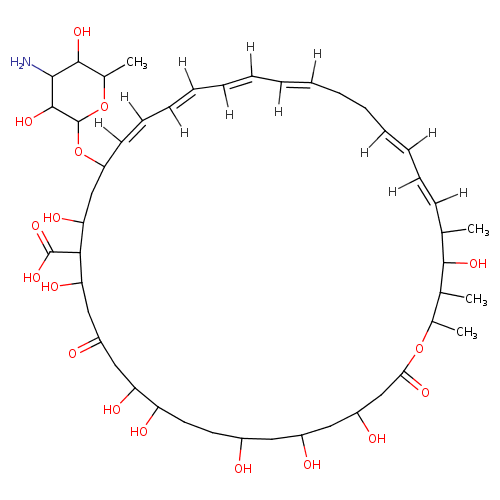
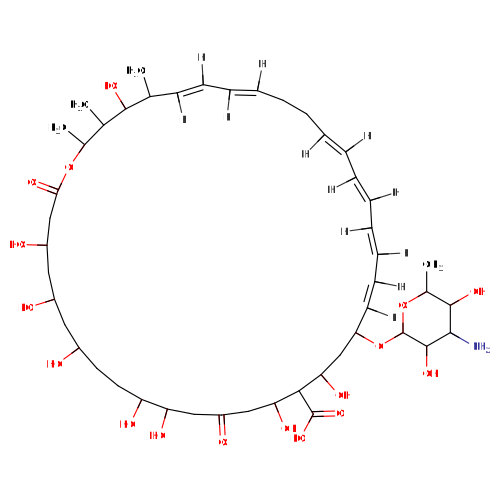
Nystatin is a polyene antifungal drug to which many molds and yeasts are sensitive, including Candida spp. Nystatin has some toxicity associated with it when given intravenously, but it is not absorbed across intact skin or mucous membranes. It is considered a relatively safe drug for treating oral or gastrointestinal fungal infections.
Oral, topical(intravaginal). Nystatin is not absorbed from intact skin or mucous membrane.
Mechanism of Toxicity
Nystatin interacts with 14-α demethylase, a cytochrome P-450 enzyme necessary for the conversion of lanosterol to ergosterol. This results in inhibition of ergosterol synthesis and increased fungal cellular permeability. Nystatin exerts its antifungal activity by binding to ergosterol found in fungal cell membranes. Binding to ergosterol causes the formation of pores in the membrane. Potassium and other cellular constituents leak from the pores causing cell death.
No indication of carcinogenicity to humans (not listed by IARC).
Uses/Sources
Used to treat cutaneous, vaginal, mucosal and esophageal Candida infections. Nystatin is often used as prophylaxis in patients who are at risk for fungal infections, such as AIDS patients with a low CD4+ count and patients receiving chemotherapy.[Wikipedia]
Minimum Risk Level
Not Available
Health Effects
Tachycardia, bronchospasm, facial swelling, and non-specific myalgia have also been rarely reported.
Stevens-Johnson syndrome has been reported very rarely. (3)
Symptoms
Diarrhea (including one case of bloody diarrhea), nausea, vomiting, gastrointestinal upset/disturbances. Rash, including urticaria has been reported rarely. (3)