Record Information
Version1.0
Creation Date2009-07-05 03:00:16 UTC
Update Date2026-05-14 16:52:42 UTC
Accession NumberCHEM002086
Identification
Common NameAmantadine
ClassSmall Molecule
DescriptionAn antiviral that is used in the prophylactic or symptomatic treatment of influenza A. It is also used as an antiparkinsonian agent, to treat extrapyramidal reactions, and for postherpetic neuralgia. The mechanisms of its effects in movement disorders are not well understood but probably reflect an increase in synthesis and release of dopamine, with perhaps some inhibition of dopamine uptake. [PubChem]
Contaminant Sources
  • EAFUS Chemicals
  • HMDB Contaminants - Urine
  • HPV EPA Chemicals
  • STOFF IDENT Compounds
  • T3DB toxins
  • ToxCast & Tox21 Chemicals
Contaminant Type
  • Amine
  • Analgesic, Non-Narcotic
  • Antiparkinson Agent
  • Antiviral Agent
  • Dopamine Agent
  • Drug
  • Human Neurotoxin
  • Metabolite
  • Organic Compound
  • PMT
  • Synthetic Compound
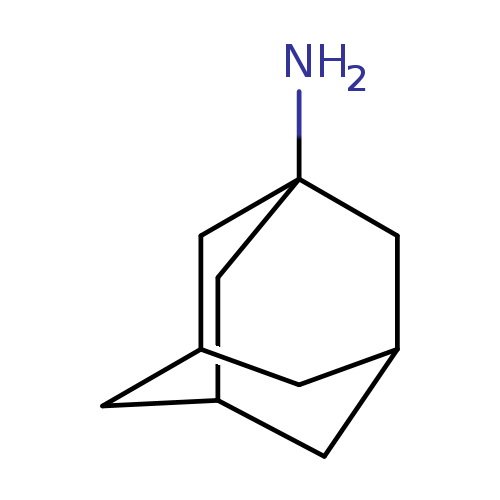
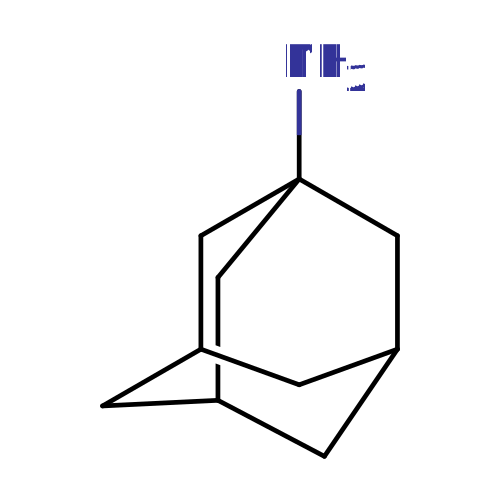
Chemical Structure
Thumb
Synonyms
ValueSource
1-AdamantanamineChEBI
1-AdamantylamineChEBI
1-AminoadamantaneChEBI
AmantadinaChEBI
AmantadinumChEBI
AmantidineChEBI
AminoadamantaneChEBI
Tricyclo[3.3.1.1(3,7)]decan-1-amineChEBI
Tricyclo[3.3.1.1(3,7)]decan-1-ylamineChEBI
Tricyclo[3.3.1.1(3,7)]decane-1-amineChEBI
ViregytChEBI
VirosolChEBI
AdamantamineHMDB
AdamantanamineHMDB
AdamantylamineHMDB
Amantadine baseHMDB
Amantadine HCLHMDB
Amantadine hydrochlorideHMDB
AL, amantadinHMDB
AdekinHMDB
Alliance brand OF amantadine hydrochlorideHMDB
AmanHMDB
Amanta-sulfate-azuHMDB
AmantaHCIAZUHMDB
Amantadin alHMDB
Amantadin neuraxpharmHMDB
Amantadin ratiopharmHMDB
Amantadin-neuraxpharmHMDB
Amantadina juventusHMDB
AmantadinratiopharmHMDB
Desitin brand OF amantadine hydrochlorideHMDB
Infecto-fluHMDB
Krewel brand OF amantadine hydrochlorideHMDB
Merz brand OF amantadine sulfateHMDB
Novartis brand OF amantadine hydrochlorideHMDB
PMSAmantadineHMDB
Solvay brand OF amantadine hydrochlorideHMDB
Stada brand OF amantadine hydrochlorideHMDB
SymmetrelHMDB
TregorHMDB
AbZ brand OF amantadine hydrochlorideHMDB
Aliud brand OF amantadine sulfateHMDB
Amanta-hci-azuHMDB
Amantadina llorenteHMDB
Azupharma brand OF amantadine hydrochlorideHMDB
Azupharma brand OF amantadine sulfateHMDB
CerebramedHMDB
Gen amantadineHMDB
GenAmantadineHMDB
Hexal brand OF amantadine sulfateHMDB
Infecto fluHMDB
Infectopharm brand OF amantadine hydrochlorideHMDB
Neuro hexal brand OF amantadine sulfateHMDB
PMS-AmantadineHMDB
Pharmascience brand OF amantadine hydrochlorideHMDB
SymadineHMDB
Thiemann brand OF amantadine hydrochlorideHMDB
AZU, amantadinHMDB
AmantaHMDB
Amanta hci azuHMDB
Amantadin stadaHMDB
Amantadin-ratiopharmHMDB
Gen-amantadineHMDB
Genpharm brand OF amantadine hydrochlorideHMDB
Hormosan brand OF amantadine sulfateHMDB
Hydrochloride, amantadineHMDB
Juventus, amantadinaHMDB
MantadixHMDB
Stada brand OF amantadine sulfateHMDB
Stada, amantadinHMDB
Sulfate, amantadineHMDB
1 AminoadamantaneHMDB
Amanta sulfate azuHMDB
AmantasulfateazuHMDB
Amantadin azuHMDB
Amantadine sulfateHMDB
AmantadinneuraxpharmHMDB
AmixxHMDB
Ciba geigy brand OF amantadine hydrochlorideHMDB
Ciba-geigy brand OF amantadine hydrochlorideHMDB
Du pont brand OF amantadine hydrochlorideHMDB
EndantadineHMDB
endo Brand OF amantadine hydrochlorideHMDB
InfectoFluHMDB
InfexHMDB
Juventus brand OF amantadine hydrochlorideHMDB
Llorente brand OF amantadine hydrochlorideHMDB
Llorente, amantadinaHMDB
MidantanHMDB
Orion brand OF amantadine hydrochlorideHMDB
PMS AmantadineHMDB
WiregytHMDB
Neuraxpharm brand OF amantadine sulfateHMDB
Ratiopharm brand OF amantadine hydrochlorideHMDB
Chemical FormulaC10H17N
Average Molecular Mass151.249 g/mol
Monoisotopic Mass151.136 g/mol
CAS Registry Number768-94-5
IUPAC Nameadamantan-1-amine
Traditional Nameamantadine
SMILESNC12CC3CC(CC(C3)C1)C2
InChI IdentifierInChI=1S/C10H17N/c11-10-4-7-1-8(5-10)3-9(2-7)6-10/h7-9H,1-6,11H2
InChI KeyDKNWSYNQZKUICI-UHFFFAOYSA-N
Chemical Taxonomy
Description belongs to the class of organic compounds known as monoalkylamines. These are organic compounds containing an primary aliphatic amine group.
KingdomOrganic compounds
Super ClassOrganic nitrogen compounds
ClassOrganonitrogen compounds
Sub ClassAmines
Direct ParentMonoalkylamines
Alternative Parents
Substituents
  • Organopnictogen compound
  • Hydrocarbon derivative
  • Primary aliphatic amine
  • Aliphatic homopolycyclic compound
Molecular FrameworkAliphatic homopolycyclic compounds
External Descriptors
Biological Properties
StatusDetected and Not Quantified
OriginExogenous
Cellular Locations
  • Cytoplasm
  • Extracellular
  • Membrane
Biofluid LocationsNot Available
Tissue LocationsNot Available
PathwaysNot Available
Applications
Biological Roles
Chemical RolesNot Available
Physical Properties
StateSolid
AppearanceHexakistetrahedral crystals by sublimation (4).
Experimental Properties
PropertyValue
Melting Point180-192°C
Boiling PointNot Available
Solubility6290 mg/L (freely soluble)
Predicted Properties
PropertyValueSource
Water Solubility0.085 g/LALOGPS
logP2.53ALOGPS
logP1.47ChemAxon
logS-3.2ALOGPS
pKa (Strongest Basic)10.71ChemAxon
Physiological Charge1ChemAxon
Hydrogen Acceptor Count1ChemAxon
Hydrogen Donor Count1ChemAxon
Polar Surface Area26.02 ŲChemAxon
Rotatable Bond Count0ChemAxon
Refractivity45.54 m³·mol⁻¹ChemAxon
Polarizability17.92 ųChemAxon
Number of Rings3ChemAxon
Bioavailability1ChemAxon
Rule of FiveYesChemAxon
Ghose FilterNoChemAxon
Veber's RuleYesChemAxon
MDDR-like RuleNoChemAxon
Spectra
Spectra
Spectrum TypeDescriptionSplash KeyView
GC-MSGC-MS Spectrum - GC-EI-TOF (Non-derivatized)splash10-014i-1910000000-c4908efe87e5cdf2ba74Spectrum
GC-MSGC-MS Spectrum - GC-EI-TOF (Non-derivatized)splash10-014i-1910000000-8b7366cc494bf757bb81Spectrum
GC-MSGC-MS Spectrum - GC-EI-TOF (Non-derivatized)splash10-01b9-6910000000-e6fd5b29f51169a772e5Spectrum
GC-MSGC-MS Spectrum - GC-EI-TOF (Non-derivatized)splash10-014i-1910000000-c4908efe87e5cdf2ba74Spectrum
GC-MSGC-MS Spectrum - GC-EI-TOF (Non-derivatized)splash10-014i-1910000000-8b7366cc494bf757bb81Spectrum
GC-MSGC-MS Spectrum - GC-EI-TOF (Non-derivatized)splash10-01b9-6910000000-e6fd5b29f51169a772e5Spectrum
Predicted GC-MSPredicted GC-MS Spectrum - GC-MS (Non-derivatized) - 70eV, Positivesplash10-0udi-0900000000-ffe93d952abd2a39e06eSpectrum
Predicted GC-MSPredicted GC-MS Spectrum - GC-MS (Non-derivatized) - 70eV, PositiveNot AvailableSpectrum
LC-MS/MSLC-MS/MS Spectrum - LC-ESI-QFT , positivesplash10-0f79-0900000000-b3511c6e5de6fce544c6Spectrum
LC-MS/MSLC-MS/MS Spectrum - LC-ESI-QFT , positivesplash10-0f79-0900000000-ca740a06e33d4850b211Spectrum
LC-MS/MSLC-MS/MS Spectrum - LC-ESI-QFT , positivesplash10-000i-0900000000-f1084780a2940c5afd1bSpectrum
LC-MS/MSLC-MS/MS Spectrum - LC-ESI-QFT , positivesplash10-000i-0900000000-a083f7fdcbb679c2996aSpectrum
LC-MS/MSLC-MS/MS Spectrum - LC-ESI-QFT , positivesplash10-000i-2900000000-496b35f0cfba5aa930edSpectrum
LC-MS/MSLC-MS/MS Spectrum - LC-ESI-QFT , positivesplash10-000i-7900000000-e37809d5efe023b0382dSpectrum
LC-MS/MSLC-MS/MS Spectrum - LC-ESI-QQ , positivesplash10-0udi-0900000000-1a8aac6647f0187ebdf9Spectrum
LC-MS/MSLC-MS/MS Spectrum - LC-ESI-QQ , positivesplash10-000i-0900000000-88a4152a7398da21333cSpectrum
LC-MS/MSLC-MS/MS Spectrum - LC-ESI-QQ , positivesplash10-000i-1900000000-76e73b05fc9ac0bdc170Spectrum
LC-MS/MSLC-MS/MS Spectrum - LC-ESI-QQ , positivesplash10-002u-9600000000-048cdcfd022184f574b6Spectrum
LC-MS/MSLC-MS/MS Spectrum - LC-ESI-QQ , positivesplash10-004l-9000000000-8bc5ffed5487b0edffafSpectrum
LC-MS/MSLC-MS/MS Spectrum - LC-ESI-QTOF , positivesplash10-0udi-0900000000-4aa7b04aaac47d693e8dSpectrum
LC-MS/MSLC-MS/MS Spectrum - LC-ESI-QTOF , positivesplash10-0udr-0900000000-815d4b207b027466d755Spectrum
LC-MS/MSLC-MS/MS Spectrum - LC-ESI-ITFT , positivesplash10-000i-0900000000-7ce8af9197b4d35ecffdSpectrum
LC-MS/MSLC-MS/MS Spectrum - LC-ESI-ITFT , positivesplash10-000i-0900000000-278de51184b1c34ed88fSpectrum
LC-MS/MSLC-MS/MS Spectrum - LC-ESI-ITFT , positivesplash10-000i-0900000000-1a9620db53d99baf9c05Spectrum
LC-MS/MSLC-MS/MS Spectrum - , positivesplash10-0f79-1900000000-f49f767b2078c543faadSpectrum
LC-MS/MSLC-MS/MS Spectrum - 30V, Positivesplash10-0f79-0900000000-ca740a06e33d4850b211Spectrum
Predicted LC-MS/MSPredicted LC-MS/MS Spectrum - 10V, Positivesplash10-0udr-0900000000-9de5310f392d5fea9404Spectrum
Predicted LC-MS/MSPredicted LC-MS/MS Spectrum - 20V, Positivesplash10-0udr-0900000000-8549fa2798ea74b6bfe9Spectrum
Predicted LC-MS/MSPredicted LC-MS/MS Spectrum - 40V, Positivesplash10-000i-0900000000-1bbfc183d3445dfb5be9Spectrum
Predicted LC-MS/MSPredicted LC-MS/MS Spectrum - 10V, Negativesplash10-0udi-0900000000-1da79c1934401c0e75b1Spectrum
Predicted LC-MS/MSPredicted LC-MS/MS Spectrum - 20V, Negativesplash10-0udi-0900000000-500c2b80938b31be9d7cSpectrum
Predicted LC-MS/MSPredicted LC-MS/MS Spectrum - 40V, Negativesplash10-0udi-0900000000-6af1e4d2eb8132df1cf9Spectrum
MSMass Spectrum (Electron Ionization)splash10-0006-9100000000-44ff981fd5fa6c48df97Spectrum
1D NMR1H NMR SpectrumNot AvailableSpectrum
1D NMR13C NMR SpectrumNot AvailableSpectrum
Toxicity Profile
Route of ExposureInhalation. Amantadine is well absorbed orally from the gastrointestinal tract.
Mechanism of ToxicityThe mechanism of its antiparkinsonic effect is not fully understood, but it appears to be releasing dopamine from the nerve endings of the brain cells, together with stimulation of norepinephrine response. It also has NMDA receptor antagonistic effects. The antiviral mechanism seems to be unrelated. The drug interferes with a viral protein, M2 (an ion channel), which is needed for the viral particle to become "uncoated" once it is taken inside the cell by endocytosis.
MetabolismNo appreciable metabolism, although negligible amounts of an acetyl metabolite have been identified. Amantadine is well absorbed orally from the gastrointestinal tract. The mechanism of its antiparkinsonic effect is not fully understood, but it appears to be releasing dopamine from the nerve endings of the brain cells, together with stimulation of norepinephrine response. The antiviral mechanism seems to be unrelated. The drug interferes with a viral protein, M2 (an ion channel), which is needed for the viral particle to become "uncoated" once it is taken inside the cell by endocytosis. Metabolites are excreted in the urine (1). Route of Elimination: It is primarily excreted unchanged in the urine by glomerular filtration and tubular secretion. Half Life: Mean half-lives ranged from 10 to 14 hours, however renal function impairment causes a severe increase in half life to 7 to 10 days.
Toxicity ValuesLD50: 800 mg/kg (Oral, Rat) LD50: 700 mg/kg (Oral, Mouse)
Lethal DoseThe lowest reported acute lethal dose was 2 grams.
Carcinogenicity (IARC Classification)No indication of carcinogenicity to humans (not listed by IARC).
Uses/SourcesFor the chemoprophylaxis, prophylaxis, and treatment of signs and symptoms of infection caused by various strains of influenza A virus. Also for the treatment of parkinsonism and drug-induced extrapyramidal reactions (1).
Minimum Risk LevelNot Available
Health EffectsAcute overdosage of amantadine has resulted in cardiac dysfunction (e.g., arrhythmia, tachycardia, hypertension); pulmonary edema and respiratory distress (including adult respiratory distress syndrome); renal dysfunction (e.g., increased BUN, decreased creatinine clearance, renal insufficiency); or CNS toxicity (e.g., insomnia, anxiety, psychotic reactions, lethargy, somnolence, coma). Hyperthermia also has occurred with amantadine overdosage. In addition, seizures may be exacerbated in patients with a history of a seizure disorder (2).
SymptomsDeaths have been reported from overdose with amantadine. The lowest reported acute lethal dose was 2 grams. Drug overdose has resulted in cardiac, respiratory, renal or central nervous system toxicity. Cardiac dysfunction includes arrhythmia, tachycardia and hypertension. Pulmonary edema and respiratory distress (including ARDS) have been reported. Renal dysfunction including increased BUN, decreased creatinine clearance and renal insufficiency can occur. Central nervous system effects that have been reported include insomnia, anxiety, aggressive behavior, hypertonia, hyperkinesia, tremor, confusion, disorientation, depersonalization, fear, delirium, hallucination, psychotic reactions, lethargy, somnolence and coma. Seizures may be exacerbated in patients with prior history of seizure disorders. Hyperthermia has also been observed in cases where a drug overdose has occurred.
TreatmentThere is no specific antidote for an overdose of Amantadine. However, slowly administered intravenous physostigmine in 1 and 2 mg doses in an adult2 at 1- to 2-hour intervals and 0.5 mg doses in a child3 at 5- to 10-minute intervals up to a maximum of 2 mg/hour have been reported to be effective in the control of central nervous system toxicity caused by amantadine hydrochloride. For acute overdosing, general supportive measures should be employed along with immediate gastric lavage or induction of emesis. Fluids should be forced, and if necessary, given intravenously. The pH of the urine has been reported to influence the excretion rate of Amantadine. (3)
Concentrations
Not Available
DrugBank IDDB00915
HMDB IDHMDB0015051
FooDB IDNot Available
Phenol Explorer IDNot Available
KNApSAcK IDNot Available
BiGG IDNot Available
BioCyc IDNot Available
METLIN IDNot Available
PDB IDNot Available
Wikipedia LinkAmantadine
Chemspider ID2045
ChEBI ID2618
PubChem Compound ID2130
Kegg Compound IDC06818
YMDB IDNot Available
ECMDB IDNot Available
References
Synthesis Reference

Haaf, W.; U.S. Patent 3,152,180; October 6, 1964; assigned to Studiengesellschaft Kohle mbH, Germany.

MSDSLink
General References
1. https://www.ncbi.nlm.nih.gov/pubmed/?term=23011311
2. https://www.ncbi.nlm.nih.gov/pubmed/?term=24371305
3. https://www.ncbi.nlm.nih.gov/pubmed/?term=24427376