Record Information
Version1.0
Creation Date2009-07-03 21:14:35 UTC
Update Date2026-04-05 15:33:34 UTC
Accession NumberCHEM002049
Identification
Common NamePalytoxin
ClassSmall Molecule
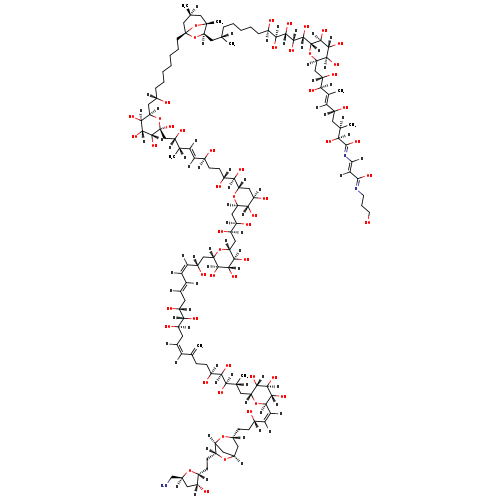
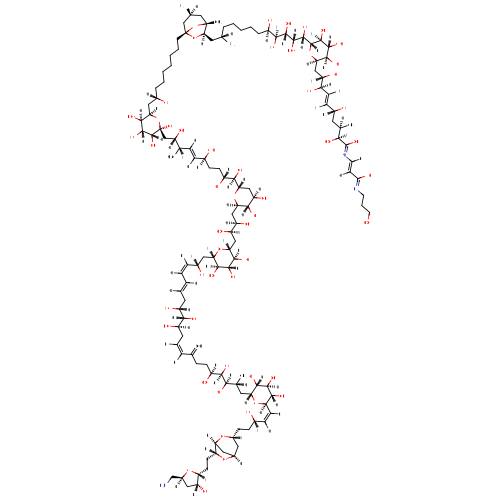
DescriptionPalytoxin is a complex marine natural product containing 71 asymmetric centers. Palytoxin, isolated from soft coral, is considered to be one of the most toxic non-peptide substances known, second only to maitotoxin (5).
Contaminant Sources
  • T3DB toxins
Contaminant Type
  • Amine
  • Animal Toxin
  • Ether
  • Lachrymator
  • Marine Toxin
  • Natural Compound
  • Organic Compound
Chemical Structure
Thumb
SynonymsNot Available
Chemical FormulaC129H223N3O53
Average Molecular Mass2664.139 g/mol
Monoisotopic Mass2662.485 g/mol
CAS Registry Number77734-91-9
IUPAC Name(2S,3R,5R,6E,8R,9S)-10-[(2R,3R,4R,5S,6R)-6-[(1S,2R,3S,4S,5R,11S)-12-[(1R,3S,5S,7R)-5-[(8S)-9-[(2R,3R,4R,5R,6S)-6-[(2S,3S,4E,6S,9R,10R)-10-[(2S,4R,5S,6R)-6-[(2R,3R)-4-[(2R,3S,4R,5R,6S)-6-[(2S,3Z,5E,8R,9S,10R,12Z,17S,18R,19R,20R)-20-{[(2R,3R,4R,5S,6R)-6-[(1Z,3S)-5-[(1S,3R,5R,7R)-7-{2-[(2R,3R,5S)-5-(aminomethyl)-3-hydroxyoxolan-2-yl]ethyl}-2,6-dioxabicyclo[3.2.1]octan-3-yl]-3-hydroxypent-1-en-1-yl]-3,4,5-trihydroxyoxan-2-yl]methyl}-2,8,9,10,17,18,19-heptahydroxy-14-methylidenehenicosa-3,5,12-trien-1-yl]-3,4,5-trihydroxyoxan-2-yl]-2,3-dihydroxybutyl]-4,5-dihydroxyoxan-2-yl]-2,6,9,10-tetrahydroxy-3-methyldec-4-en-1-yl]-3,4,5,6-tetrahydroxyoxan-2-yl]-8-hydroxynonyl]-1,3-dimethyl-6,8-dioxabicyclo[3.2.1]octan-7-yl]-1,2,3,4,5-pentahydroxy-11-methyldodecyl]-3,4,5-trihydroxyoxan-2-yl]-2,5,8,9-tetrahydroxy-N-[(1E)-2-[(3-hydroxypropyl)-C-hydroxycarbonimidoyl]eth-1-en-1-yl]-3,7-dimethyldec-6-enimidic acid
Traditional Name(2S,3R,5R,6E,8R,9S)-10-[(2R,3R,4R,5S,6R)-6-[(1S,2R,3S,4S,5R,11S)-12-[(1R,3S,5S,7R)-5-[(8S)-9-[(2R,3R,4R,5R,6S)-6-[(2S,3S,4E,6S,9R,10R)-10-[(2S,4R,5S,6R)-6-[(2R,3R)-4-[(2R,3S,4R,5R,6S)-6-[(2S,3Z,5E,8R,9S,10R,12Z,17S,18R,19R,20R)-20-{[(2R,3R,4R,5S,6R)-6-[(1Z,3S)-5-[(1S,3R,5R,7R)-7-{2-[(2R,3R,5S)-5-(aminomethyl)-3-hydroxyoxolan-2-yl]ethyl}-2,6-dioxabicyclo[3.2.1]octan-3-yl]-3-hydroxypent-1-en-1-yl]-3,4,5-trihydroxyoxan-2-yl]methyl}-2,8,9,10,17,18,19-heptahydroxy-14-methylidenehenicosa-3,5,12-trien-1-yl]-3,4,5-trihydroxyoxan-2-yl]-2,3-dihydroxybutyl]-4,5-dihydroxyoxan-2-yl]-2,6,9,10-tetrahydroxy-3-methyldec-4-en-1-yl]-3,4,5,6-tetrahydroxyoxan-2-yl]-8-hydroxynonyl]-1,3-dimethyl-6,8-dioxabicyclo[3.2.1]octan-7-yl]-1,2,3,4,5-pentahydroxy-11-methyldodecyl]-3,4,5-trihydroxyoxan-2-yl]-2,5,8,9-tetrahydroxy-N-[(1E)-2-[(3-hydroxypropyl)-C-hydroxycarbonimidoyl]eth-1-en-1-yl]-3,7-dimethyldec-6-enimidic acid
SMILES[H]\C(C[C@@]([H])(O)[C@]([H])(O)[C@]([H])(O)C\C([H])=C(\[H])C(=C)CC[C@]([H])(O)[C@@]([H])(O)[C@]([H])(O)[C@]([H])(C)C[C@@]1([H])O[C@]([H])(C(\[H])=C(\[H])[C@@]([H])(O)CC[C@]2([H])C[C@]3([H])C[C@]([H])(O2)[C@@]([H])(CC[C@@]2([H])O[C@]([H])(CN)C[C@@]2([H])O)O3)[C@@]([H])(O)[C@]([H])(O)[C@@]1([H])O)=C(\[H])/C(/[H])=C(/[H])[C@@]([H])(O)C[C@]1([H])O[C@]([H])(C[C@@]([H])(O)[C@]([H])(O)C[C@@]2([H])O[C@@]([H])(C[C@@]([H])(O)[C@]2([H])O)[C@]([H])(O)[C@]([H])(O)CC[C@]([H])(O)C(\[H])=C(/[H])[C@]([H])(C)[C@@]([H])(O)C[C@]2(O)O[C@]([H])(C[C@@]([H])(O)CCCCCCC[C@@]34C[C@@]([H])(C)C[C@@](C)(O3)[C@@]([H])(C[C@@]([H])(C)CCCCC[C@@]([H])(O)[C@]([H])(O)[C@]([H])(O)[C@@]([H])(O)[C@]([H])(O)[C@@]3([H])O[C@]([H])(C[C@]([H])(O)[C@]([H])(O)C(\C)=C(/[H])[C@]([H])(O)C[C@@]([H])(C)[C@]([H])(O)C(O)=N\C([H])=C(/[H])C(O)=NCCCO)[C@]([H])(O)[C@@]([H])(O)[C@]3([H])O)O4)[C@]([H])(O)[C@@]([H])(O)[C@@]2([H])O)[C@@]([H])(O)[C@]([H])(O)[C@@]1([H])O
InChI IdentifierInChI=1S/C129H223N3O53/c1-63(29-36-82(143)108(157)103(152)69(7)49-93-111(160)117(166)110(159)91(179-93)38-34-71(135)32-35-75-52-76-54-92(176-75)90(177-76)40-39-89-85(146)53-77(62-130)178-89)23-20-28-79(140)105(154)78(139)26-18-13-16-25-72(136)50-94-112(161)118(167)113(162)97(180-94)56-84(145)83(144)55-95-107(156)87(148)58-96(181-95)106(155)81(142)37-33-70(134)31-30-66(4)88(149)61-129(175)125(173)123(172)115(164)99(183-129)51-73(137)24-15-10-9-11-19-42-128-60-65(3)59-127(8,185-128)100(184-128)46-64(2)22-14-12-17-27-80(141)109(158)116(165)120(169)122(171)124-121(170)119(168)114(163)98(182-124)57-86(147)102(151)67(5)47-74(138)48-68(6)104(153)126(174)132-44-41-101(150)131-43-21-45-133/h13,16,18,20,23,25,30-31,34,38,41,44,47,64-66,68-100,102-125,133-149,151-173,175H,1,9-12,14-15,17,19,21-22,24,26-29,32-33,35-37,39-40,42-43,45-46,48-62,130H2,2-8H3,(H,131,150)(H,132,174)/b18-13+,23-20-,25-16-,31-30+,38-34-,44-41+,67-47+/t64-,65-,66-,68+,69+,70+,71-,72+,73-,74-,75+,76+,77-,78+,79+,80+,81+,82-,83+,84+,85+,86-,87+,88-,89+,90+,91+,92-,93+,94-,95+,96-,97+,98+,99+,100+,102+,103+,104-,105-,106+,107-,108+,109-,110+,111-,112-,113+,114-,115-,116-,117-,118+,119+,120+,121-,122-,123+,124-,125+,127+,128-,129-/m0/s1
InChI KeyGZXBNJVQTZZERE-YUOBMYCZSA-N
Chemical Taxonomy
Description belongs to the class of organic compounds known as terpene glycosides. These are prenol lipids containing a carbohydrate moiety glycosidically bound to a terpene backbone.
KingdomOrganic compounds
Super ClassLipids and lipid-like molecules
ClassPrenol lipids
Sub ClassTerpene glycosides
Direct ParentTerpene glycosides
Alternative Parents
Substituents
  • Terpene glycoside
  • C-glycosyl compound
  • Glycosyl compound
  • Monoterpenoid
  • 1,4-dioxepane
  • Ketal
  • Oxepane
  • Dioxepane
  • N-acyl-amine
  • Oxane
  • Fatty acyl
  • Fatty amide
  • Monosaccharide
  • Meta-dioxolane
  • Acrylic acid or derivatives
  • Vinylogous amide
  • Tetrahydrofuran
  • Amino acid or derivatives
  • Hemiacetal
  • Carboxamide group
  • Secondary alcohol
  • Secondary carboxylic acid amide
  • Acetal
  • Alkanolamine
  • Carboxylic acid derivative
  • Dialkyl ether
  • Oxacycle
  • Ether
  • Organoheterocyclic compound
  • Polyol
  • Alcohol
  • Organic nitrogen compound
  • Hydrocarbon derivative
  • Carbonyl group
  • Organic oxide
  • Organic oxygen compound
  • Amine
  • Primary amine
  • Primary alcohol
  • Primary aliphatic amine
  • Organopnictogen compound
  • Organooxygen compound
  • Organonitrogen compound
  • Aliphatic heteropolycyclic compound
Molecular FrameworkAliphatic heteropolycyclic compounds
External DescriptorsNot Available
Biological Properties
StatusDetected and Not Quantified
OriginExogenous
Cellular Locations
  • Actin Cytoskeleton
  • Actin Filament
  • Apical Membrane
  • Cell junction
  • Cell surface
  • Cytoskeleton
  • Cytosol
  • Endoplasmic reticulum
  • Extracellular
  • Intermediate Filament
  • Membrane
  • Microsome
  • Microtubule
  • Mitochondrion
  • Plasma Membrane
  • Ribosome
  • Sarcoplasmic Reticulum
  • Synaptic Vesicle
Biofluid LocationsNot Available
Tissue LocationsNot Available
Pathways
NameSMPDB LinkKEGG Link
ApoptosisNot Availablemap04210
Arachidonic Acid MetabolismSMP00075 map00590
Cell cycleNot Availablemap04110
Antiarrhythmic DrugsNot AvailableNot Available
ApplicationsNot Available
Biological RolesNot Available
Chemical RolesNot Available
Physical Properties
StateSolid
AppearanceWhite powder.
Experimental Properties
PropertyValue
Melting PointNot Available
Boiling PointNot Available
SolubilityNot Available
Predicted Properties
PropertyValueSource
logP-12ChemAxon
pKa (Strongest Acidic)0.3ChemAxon
pKa (Strongest Basic)9.23ChemAxon
Physiological Charge2ChemAxon
Hydrogen Acceptor Count56ChemAxon
Hydrogen Donor Count44ChemAxon
Polar Surface Area1012.93 ŲChemAxon
Rotatable Bond Count80ChemAxon
Refractivity667.43 m³·mol⁻¹ChemAxon
Polarizability284.6 ųChemAxon
Number of Rings10ChemAxon
Bioavailability0ChemAxon
Rule of FiveNoChemAxon
Ghose FilterNoChemAxon
Veber's RuleNoChemAxon
MDDR-like RuleYesChemAxon
Spectra
SpectraNot Available
Toxicity Profile
Route of ExposureIngestion, dermal and eye contact. (1, 2)
Mechanism of ToxicityPalytoxin targets the sodium-potassium pump protein by binding to the molecule such that the molecule is locked in a position where it allows passive transport of both the sodium and potassium ions, thereby destroying the ion gradient that is essential for most cells. It also diminishing the supply of oxygen to the myocardium, and can cause death within minutes. (5, 3).
MetabolismNot Available
Toxicity ValuesLD50: 0.025 ug/kg (Intravenous, Rabbit) (4)
Lethal DoseThe lethal oral dose in humans is 1 to 4 mg. (4)
Carcinogenicity (IARC Classification)No indication of carcinogenicity to humans (not listed by IARC).
Uses/SourcesPalytoxin is isolated from soft coral (5).
Minimum Risk LevelNot Available
Health EffectsPalytoxin poisoning can cause multiple clinical effects, including paresthesia, dysguesia, hypertension, respiratory depression, and coma. Other health effects include tachycardia, unstable blood pressure, hemolysis (destruction of red blood cells). The onset of symptoms is rapid, and death usually follows just minutes after. Early death is probably due to intense spasm of the coronary vascular smooth muscle, resulting in marked reduction in blood flow. This may be an early manifestation of what later becomes a general necrotizing effect of palytoxin on blood vessels, which ultimately causes cell destruction throughout the body. The delayed deaths may be the result of a less profound but widespread decrease in blood flow and oxygen supply, causing ischemia and, ultimately, anoxia in major organ systems. Palytoxin can cause marked irritation and tissue injury when applied topically to the skin or eyes of animals. (5, 2).
SymptomsTypical symptoms of palytoxin poisoning are angina-like chest pains, asthma-like breathing difficulties, and an electrocardiogram showing an exaggerated T wave (5).
TreatmentTreatment in humans is symptomatic and supportive. Vasodilators, such as papverine and isosorbide nitrate, can be used as antidotes. The patient can be treated supportively with corticosteroids and a histamine antagonist after dermal exposure. (5, 1)

Concentrations
Not Available
DrugBank IDNot Available
HMDB IDNot Available
FooDB IDNot Available
Phenol Explorer IDNot Available
KNApSAcK IDNot Available
BiGG IDNot Available
BioCyc IDNot Available
METLIN IDNot Available
PDB IDNot Available
Wikipedia LinkPalytoxin
Chemspider IDNot Available
ChEBI IDNot Available
PubChem Compound ID57393423
Kegg Compound IDNot Available
YMDB IDNot Available
ECMDB IDNot Available
References
Synthesis ReferenceNot Available
MSDSNot Available
General ReferencesNot Available