Magnesium perchlorate (CHEM001659)
| Record Information | |||||||||||||||||||||||||||||||||||||||||||||||||
|---|---|---|---|---|---|---|---|---|---|---|---|---|---|---|---|---|---|---|---|---|---|---|---|---|---|---|---|---|---|---|---|---|---|---|---|---|---|---|---|---|---|---|---|---|---|---|---|---|---|
| Version | 1.0 | ||||||||||||||||||||||||||||||||||||||||||||||||
| Creation Date | 2009-06-24 15:20:02 UTC | ||||||||||||||||||||||||||||||||||||||||||||||||
| Update Date | 2026-04-06 01:08:14 UTC | ||||||||||||||||||||||||||||||||||||||||||||||||
| Accession Number | CHEM001659 | ||||||||||||||||||||||||||||||||||||||||||||||||
| Identification | |||||||||||||||||||||||||||||||||||||||||||||||||
| Common Name | Magnesium perchlorate | ||||||||||||||||||||||||||||||||||||||||||||||||
| Class | Small Molecule | ||||||||||||||||||||||||||||||||||||||||||||||||
| Description | Magnesium perchlorate is a powerful oxidizing agent, with the formula Mg(ClO4)2. It decomposes at 250 | ||||||||||||||||||||||||||||||||||||||||||||||||
| Contaminant Sources |
| ||||||||||||||||||||||||||||||||||||||||||||||||
| Contaminant Type |
| ||||||||||||||||||||||||||||||||||||||||||||||||
| Chemical Structure | 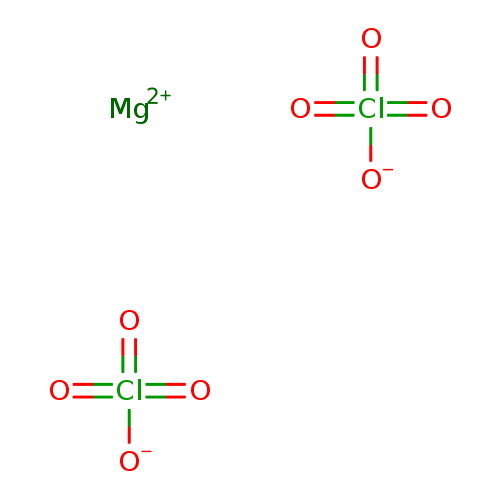 | ||||||||||||||||||||||||||||||||||||||||||||||||
| Synonyms |
| ||||||||||||||||||||||||||||||||||||||||||||||||
| Chemical Formula | Cl2MgO8 | ||||||||||||||||||||||||||||||||||||||||||||||||
| Average Molecular Mass | 223.206 g/mol | ||||||||||||||||||||||||||||||||||||||||||||||||
| Monoisotopic Mass | 221.882 g/mol | ||||||||||||||||||||||||||||||||||||||||||||||||
| CAS Registry Number | 10034-81-8 | ||||||||||||||||||||||||||||||||||||||||||||||||
| IUPAC Name | magnesium(2+) ion diperchlorate | ||||||||||||||||||||||||||||||||||||||||||||||||
| Traditional Name | magnesium(2+) ion diperchlorate | ||||||||||||||||||||||||||||||||||||||||||||||||
| SMILES | [Mg++].[O-][Cl](=O)(=O)=O.[O-][Cl](=O)(=O)=O | ||||||||||||||||||||||||||||||||||||||||||||||||
| InChI Identifier | InChI=1S/2ClHO4.Mg/c2*2-1(3,4)5;/h2*(H,2,3,4,5);/q;;+2/p-2 | ||||||||||||||||||||||||||||||||||||||||||||||||
| InChI Key | MPCRDALPQLDDFX-UHFFFAOYSA-L | ||||||||||||||||||||||||||||||||||||||||||||||||
| Chemical Taxonomy | |||||||||||||||||||||||||||||||||||||||||||||||||
| Description | belongs to the class of inorganic compounds known as alkaline earth metal perchlorates. These are inorganic compounds in which the largest oxoanion is perchlorate, and in which the heaviest atom not in an oxoanion is an alkaline earth metal. | ||||||||||||||||||||||||||||||||||||||||||||||||
| Kingdom | Inorganic compounds | ||||||||||||||||||||||||||||||||||||||||||||||||
| Super Class | Mixed metal/non-metal compounds | ||||||||||||||||||||||||||||||||||||||||||||||||
| Class | Alkaline earth metal oxoanionic compounds | ||||||||||||||||||||||||||||||||||||||||||||||||
| Sub Class | Alkaline earth metal perchlorates | ||||||||||||||||||||||||||||||||||||||||||||||||
| Direct Parent | Alkaline earth metal perchlorates | ||||||||||||||||||||||||||||||||||||||||||||||||
| Alternative Parents | |||||||||||||||||||||||||||||||||||||||||||||||||
| Substituents |
| ||||||||||||||||||||||||||||||||||||||||||||||||
| Molecular Framework | Not Available | ||||||||||||||||||||||||||||||||||||||||||||||||
| External Descriptors | Not Available | ||||||||||||||||||||||||||||||||||||||||||||||||
| Biological Properties | |||||||||||||||||||||||||||||||||||||||||||||||||
| Status | Detected and Not Quantified | ||||||||||||||||||||||||||||||||||||||||||||||||
| Origin | Exogenous | ||||||||||||||||||||||||||||||||||||||||||||||||
| Cellular Locations |
| ||||||||||||||||||||||||||||||||||||||||||||||||
| Biofluid Locations | Not Available | ||||||||||||||||||||||||||||||||||||||||||||||||
| Tissue Locations | Not Available | ||||||||||||||||||||||||||||||||||||||||||||||||
| Pathways | Not Available | ||||||||||||||||||||||||||||||||||||||||||||||||
| Applications | Not Available | ||||||||||||||||||||||||||||||||||||||||||||||||
| Biological Roles | Not Available | ||||||||||||||||||||||||||||||||||||||||||||||||
| Chemical Roles | Not Available | ||||||||||||||||||||||||||||||||||||||||||||||||
| Physical Properties | |||||||||||||||||||||||||||||||||||||||||||||||||
| State | Solid | ||||||||||||||||||||||||||||||||||||||||||||||||
| Appearance | white powder,deliquescent (4). | ||||||||||||||||||||||||||||||||||||||||||||||||
| Experimental Properties |
| ||||||||||||||||||||||||||||||||||||||||||||||||
| Predicted Properties |
| ||||||||||||||||||||||||||||||||||||||||||||||||
| Spectra | |||||||||||||||||||||||||||||||||||||||||||||||||
| Spectra | Not Available | ||||||||||||||||||||||||||||||||||||||||||||||||
| Toxicity Profile | |||||||||||||||||||||||||||||||||||||||||||||||||
| Route of Exposure | Inhalation (3) ; oral (3) ; dermal (3) ; eye contact (3). | ||||||||||||||||||||||||||||||||||||||||||||||||
| Mechanism of Toxicity | The primary and most sensitive target of the perchlorate anion (perchlorate) is the thyroid gland. Perchlorate inhibits the transport of iodide (I-) from the blood into the thyroid follicle cells. The inhibition is thought to be accomplished by perchlorate competitively blocking iodide binding to a carrier, or sodium/iodide symporter (NIS), which catalyzes the simultaneous transfer of Na+ and I-across the basolateral membrane of thyroid follicle cells. Perchlorate inhibition of the NIS can limit the availability of iodide needed for the production of the thyroid hormones thyroxine (7) and triiodothyronine (6), which in turn, may affect the circulating levels of T4 and T3. All known effects of perchlorate on the thyroid hormone system derive directly or secondarily from the inhibition of the NIS. T3 is essential for normal development of the nervous system and for the regulation of metabolism of cells in nearly all tissues of the body. Disruption in the availability of T3 in target tissues can result in adverse effects on a wide variety of organs and systems (3). | ||||||||||||||||||||||||||||||||||||||||||||||||
| Metabolism | There is no evidence that magnesium perchlorate is metabolized in the body. It is rapidly eliminated from the body through the urinary tract (3). | ||||||||||||||||||||||||||||||||||||||||||||||||
| Toxicity Values | Not Available | ||||||||||||||||||||||||||||||||||||||||||||||||
| Lethal Dose | Not Available | ||||||||||||||||||||||||||||||||||||||||||||||||
| Carcinogenicity (IARC Classification) | No indication of carcinogenicity to humans (not listed by IARC). | ||||||||||||||||||||||||||||||||||||||||||||||||
| Uses/Sources | Breathing in contaminated air; drinking contaminated water; eating contaminated food; dermal and eye exposure (3). | ||||||||||||||||||||||||||||||||||||||||||||||||
| Minimum Risk Level | Chronic Oral: 0.0007 mg/kg/day (5) | ||||||||||||||||||||||||||||||||||||||||||||||||
| Health Effects | Adverse effects on a wide variety of organ systems can result from disruption in the availability of T3 to target tissues. Organ systems affected by disturbances in T3 levels include the skin, cardiovascular system, pulmonary system, kidneys, gastrointestinal tract, liver, blood, neuromuscular system, central nervous system, skeleton, male and female reproductive systems, and numerous endocrine organs, including the pituitary and adrenal glands. Such an array of secondary potential targets underscores the need to maintain an adequate level of circulating thyroid hormones. Perchlorate, an environmental contaminant, is known to disturb the hypothalamus-pituitary-thyroid (HPT) axis by blocking iodide accumulation in the thyroid. Iodide deficiency can lead to hypothyroidism and goiter (3, 1). | ||||||||||||||||||||||||||||||||||||||||||||||||
| Symptoms | Irritating to skin, eyes, and respiratory system, depending on the route of exposure. Esophageal or gastrointestinal tract irritation could occur following exposures (3). | ||||||||||||||||||||||||||||||||||||||||||||||||
| Treatment | In case of oral exposure, immediately dilute with 4 to 8 ounces (120 to 240 mol) of water or milk. Consider after ingestion of a potentially life-threatening amount of poison if it can be performed soon after ingestion (generally within 1 hour). Protect airway by placement in Trendelenburg and left lateral decubitus position or by endotracheal intubation. Control any seizures first. Maintain ventilation and oxygenation and evaluate with frequent arterial blood gas or pulse oximetry monitoring. Early use of PEEP and mechanical ventilation may be needed. Following inhalation, Move patient to fresh air. Monitor for respiratory distress. If cough or difficulty breathing develops, evaluate for respiratory tract irritation, bronchitis, or pneumonitis. Administer oxygen and assist ventilation as required. Treat bronchospasm with inhaled beta2 agonist and oral or parenteral corticosteroids. In case of acute lung injury, maintain ventilation and oxygenation and evaluate with frequent arterial blood gas or pulse oximetry monitoring. Following eye exposure, irrigate exposed eyes with copious amounts of room temperature water for at least 15 minutes. Following dermal exposure, remove contaminated clothing and wash exposed area thoroughly with soap and water. A physician may need to examine the area if irritation or pain persists. Treat dermal irritation or burns with standard topical therapy. Patients developing dermal hypersensitivity reactions may require treatment with systemic or topical corticosteroids or antihistamines. (8) | ||||||||||||||||||||||||||||||||||||||||||||||||
| Concentrations | |||||||||||||||||||||||||||||||||||||||||||||||||
| Not Available | |||||||||||||||||||||||||||||||||||||||||||||||||
| External Links | |||||||||||||||||||||||||||||||||||||||||||||||||
| DrugBank ID | Not Available | ||||||||||||||||||||||||||||||||||||||||||||||||
| HMDB ID | HMDB0094714 | ||||||||||||||||||||||||||||||||||||||||||||||||
| FooDB ID | FDB015400 | ||||||||||||||||||||||||||||||||||||||||||||||||
| Phenol Explorer ID | Not Available | ||||||||||||||||||||||||||||||||||||||||||||||||
| KNApSAcK ID | Not Available | ||||||||||||||||||||||||||||||||||||||||||||||||
| BiGG ID | Not Available | ||||||||||||||||||||||||||||||||||||||||||||||||
| BioCyc ID | Not Available | ||||||||||||||||||||||||||||||||||||||||||||||||
| METLIN ID | Not Available | ||||||||||||||||||||||||||||||||||||||||||||||||
| PDB ID | Not Available | ||||||||||||||||||||||||||||||||||||||||||||||||
| Wikipedia Link | Magnesium perchlorate | ||||||||||||||||||||||||||||||||||||||||||||||||
| Chemspider ID | Not Available | ||||||||||||||||||||||||||||||||||||||||||||||||
| ChEBI ID | Not Available | ||||||||||||||||||||||||||||||||||||||||||||||||
| PubChem Compound ID | 24840 | ||||||||||||||||||||||||||||||||||||||||||||||||
| Kegg Compound ID | Not Available | ||||||||||||||||||||||||||||||||||||||||||||||||
| YMDB ID | Not Available | ||||||||||||||||||||||||||||||||||||||||||||||||
| ECMDB ID | Not Available | ||||||||||||||||||||||||||||||||||||||||||||||||
| References | |||||||||||||||||||||||||||||||||||||||||||||||||
| Synthesis Reference | Not Available | ||||||||||||||||||||||||||||||||||||||||||||||||
| MSDS | Not Available | ||||||||||||||||||||||||||||||||||||||||||||||||
| General References | Not Available | ||||||||||||||||||||||||||||||||||||||||||||||||