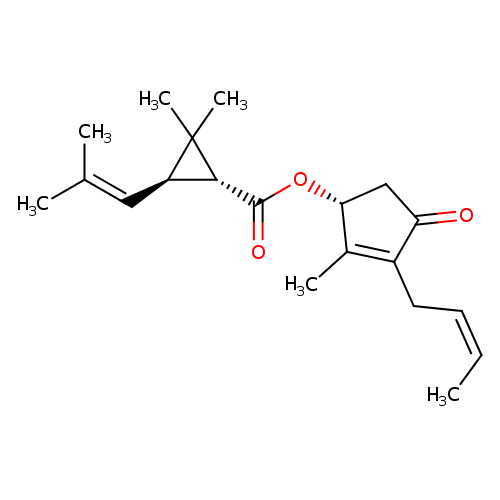
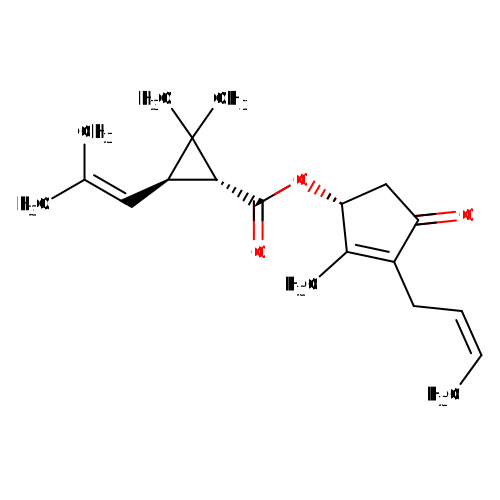
Cinerin I is a synthetic pyrethrin. Pyrethrins are naturally-occurring compounds with insecticidal properties that are found in pyrethrum extract from certain chrysanthemum flowers. The pyrethrins are often used in household insecticides and products to control insects on pets or livestock. (3)
belongs to the class of organic compounds known as pyrethroids. These are organic compounds similar to the pyrethrins. Some pyrethroids containing a chrysanthemic acid esterified with a cyclopentenone (pyrethrins), or with a phenoxybenzyl group.
Pyrethrins exert their effect by prolonging the open phase of the sodium channel gates when a nerve cell is excited. They appear to bind to the membrane lipid phase in the immediate vicinity of the sodium channel, thus modifying the channel kinetics. This blocks the closing of the sodium gates in the nerves, and thus prolongs the return of the membrane potential to its resting state. The repetitive (sensory, motor) neuronal discharge and a prolonged negative afterpotential produces effects quite similar to those produced by DDT, leading to hyperactivity of the nervous system which can result in paralysis and/or death. (3, 1)
Metabolism
Following ingestion, pyrethrins are hydrolysed by various digestive enzymes in the gastro-intestinal tract. However, a small portion of the insecticidally active compounds or its derivatives are absorbed, as shown by their toxicity and their effect on the liver. Pyrethrins may also be absorbed following inhalation or dermal contact. They are rapidly distributed to most tissues, particularly to those with a high lipid content, and are concentrated in central and peripheral nervous tissues. Pyrethrins or their metabolites are not known to be stored in the body or to be excreted in the milk, but no study of the matter has employed modern methods. The major metabolic pathways for pyrethrins are hydrolysis
of the central ester bond, oxidative attacks at several sites, and conjugation reactions, to produce a
complex array of primary and secondary water-soluble metabolites that undergo urinary excretion. Metabolism is believed to involve nonspecific microsomal carboxyesterases and microsomal mixed function oxidases, which are located in nearly all tissue types, with particularly high activities in the liver. Metabolites, such as chrysanthemummonocarboxylic acid, are excreted in the urine and faeces. (3, 5)
No indication of carcinogenicity to humans (not listed by IARC).
Uses/Sources
Breathing in contaminated air; drinking contaminated water or eating contaminated foods; skin and eye exposure (3).
Minimum Risk Level
Not Available
Health Effects
Pyrethrin effects typically include rapid onset of aggressive behavior and increased sensitivity to external stimuli, followed by fine tremor, prostration with coarse whole body tremor, elevated body temperature, coma, and death. Paresthesia, severe corneal damage, hypotension and tachycardia, associated with anaphylaxis, can also occur following pyrethrin poisoning. (3)
Symptoms
The clinical manifestations of inhalation exposure to pyrethrins can be local or systemic. Localized reactions confined to the upper respiratory tract include rhinitis, sneezing, scratchy throat, oral mucosal edema, and even laryngeal mucosal edema. Localized reactions of the lower respiratory tract include cough, shortness of breath, wheezing, and chest pain. An asthmalike reaction occurs with acute exposures in sensitized patients. Hypersensitivity pneumonitis characterized by chest pain, cough, dyspnea, and bronchospasm may occur in an individual chronically exposed. Large amounts may cause nausea, vomiting, tinnitus, headache, and other central nervous system disturbances. (2)
Treatment
Following oral exposure, the treatment is symptomatic and supportive and includes monitoring for the development of hypersensitivity reactions with respiratory distress. Provide adequate airway management when needed. Gastric decontamination is usually not required unless the pyrethrin product is combined with a hydrocarbon. Following inhalation exposure, move patient to fresh air. monitor for respiratory distress. If cough or difficulty breathing develops, evaluate for respiratory tract irritation, bronchitis, or pneumonitis. Administer oxygen and assist ventilation as required. Treat bronchospasm with inhaled beta2 agonist and oral or parenteral corticosteroids. In case of eye exposure, irrigate exposed eyes with copious amounts of room temperature water for at least 15 minutes. If irritation, pain, swelling, lacrimation, or photophobia persist, the patient should be seen in a health care facility. If the contamination occurs through dermal exposure, remove contaminated clothing and wash exposed area thoroughly with soap and water. A physician may need to examine the area if irritation or pain persists. Vitamin E topical application is highly effective in relieving parenthesis. (6)