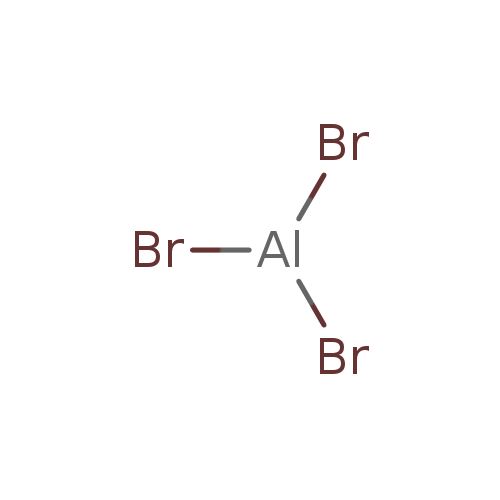
Aluminium bromide is a chemical compound of aluminum and bromine. It is used as a catalyst for the Friedel-Crafts alkylation reaction. Bromine is a halogen element with the symbol Br and atomic number 35. Diatomic bromine does not occur naturally, but bromine salts can be found in crustal rock. Aluminum is the most abundant metal in the earth’s crust and is always found combined with other elements such as oxygen, silicon, and fluorine. (11, 12, 7, 10)
belongs to the class of inorganic compounds known as post-transition metal bromides. These are inorganic compounds in which the largest halogen atom is Bromine, and the heaviest metal atom a post-transition metal.
Bromine is a powerful oxidizing agent and is able to release oxygen free radicals from the water in mucous membranes. These free radicals are also potent oxidizers and produce tissue damage. In additon, the formation of hydrobromic and bromic acids will result in secondary irritation. The bromide ion is also known to affect the central nervous system, causing bromism. This is believed to be a result of bromide ions substituting for chloride ions in the in actions of neurotransmitters and transport systems, thus affecting numerous synaptic processes. The main target organs of aluminum are the central nervous system and bone. Aluminum binds with dietary phosphorus and impairs gastrointestinal absorption of phosphorus. The decreased phosphate body burden results in osteomalacia (softening of the bones due to defective bone mineralization) and rickets. Aluminum's neurotoxicity is believed to involve several mechanisms. Changes in cytoskeletal protein functions as a results of altered phosphorylation, proteolysis, transport, and synthesis are believed to be one cause. Aluminum may induce neurobehavioral effects by affecting permeability of the blood-brain barrier, cholinergic activity, signal transduction pathways, lipid peroxidation, and impair neuronal glutamate nitric oxide-cyclic GMP pathway, as well as interfere with metabolism of essential trace elements because of similar coordination chemistries and consequent competitive interactions. It has been suggested that aluminum's interaction with estrogen receptors increases the expression of estrogen-related genes and thereby contributes to the progression of breast cancer (1), but studies have not been able to establish a clear link between aluminum and increased risk of breast cancer (4). Certain aluminum salts induce immune responses by activating inflammasomes. (11, 1, 2, 8, 9, 3)
Metabolism
Bromine is mainly absorbed via inhalation, but may also enter the body through dermal contact. Bromine salts can be ingested. Due to its reactivity, bromine quickly forms bromide and may be deposited in the tissues, displacing other halogens. Aluminum is poorly absorbed following either oral or inhalation exposure and is essentially not absorbed dermally. The bioavailability of aluminum is strongly influenced by the aluminum compound and the presence of dietary constituents which can complex with aluminum and enhance or inhibit its absorption. Aluminum binds to various ligands in the blood and distributes to every organ, with highest concentrations found in bone and lung tissues. In living organisms, aluminum is believed to exist in four different forms: as free ions, as low-molecular-weight complexes, as physically bound macromolecular complexes, and as covalently bound macromolecular complexes. Absorbed aluminum is excreted principally in the urine and, to a lesser extent, in the bile, while unabsorbed aluminum is excreted in the faeces. (11, 8)
Not listed by IARC. IARC classified aluminum production as carcinogenic to humans (Group 1), but did not implicate aluminum itself as a human carcinogen. (6) A link between use of aluminum-containing antiperspirants and increased risk of breast cancer has been proposed (1), but studies have not been able to establish a clear link (4).
Uses/Sources
Aluminium bromide is used as a catalyst for the Friedel-Crafts alkylation reaction. (10)
Bromine vapour causes irritation and direct damage to the mucous membranes. Elemental bromine also burns the skin. The bromide ion is a central nervous system depressant and chronic exposure produces neuronal effects. This is called bromism and can result in central reactions reaching from somnolence to coma, cachexia, exicosis, loss of reflexes or pathologic reflexes, clonic seizures, tremor, ataxia, loss of neural sensitivity, paresis, papillar edema of the eyes, abnormal speech, cerebral edema, delirium, aggressiveness, and psychoses. Aluminum targets the nervous system and causes decreased nervous system performance and is associated with altered function of the blood-brain barrier. The accumulation of aluminum in the body may cause bone or brain diseases. High levels of aluminum have been linked to Alzheimer’s disease. A small percentage of people are allergic to aluminium and experience contact dermatitis, digestive disorders, vomiting or other symptoms upon contact or ingestion of products containing aluminium. (11, 12, 7, 8, 9)
Symptoms
Bromine vapour causes irritation and direct damage to the mucous membranes. Symptoms include lacrimation, rhinorrhoea, eye irritation with mucous secretions from the oropharyngeal and upper airways, coughing, dyspnoea, choking, wheezing, epistaxis, and headache. The bromide ion is a central nervous system depressant producing ataxia, slurred speech, tremor, nausea, vomiting, lethargy, dizziness, visual disturbances, unsteadiness, headaches, impaired memory and concentration, disorientation and hallucinations. This is called bromism. Inhalating aluminum dust causes coughing and abnormal chest X-rays. A small percentage of people are allergic to aluminium and experience contact dermatitis, digestive disorders, vomiting or other symptoms upon contact or ingestion of products containing aluminium. (11, 12, 8, 9)
Treatment
EYES: irrigate opened eyes for several minutes under running water.
INGESTION: do not induce vomiting. Rinse mouth with water (never give anything by mouth to an unconscious person). Seek immediate medical advice.
SKIN: should be treated immediately by rinsing the affected parts in cold running water for at least 15 minutes, followed by thorough washing with soap and water. If necessary, the person should shower and change contaminated clothing and shoes, and then must seek medical attention.
INHALATION: supply fresh air. If required provide artificial respiration.