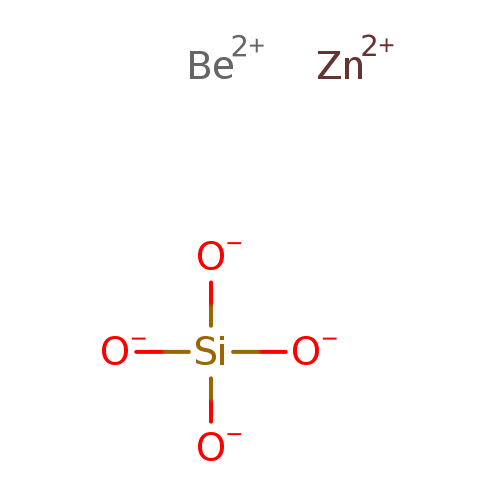
Zinc beryllium silicate is a chemical compound of zinc, beryllium, and silicon. Zinc is a metallic element with the atomic number 30. It is found in nature most often as the mineral sphalerite. Though excess zinc in harmful, in smaller amounts it is an essential element for life, as it is a cofactor for over 300 enzymes and is found in just as many transcription factors. Beryllium is a lightweight alkaline earth metal with the atomic number 4. It is a relatively rare element found naturally only combined with other elements in minerals. (4, 6, 7)
belongs to the class of inorganic compounds known as alkaline earth metal silicates. These are inorganic compounds in which the largest oxoanion is silicate, and in which the heaviest atom not in an oxoanion is an alkaline earth metal.
Anaemia results from the excessive absorption of zinc suppressing copper and iron absorption, most likely through competitive binding of intestinal mucosal cells. Unbalanced levels of copper and zinc binding to Cu,Zn-superoxide dismutase has been linked to amyotrophic lateral sclerosis (ALS). Stomach acid dissolves metallic zinc to give corrosive zinc chloride, which can cause damage to the stomach lining. Metal fume fever is thought to be an immune response to inhaled zinc. Once in the body, beryllium acts as a hapten and interacts with human leucocyte antigen (HLA) DP presenting cells in the lungs, becoming physically associated with a major histocompatability (MHC) class II molecule. This MHC class II-beryllium-peptide complex is recognized by the T lymphocyte receptor, triggering CD4+ T lymphocyte activation and proliferation. The resulting inflammatory response is a cell-mediated process orchestrated by cytokines and results in the formation of (usually pulmonary) granulomas. Beryllium's toxicity may be controlled by the iron-storage protein ferritin, which sequesters beryllium by binding it and preventing it from interacting with other enzymes. (5, 1, 6, 7, 2, 3)
Metabolism
Zinc can enter the body through the lungs, skin, and gastrointestinal tract. Intestinal absorption of zinc is controlled by zinc carrier protein CRIP. Zinc also binds to metallothioneins, which help prevent absorption of excess zinc. Zinc is widely distributed and found in all tissues and tissues fluids, concentrating in the liver, gastrointestinal tract, kidney, skin, lung, brain, heart, and pancreas. In the bloodstream zinc is found bound to carbonic anhydrase in erythrocytes, as well as bound to albumin, _2-macroglobulin, and amino acids in the the plasma. Albumin and amino acid bound zinc can diffuse across tissue membranes. Zinc is excreted in the urine and faeces. Beryllium is absorbed mainly through the lungs, where it enters the bloodstream and is transported throughout the body by binding to prealbumins and _-globulins. Beryllium accumulates in lung tissue and the skeleton. It is excreted mainly in the urine. (5, 7)
Chronic exposure to zinc causes anemia, atazia, lethargy, and decreases the level of good cholesterol in the body. It is also believed to cause pancreatic and reproductive damage. Acute inhalation of a high level of beryllium can results in a pneumonia-like condition called acute beryllium disease. Chronic inhalation of beryllium can caused an inflammatory reaction in the respiratory system called chronic beryllium disease. Chronic beryllium disease may result in anorexia and weight loss, as well as right side heart enlargement and heart disease in advanced cases. Chronic exposure can also increase the risk of lung cancer. Skin contact with beryllium results in contact dermatitus. (4, 5, 7)
Symptoms
Ingestion of large doses of zinc causes stomach cramps, nausea, and vomiting. Acute inhalation of large amounts of zinc causes metal fume fever, which is characterized by chills, fever, headache, weakness, dryness of the nose and throat, chest pain, and coughing. Dermal contact with zinc results in skin irritation. Chronic beryllium disease causes fatigue, weakness, difficulty breathing, and a persistent dry cough. (4, 5, 7)
Treatment
Zinc poisoning is treated symptomatically, often by administering fluids such as water or milk, or with gastric lavage. Chronic beryllium disease is treated with immunosuppressive medicines, usually of the glucocorticoid class. (4, 7)