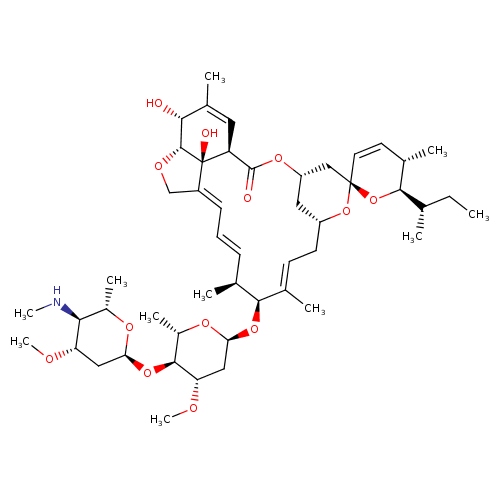
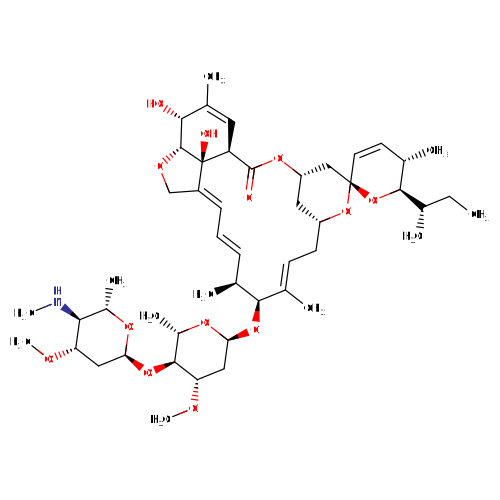
The avermectins are a series of macrocyclic lactone derivatives with potent anthelmintic properties. A commonly used therapy in recent times has been based on oral or parenteral administration of avermectins, which are macrocyclic lactones produced by fermentation of various, carefully prepared laboratory broths using the soil micro-organism Streptomyces avermitilis. They show activity against a broad range of nematodes and arthropod parasites of domestic animals at dose rates of 300 microgram/kg or less. Unlike the macrolide or polyene antibiotics, they lack significant antibacterial or antifungal activity. (1)
It has low solubility in water and extensive non-specific binding. It opens GABA-insensitive chloride channels, reducing membrane resistance and increasing conductance inward. (3)
Active ingredient in some commercial ant bait traps. (1)
Minimum Risk Level
Not Available
Health Effects
Avermectins are neurotoxic and have reproductive and developmental effects. (2)
Symptoms
Avermectins cause irritation of skin and eyes, central nervous system depression (incoordination, tremors, lethargy, excitation, pupil dilation, coma), vomiting, convulsions and/or tremors, and respiratory failure at high doses. (2)