Record Information
Version1.0
Creation Date2009-03-06 18:59:16 UTC
Update Date2026-05-14 20:06:16 UTC
Accession NumberCHEM000563
Identification
Common NameQuinoline
ClassSmall Molecule
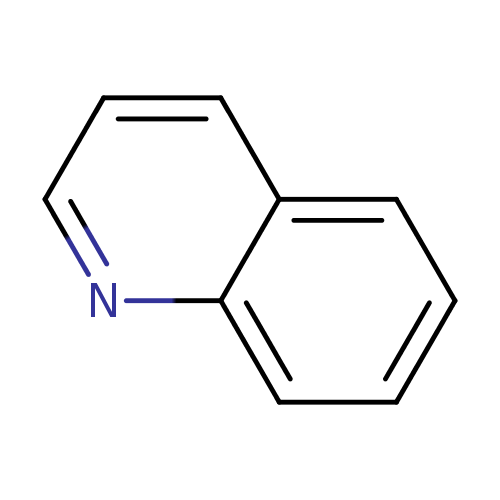
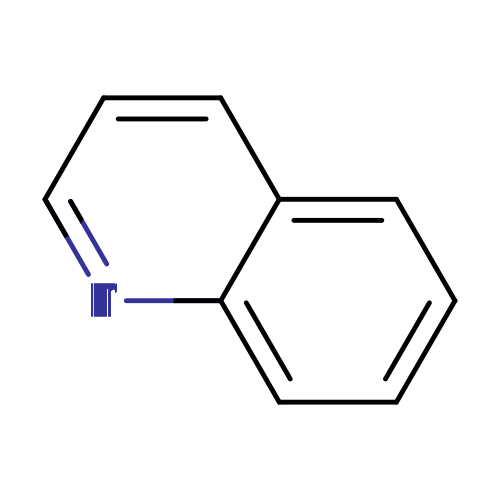
DescriptionQuinoline is found in alcoholic beverages. Quinoline is an alkaloid from various plant species including Mentha species. Also present in cocoa, black tea and scotch whiskey. Quinoline is a flavouring ingredient Quinoline is a heterocyclic aromatic organic compound. It has the formula C9H7N and is a colourless hygroscopic liquid with a strong odour. Aged samples, if exposed to light, become yellow and later brown. Quinoline is only slightly soluble in cold water but dissolves readily in hot water and most organic solvents. Quinoline is mainly used as a building block to other specialty chemicals. Approximately 4 tonnes are produced annually according to a report published in 2005.[citation needed] Its principal use is as a precursor to 8-hydroxyquinoline, which is a versatile chelating agent and precursor to pesticides. Its 2- and 4-methyl derivatives are precursors to cyanine dyes. Oxidation of quinoline affords quinolinic acid (pyridine-2,3-dicarboxylic acid), a precursor to the herbicide sold under the name Assert. Quinoline has been shown to exhibit catabolic, anti-microbial, anti-tumor, anti-fungal and anti-cancer functions (4, 5, 6, 7, 8).
Contaminant Sources
  • Clean Air Act Chemicals
  • EAFUS Chemicals
  • FooDB Chemicals
  • HPV EPA Chemicals
  • STOFF IDENT Compounds
  • T3DB toxins
  • ToxCast & Tox21 Chemicals
Contaminant Type
  • Aromatic Hydrocarbon
  • Food Toxin
  • Industrial/Workplace Toxin
  • Metabolite
  • Natural Compound
  • Organic Compound
  • Pesticide
  • Plant Toxin
  • Pollutant
  • Polycyclic Aromatic Hydrocarbon
Chemical Structure
Thumb
Synonyms
ValueSource
Benzo[b]pyridineChEBI
ChinolinChEBI
Quinoline hydrochlorideMeSH
1-AzanaphthaleneHMDB
1-BenzazineHMDB
1-BenzineHMDB
2,3-BenzopyridineHMDB
benzo(b)PyridineHMDB
ChinoleineHMDB
ChinolineHMDB
FEMA 3470HMDB
LeucolHMDB
LeukolHMDB
QuinolinHMDB
Quinoline (8ci,9ci)HMDB
Chemical FormulaC9H7N
Average Molecular Mass129.159 g/mol
Monoisotopic Mass129.058 g/mol
CAS Registry Number91-22-5
IUPAC Namequinoline
Traditional Namecinch
SMILESC1=CC=C2N=CC=CC2=C1
InChI IdentifierInChI=1S/C9H7N/c1-2-6-9-8(4-1)5-3-7-10-9/h1-7H
InChI KeySMWDFEZZVXVKRB-UHFFFAOYSA-N
Chemical Taxonomy
Description belongs to the class of organic compounds known as quinolines and derivatives. Quinolines and derivatives are compounds containing a quinoline moiety, which consists of a benzene ring fused to a pyrimidine ring to form benzo[b]azabenzene.
KingdomOrganic compounds
Super ClassOrganoheterocyclic compounds
ClassQuinolines and derivatives
Sub ClassNot Available
Direct ParentQuinolines and derivatives
Alternative Parents
Substituents
  • Quinoline
  • Benzenoid
  • Pyridine
  • Heteroaromatic compound
  • Azacycle
  • Organic nitrogen compound
  • Organopnictogen compound
  • Hydrocarbon derivative
  • Organonitrogen compound
  • Aromatic heteropolycyclic compound
Molecular FrameworkAromatic heteropolycyclic compounds
External Descriptors
Biological Properties
StatusDetected and Not Quantified
OriginExogenous
Cellular Locations
  • Cytoplasm
  • Extracellular
  • Membrane
Biofluid LocationsNot Available
Tissue LocationsNot Available
PathwaysNot Available
ApplicationsNot Available
Biological RolesNot Available
Chemical RolesNot Available
Physical Properties
StateLiquid
AppearanceColorless solid.
Experimental Properties
PropertyValue
Melting Point-15.6°C
Boiling Point238°C (460.4°F)
Solubility6.11 mg/mL at 25°C
Predicted Properties
PropertyValueSource
Water Solubility3.37 g/LALOGPS
logP2.19ALOGPS
logP2.13ChemAxon
logS-1.6ALOGPS
pKa (Strongest Basic)4.5ChemAxon
Physiological Charge0ChemAxon
Hydrogen Acceptor Count1ChemAxon
Hydrogen Donor Count0ChemAxon
Polar Surface Area12.89 ŲChemAxon
Rotatable Bond Count0ChemAxon
Refractivity39.98 m³·mol⁻¹ChemAxon
Polarizability13.95 ųChemAxon
Number of Rings2ChemAxon
Bioavailability1ChemAxon
Rule of FiveYesChemAxon
Ghose FilterNoChemAxon
Veber's RuleYesChemAxon
MDDR-like RuleNoChemAxon
Spectra
Spectra
Spectrum TypeDescriptionSplash KeyView
GC-MSGC-MS Spectrum - EI-B (Non-derivatized)splash10-004i-4900000000-6650a64dcfaff97a384fSpectrum
GC-MSGC-MS Spectrum - EI-B (Non-derivatized)splash10-0fb9-9700000000-162da149cecb7471177eSpectrum
GC-MSGC-MS Spectrum - EI-B (Non-derivatized)splash10-004i-0900000000-589a1fb16b83c4fe8115Spectrum
GC-MSGC-MS Spectrum - EI-B (Non-derivatized)splash10-004i-5900000000-f63ba1bba58ccc63c20aSpectrum
GC-MSGC-MS Spectrum - EI-B (Non-derivatized)splash10-004i-4900000000-06d1e2a8216798421e17Spectrum
GC-MSGC-MS Spectrum - EI-B (Non-derivatized)splash10-004i-2900000000-5f026eea98547624a47fSpectrum
GC-MSGC-MS Spectrum - EI-B (Non-derivatized)splash10-004i-4900000000-6650a64dcfaff97a384fSpectrum
GC-MSGC-MS Spectrum - EI-B (Non-derivatized)splash10-0fb9-9700000000-162da149cecb7471177eSpectrum
GC-MSGC-MS Spectrum - EI-B (Non-derivatized)splash10-004i-0900000000-589a1fb16b83c4fe8115Spectrum
GC-MSGC-MS Spectrum - EI-B (Non-derivatized)splash10-004i-5900000000-f63ba1bba58ccc63c20aSpectrum
GC-MSGC-MS Spectrum - EI-B (Non-derivatized)splash10-004i-4900000000-06d1e2a8216798421e17Spectrum
GC-MSGC-MS Spectrum - EI-B (Non-derivatized)splash10-004i-2900000000-5f026eea98547624a47fSpectrum
Predicted GC-MSPredicted GC-MS Spectrum - GC-MS (Non-derivatized) - 70eV, Positivesplash10-0fb9-0900000000-5bfb659404cb36aa304fSpectrum
Predicted GC-MSPredicted GC-MS Spectrum - GC-MS (Non-derivatized) - 70eV, PositiveNot AvailableSpectrum
LC-MS/MSLC-MS/MS Spectrum - LC-ESI-QQ , positivesplash10-001i-0900000000-f80d7ca98d120817a55cSpectrum
LC-MS/MSLC-MS/MS Spectrum - LC-ESI-QQ , positivesplash10-001i-0900000000-027cf5e71116c5fcb4b6Spectrum
LC-MS/MSLC-MS/MS Spectrum - LC-ESI-QQ , positivesplash10-001i-0900000000-b503a364d204d8e6ac8cSpectrum
LC-MS/MSLC-MS/MS Spectrum - LC-ESI-QQ , positivesplash10-004i-8900000000-49aa8f9641f21e97fc43Spectrum
LC-MS/MSLC-MS/MS Spectrum - LC-ESI-QQ , positivesplash10-004i-9100000000-25969cc68eb743f7f3dfSpectrum
LC-MS/MSLC-MS/MS Spectrum - ESI-ITFT , positivesplash10-001i-0900000000-f501f97d31380e58bdabSpectrum
LC-MS/MSLC-MS/MS Spectrum - ESI-ITFT , positivesplash10-001i-0900000000-7ca73e074935b2add2f4Spectrum
LC-MS/MSLC-MS/MS Spectrum - ESI-ITFT , positivesplash10-001i-0900000000-a45f6683fe6d4b0b16aaSpectrum
LC-MS/MSLC-MS/MS Spectrum - ESI-ITFT , positivesplash10-001i-0900000000-7026ebf0519b2fba0024Spectrum
LC-MS/MSLC-MS/MS Spectrum - ESI-ITFT , positivesplash10-001i-1900000000-09e171e9467e40b551d2Spectrum
LC-MS/MSLC-MS/MS Spectrum - ESI-ITFT , positivesplash10-0fai-4900000000-7b17c392210401ee485dSpectrum
LC-MS/MSLC-MS/MS Spectrum - ESI-ITFT , positivesplash10-0fba-9700000000-581ee9456c67170a0520Spectrum
LC-MS/MSLC-MS/MS Spectrum - APCI-ITFT , positivesplash10-001i-0900000000-f501f97d31380e58bdabSpectrum
Predicted LC-MS/MSPredicted LC-MS/MS Spectrum - 10V, Positivesplash10-001i-0900000000-6596d88125ed21410c6dSpectrum
Predicted LC-MS/MSPredicted LC-MS/MS Spectrum - 20V, Positivesplash10-001i-0900000000-6c1f93bf41d02c99ce73Spectrum
Predicted LC-MS/MSPredicted LC-MS/MS Spectrum - 40V, Positivesplash10-0ue9-3900000000-7293ce5372993b70ea55Spectrum
Predicted LC-MS/MSPredicted LC-MS/MS Spectrum - 10V, Negativesplash10-004i-0900000000-f7d71396a8498e54005aSpectrum
Predicted LC-MS/MSPredicted LC-MS/MS Spectrum - 20V, Negativesplash10-004i-0900000000-f7d71396a8498e54005aSpectrum
Predicted LC-MS/MSPredicted LC-MS/MS Spectrum - 40V, Negativesplash10-004i-1900000000-678317c07cf462bbdfa9Spectrum
MSMass Spectrum (Electron Ionization)splash10-004i-4900000000-f18da8f2e791614f0c9aSpectrum
1D NMR1H NMR SpectrumNot AvailableSpectrum
1D NMR13C NMR SpectrumNot AvailableSpectrum
1D NMR1H NMR SpectrumNot AvailableSpectrum
1D NMR13C NMR SpectrumNot AvailableSpectrum
1D NMR1H NMR SpectrumNot AvailableSpectrum
1D NMR13C NMR SpectrumNot AvailableSpectrum
1D NMR1H NMR SpectrumNot AvailableSpectrum
1D NMR13C NMR SpectrumNot AvailableSpectrum
1D NMR1H NMR SpectrumNot AvailableSpectrum
1D NMR13C NMR SpectrumNot AvailableSpectrum
1D NMR1H NMR SpectrumNot AvailableSpectrum
1D NMR13C NMR SpectrumNot AvailableSpectrum
1D NMR1H NMR SpectrumNot AvailableSpectrum
1D NMR13C NMR SpectrumNot AvailableSpectrum
1D NMR1H NMR SpectrumNot AvailableSpectrum
1D NMR13C NMR SpectrumNot AvailableSpectrum
1D NMR1H NMR SpectrumNot AvailableSpectrum
1D NMR13C NMR SpectrumNot AvailableSpectrum
1D NMR1H NMR SpectrumNot AvailableSpectrum
1D NMR13C NMR SpectrumNot AvailableSpectrum
1D NMR1H NMR SpectrumNot AvailableSpectrum
Toxicity Profile
Route of ExposureOral (9) ; inhalation (9)
Mechanism of ToxicityThe ability of PAH's to bind to blood proteins such as albumin allows them to be transported throughout the body. Many PAH's induce the expression of cytochrome P450 enzymes, especially CYP1A1, CYP1A2, and CYP1B1, by binding to the aryl hydrocarbon receptor or glycine N-methyltransferase protein. These enzymes metabolize PAH's into their toxic intermediates. The reactive metabolites of PAHs (epoxide intermediates, dihydrodiols, phenols, quinones, and their various combinations) covalently bind to DNA and other cellular macromolecules, initiating mutagenesis and carcinogenesis. (9, 10, 2, 3)
MetabolismPAH metabolism occurs in all tissues, usually by cytochrome P-450 and its associated enzymes. PAHs are metabolized into reactive intermediates, which include epoxide intermediates, dihydrodiols, phenols, quinones, and their various combinations. The phenols, quinones, and dihydrodiols can all be conjugated to glucuronides and sulfate esters; the quinones also form glutathione conjugates. (9)
Toxicity ValuesLD50: 331 mg/kg (Oral, Rat) (12) LD50: 540 mg/kg (Dermal, Rabbit) (12)
Lethal DoseNot Available
Carcinogenicity (IARC Classification)Not listed by IARC. IARC has evaluated related PAHs (11).
Uses/SourcesPAHs are released into the environment via the combustion of fossil fuels, coke oven emissions and vehicle exhausts, as well as naturally from forest fires and vocanic eruptions. PAHs from these sources may contaminate nearly water systems. They are also found in coal tar and charbroiled food. (9)
Minimum Risk LevelNot Available
Health EffectsPAHs are carcinogens and have been associated with the increased risk of skin, respiratory tract, bladder, stomach, and kidney cancers. They may also cause reproductive effects and depress the immune system. (9)
SymptomsAcute exposure to PAHs causes irritation and inflammation of the skin and lung tissue. (1)
TreatmentThere is no know antidote for PAHs. Exposure is usually handled with symptomatic treatment. (9)
Concentrations
Not Available
DrugBank IDNot Available
HMDB IDHMDB0033731
FooDB IDFDB011854
Phenol Explorer IDNot Available
KNApSAcK IDC00026478
BiGG IDNot Available
BioCyc IDQUINOLINE
METLIN IDNot Available
PDB IDNot Available
Wikipedia LinkQuinoline
Chemspider ID6780
ChEBI ID17362
PubChem Compound ID7047
Kegg Compound IDC06413
YMDB IDNot Available
ECMDB IDNot Available
References
Synthesis ReferenceNot Available
MSDSLink
General References
1. https://www.ncbi.nlm.nih.gov/pubmed/?term=16406213
2. https://www.ncbi.nlm.nih.gov/pubmed/?term=8070089
3. Ruger A, Schwarz G, Lingens F: Microbial metabolism of quinoline and related compounds. XIX. Degradation of 4-methylquinoline and quinoline by Pseudomonas putida K1. Biol Chem Hoppe Seyler. 1993 Jul;374(7):479-88.
4. Van Caekenberghe DL, Pattyn SR: In vitro activity of ciprofloxacin compared with those of other new fluorinated piperazinyl-substituted quinoline derivatives. Antimicrob Agents Chemother. 1984 Apr;25(4):518-21.
5. Xu XD, Hu XR, Yang JS: [Review of studies on active components of antitumor medicinal plants]. Zhongguo Zhong Yao Za Zhi. 2008 Sep;33(17):2073-81.
6. Musiol R, Serda M, Hensel-Bielowka S, Polanski J: Quinoline-based antifungals. Curr Med Chem. 2010;17(18):1960-73.
7. Solomon VR, Lee H: Quinoline as a privileged scaffold in cancer drug discovery. Curr Med Chem. 2011;18(10):1488-508.
8. Yannai, Shmuel. (2004) Dictionary of food compounds with CD-ROM: Additives, flavors, and ingredients. Boca Raton: Chapman & Hall/CRC.