Record Information
Version1.0
Creation Date2009-03-06 18:59:15 UTC
Update Date2026-03-26 20:25:09 UTC
Accession NumberCHEM000557
Identification
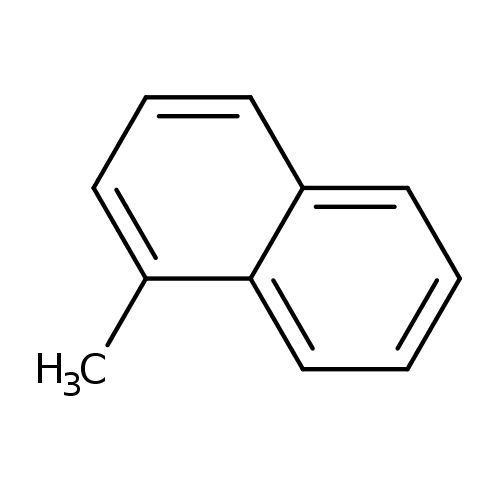
Common Name1-Methylnaphthalene
ClassSmall Molecule
Description1-Methylnaphthalene is found in black walnut. 1-Methylnaphthalene is a flavouring ingredient.
Contaminant Sources
  • EAFUS Chemicals
  • FooDB Chemicals
  • HPV EPA Chemicals
  • My Exposome Chemicals
  • OECD HPV Chemicals
  • STOFF IDENT Compounds
  • Sludge Chemicals
  • T3DB toxins
  • ToxCast & Tox21 Chemicals
Contaminant Type
  • Aromatic Hydrocarbon
  • Food Toxin
  • Metabolite
  • Natural Compound
  • Organic Compound
  • Pollutant
  • Polycyclic Aromatic Hydrocarbon
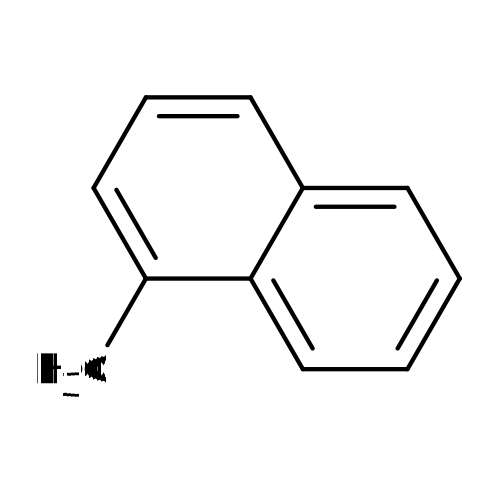
Chemical Structure
Thumb
Synonyms
ValueSource
alpha-MethylnaphthaleneChEBI
a-MethylnaphthaleneGenerator
Α-methylnaphthaleneGenerator
1-Methyl naphthaleneHMDB
1-Methyl-naphthaleneHMDB
alpha-Methyl naphthalenesHMDB
alpha-Methyl-naphthaleneHMDB
FEMA 3193HMDB
Methyl naphthaleneHMDB
Methyl-1-naphthaleneHMDB
Methyl-naphthaleneHMDB
Naphthalene, methyl-, homopolymerHMDB
PolymethylnaphthaleneHMDB
Chemical FormulaC11H10
Average Molecular Mass142.197 g/mol
Monoisotopic Mass142.078 g/mol
CAS Registry Number90-12-0
IUPAC Name1-methylnaphthalene
Traditional Name1-methylnaphthalene
SMILESCC1=CC=CC2=CC=CC=C12
InChI IdentifierInChI=1S/C11H10/c1-9-5-4-7-10-6-2-3-8-11(9)10/h2-8H,1H3
InChI KeyQPUYECUOLPXSFR-UHFFFAOYSA-N
Chemical Taxonomy
Description belongs to the class of organic compounds known as naphthalenes. Naphthalenes are compounds containing a naphthalene moiety, which consists of two fused benzene rings.
KingdomOrganic compounds
Super ClassBenzenoids
ClassNaphthalenes
Sub ClassNot Available
Direct ParentNaphthalenes
Alternative Parents
Substituents
  • Naphthalene
  • Aromatic hydrocarbon
  • Polycyclic hydrocarbon
  • Unsaturated hydrocarbon
  • Hydrocarbon
  • Aromatic homopolycyclic compound
Molecular FrameworkAromatic homopolycyclic compounds
External Descriptors
Biological Properties
StatusDetected and Not Quantified
OriginExogenous
Cellular Locations
  • Membrane
Biofluid LocationsNot Available
Tissue LocationsNot Available
PathwaysNot Available
ApplicationsNot Available
Biological Roles
Chemical RolesNot Available
Physical Properties
StateLiquid
AppearanceColorless solid.
Experimental Properties
PropertyValue
Melting Point-22°C
Boiling Point244.6°C (472.3°F)
Solubility0.0258 mg/mL at 25°C
Predicted Properties
PropertyValueSource
Water Solubility0.016 g/LALOGPS
logP3.84ALOGPS
logP3.48ChemAxon
logS-3.9ALOGPS
Physiological Charge0ChemAxon
Hydrogen Acceptor Count0ChemAxon
Hydrogen Donor Count0ChemAxon
Polar Surface Area0 ŲChemAxon
Rotatable Bond Count0ChemAxon
Refractivity47.55 m³·mol⁻¹ChemAxon
Polarizability16.61 ųChemAxon
Number of Rings2ChemAxon
Bioavailability1ChemAxon
Rule of FiveYesChemAxon
Ghose FilterNoChemAxon
Veber's RuleYesChemAxon
MDDR-like RuleNoChemAxon
Spectra
Spectra
Spectrum TypeDescriptionSplash KeyView
GC-MSGC-MS Spectrum - EI-B (Non-derivatized)splash10-0006-5900000000-1053593aad42a77aa98bSpectrum
GC-MSGC-MS Spectrum - EI-B (Non-derivatized)splash10-0006-2900000000-56264ce7fb87f61d59e3Spectrum
GC-MSGC-MS Spectrum - EI-B (Non-derivatized)splash10-0006-3900000000-466eebbbc710f9d74e3bSpectrum
GC-MSGC-MS Spectrum - EI-B (Non-derivatized)splash10-0006-3900000000-5b7a1e8903022a3f5a57Spectrum
GC-MSGC-MS Spectrum - EI-B (Non-derivatized)splash10-0006-0900000000-e017871c9adc6ee00fb9Spectrum
GC-MSGC-MS Spectrum - CI-B (Non-derivatized)splash10-0006-0900000000-e2ebef06c838787a1720Spectrum
GC-MSGC-MS Spectrum - EI-B (Non-derivatized)splash10-0006-5900000000-1053593aad42a77aa98bSpectrum
GC-MSGC-MS Spectrum - EI-B (Non-derivatized)splash10-0006-2900000000-56264ce7fb87f61d59e3Spectrum
GC-MSGC-MS Spectrum - EI-B (Non-derivatized)splash10-0006-3900000000-466eebbbc710f9d74e3bSpectrum
GC-MSGC-MS Spectrum - EI-B (Non-derivatized)splash10-0006-3900000000-5b7a1e8903022a3f5a57Spectrum
GC-MSGC-MS Spectrum - EI-B (Non-derivatized)splash10-0006-0900000000-e017871c9adc6ee00fb9Spectrum
GC-MSGC-MS Spectrum - CI-B (Non-derivatized)splash10-0006-0900000000-e2ebef06c838787a1720Spectrum
Predicted GC-MSPredicted GC-MS Spectrum - GC-MS (Non-derivatized) - 70eV, Positivesplash10-0006-0900000000-0da70ea2233c3affb638Spectrum
Predicted GC-MSPredicted GC-MS Spectrum - GC-MS (Non-derivatized) - 70eV, PositiveNot AvailableSpectrum
Predicted LC-MS/MSPredicted LC-MS/MS Spectrum - 10V, Positivesplash10-0006-0900000000-9a9a9f94bee2dbaba3c0Spectrum
Predicted LC-MS/MSPredicted LC-MS/MS Spectrum - 20V, Positivesplash10-0006-0900000000-5692907557a9baf3d257Spectrum
Predicted LC-MS/MSPredicted LC-MS/MS Spectrum - 40V, Positivesplash10-014l-3900000000-7eef39e40fe85545ba50Spectrum
Predicted LC-MS/MSPredicted LC-MS/MS Spectrum - 10V, Negativesplash10-0006-0900000000-4b4ea885969f2a72f1b7Spectrum
Predicted LC-MS/MSPredicted LC-MS/MS Spectrum - 20V, Negativesplash10-0006-0900000000-4b4ea885969f2a72f1b7Spectrum
Predicted LC-MS/MSPredicted LC-MS/MS Spectrum - 40V, Negativesplash10-0006-0900000000-e204af06be24fa547ed9Spectrum
Predicted LC-MS/MSPredicted LC-MS/MS Spectrum - 10V, Positivesplash10-0006-0900000000-c989a442d4404542ed61Spectrum
Predicted LC-MS/MSPredicted LC-MS/MS Spectrum - 20V, Positivesplash10-0006-2900000000-4c5f4b7cbec6cfd38b14Spectrum
Predicted LC-MS/MSPredicted LC-MS/MS Spectrum - 40V, Positivesplash10-00mo-9800000000-c7005946673c7bd7a926Spectrum
Predicted LC-MS/MSPredicted LC-MS/MS Spectrum - 10V, Negativesplash10-0006-0900000000-84dab5fd9e005e323db0Spectrum
Predicted LC-MS/MSPredicted LC-MS/MS Spectrum - 20V, Negativesplash10-0006-0900000000-84dab5fd9e005e323db0Spectrum
Predicted LC-MS/MSPredicted LC-MS/MS Spectrum - 40V, Negativesplash10-0006-1900000000-3a4e7194998e40dc39cfSpectrum
MSMass Spectrum (Electron Ionization)splash10-0006-2900000000-53cda581a6605326e48cSpectrum
1D NMR1H NMR SpectrumNot AvailableSpectrum
1D NMR13C NMR SpectrumNot AvailableSpectrum
Toxicity Profile
Route of ExposureOral (18) ; inhalation (18)
Mechanism of ToxicityThe ability of PAH's to bind to blood proteins such as albumin allows them to be transported throughout the body. Many PAH's induce the expression of cytochrome P450 enzymes, especially CYP1A1, CYP1A2, and CYP1B1, by binding to the aryl hydrocarbon receptor or glycine N-methyltransferase protein. These enzymes metabolize PAH's into their toxic intermediates. The reactive metabolites of PAHs (epoxide intermediates, dihydrodiols, phenols, quinones, and their various combinations) covalently bind to DNA and other cellular macromolecules, initiating mutagenesis and carcinogenesis. (18, 19, 2, 3)
MetabolismPAH metabolism occurs in all tissues, usually by cytochrome P-450 and its associated enzymes. PAHs are metabolized into reactive intermediates, which include epoxide intermediates, dihydrodiols, phenols, quinones, and their various combinations. The phenols, quinones, and dihydrodiols can all be conjugated to glucuronides and sulfate esters; the quinones also form glutathione conjugates. (18)
Toxicity ValuesLD50: 1840 mg/kg (Oral, Rat) (21)
Lethal DoseNot Available
Carcinogenicity (IARC Classification)No indication of carcinogenicity (not listed by IARC). (20)
Uses/SourcesPAHs are released into the environment via the combustion of fossil fuels, coke oven emissions and vehicle exhausts, as well as naturally from forest fires and vocanic eruptions. PAHs from these sources may contaminate nearly water systems. They are also found in coal tar and charbroiled food. (18)
Minimum Risk LevelNot Available
Health EffectsPAHs are carcinogens and have been associated with the increased risk of skin, respiratory tract, bladder, stomach, and kidney cancers. They may also cause reproductive effects and depress the immune system. (18)
SymptomsAcute exposure to PAHs causes irritation and inflammation of the skin and lung tissue. (1)
TreatmentThere is no know antidote for PAHs. Exposure is usually handled with symptomatic treatment. (18)
Concentrations
Not Available
DrugBank IDNot Available
HMDB IDHMDB0032860
FooDB IDFDB010838
Phenol Explorer IDNot Available
KNApSAcK IDC00050647
BiGG IDNot Available
BioCyc IDNot Available
METLIN IDNot Available
PDB IDNot Available
Wikipedia Link1-Methylnaphthalene
Chemspider ID6736
ChEBI ID50717
PubChem Compound ID7002
Kegg Compound IDC14082
YMDB IDNot Available
ECMDB IDNot Available
References
Synthesis ReferenceNot Available
MSDSLink
General References
1. https://www.ncbi.nlm.nih.gov/pubmed/?term=19823936
2. https://www.ncbi.nlm.nih.gov/pubmed/?term=22367023
3. https://www.ncbi.nlm.nih.gov/pubmed/?term=22863852
4. https://www.ncbi.nlm.nih.gov/pubmed/?term=24011230
5. Adachi K: Mass fragmentographic determination of polymethylnaphthalene and polymethylphenanthrene in a crude oil and in marine organisms. Bull Environ Contam Toxicol. 1980 Sep;25(3):416-23.
6. Jin M, Kijima A, Suzuki Y, Hibi D, Ishii Y, Nohmi T, Nishikawa A, Ogawa K, Umemura T: In vivo genotoxicity of 1-methylnaphthalene from comprehensive toxicity studies with B6C3F1 gpt delta mice. J Toxicol Sci. 2012;37(4):711-21.
7. Kameda T, Inazu K, Asano K, Murota M, Takenaka N, Sadanaga Y, Hisamatsu Y, Bandow H: Prediction of rate constants for the gas phase reactions of triphenylene with OH and NO3 radicals using a relative rate method in CCl4 liquid phase-system. Chemosphere. 2013 Jan;90(2):766-71. doi: 10.1016/j.chemosphere.2012.09.071. Epub 2012 Oct 22.
8. Kwon HC, Kwon JH: Measuring aqueous solubility in the presence of small cosolvent volume fractions by passive dosing. Environ Sci Technol. 2012 Nov 20;46(22):12550-6. doi: 10.1021/es3035363. Epub 2012 Oct 29.
9. Wang Y, Lonard DM, Yu Y, Chow DC, Palzkill TG, O'Malley BW: Small molecule inhibition of the steroid receptor coactivators, SRC-3 and SRC-1. Mol Endocrinol. 2011 Dec;25(12):2041-53. doi: 10.1210/me.2011-1222. Epub 2011 Nov 3.
10. Shintani M, Matsuo Y, Sakuraba S, Matubayasi N: Interaction of naphthalene derivatives with lipids in membranes studied by the 1H-nuclear Overhauser effect and molecular dynamics simulation. Phys Chem Chem Phys. 2012 Oct 28;14(40):14049-60. Epub 2012 Sep 17.
11. Kleemann R, Meckenstock RU: Anaerobic naphthalene degradation by Gram-positive, iron-reducing bacteria. FEMS Microbiol Ecol. 2011 Dec;78(3):488-96. doi: 10.1111/j.1574-6941.2011.01193.x. Epub 2011 Sep 22.
12. Govindarajan M, Karabacak M: FT-IR, FT-Raman and UV spectral investigation: computed frequency estimation analysis and electronic structure calculations on 1-bromo-2-methylnaphthalene. Spectrochim Acta A Mol Biomol Spectrosc. 2013 Jan 15;101:314-24. doi: 10.1016/j.saa.2012.09.099. Epub 2012 Oct 12.
13. Lopez ER, Pensado AS, Fernandez J, Harris KR: On the density scaling of pVT data and transport properties for molecular and ionic liquids. J Chem Phys. 2012 Jun 7;136(21):214502. doi: 10.1063/1.4720070.
14. Wang LF, Wu QJ, Zu LL: [Laser-induced fluorescence of 1-methylnaphthalene in a supersonic jet expansion]. Guang Pu Xue Yu Guang Pu Fen Xi. 2011 Nov;31(11):2965-8.
15. Liu J, Tang X, Zhang Y, Zhao W: Determination of the volatile composition in brown millet, milled millet and millet bran by gas chromatography/mass spectrometry. Molecules. 2012 Feb 24;17(3):2271-82. doi: 10.3390/molecules17032271.
16. Molloy JK, Kotova O, Peacock RD, Gunnlaugsson T: Synthesis of luminescent homo-dinuclear cationic lanthanide cyclen complexes bearing amide pendant arms through the use of copper catalysed (1,3-Huisgen, CuAAC) click chemistry. Org Biomol Chem. 2012 Jan 14;10(2):314-22. doi: 10.1039/c1ob06203d. Epub 2011 Nov 9.
17. Berdugo-Clavijo C, Dong X, Soh J, Sensen CW, Gieg LM: Methanogenic biodegradation of two-ringed polycyclic aromatic hydrocarbons. FEMS Microbiol Ecol. 2012 Jul;81(1):124-33. doi: 10.1111/j.1574-6941.2012.01328.x. Epub 2012 Mar 8.
18. Baedecker MJ, Eganhouse RP, Bekins BA, Delin GN: Loss of volatile hydrocarbons from an LNAPL oil source. J Contam Hydrol. 2011 Nov 1;126(3-4):140-52. doi: 10.1016/j.jconhyd.2011.06.006. Epub 2011 Jul 19.
19. Yannai, Shmuel. (2004) Dictionary of food compounds with CD-ROM: Additives, flavors, and ingredients. Boca Raton: Chapman & Hall/CRC.