Record Information
Version1.0
Creation Date2009-03-06 18:58:41 UTC
Update Date2026-03-31 18:49:47 UTC
Accession NumberCHEM000332
Identification
Common NameBiphenyl
ClassSmall Molecule
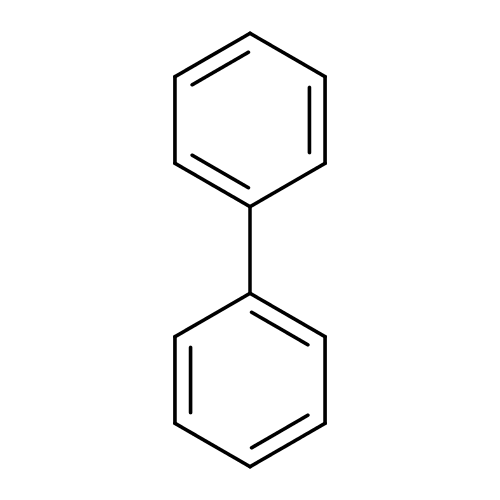
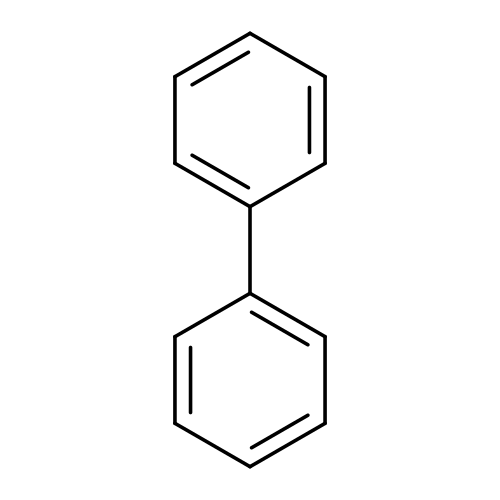
DescriptionBiphenyl is found in alcoholic beverages. Fungistat, especially for citrus fruits. Biphenyl is used as food preservative and flavouring agent. Biphenyl is detected in bilberry, wine grape, carrot, peas, rum, potato, bell pepper, tomato, butter, milk, smoked fatty fish, cocoa, coffee, roast peanuts, olive, buckwheat and tamarind. Generally, the fruit packaging is impregnated with biphenyl, which evaporates into the air space surrounding the fruit. Some biphenyl is absorbed by the fruit skins Biphenyl has been shown to exhibit anti-coagulant and catabolic functions (5, 6). Biphenyl belongs to the family of Biphenyls and Derivatives. These are organic compounds containing to benzene rings linked together by a C-C bond.
Contaminant Sources
  • Clean Air Act Chemicals
  • EAFUS Chemicals
  • FooDB Chemicals
  • HPV EPA Chemicals
  • My Exposome Chemicals
  • OECD HPV Chemicals
  • STOFF IDENT Compounds
  • T3DB toxins
  • ToxCast & Tox21 Chemicals
Contaminant Type
  • Aromatic Hydrocarbon
  • Coolant
  • Food Toxin
  • Industrial/Workplace Toxin
  • Metabolite
  • Natural Compound
  • Organic Compound
  • Organochloride
  • Plasticizer
  • Pollutant
  • Polychlorinated Biphenyl
Chemical Structure
Thumb
Synonyms
ValueSource
1,1'-BiphenylChEBI
1,1'-DiphenylChEBI
e230ChEBI
PhenylbenzeneChEBI
DiphenylMeSH
Diphenyl, 14C-labeledMeSH
1, 1'-DiphenylHMDB
1,1'-Biphenyl, 9ciHMDB
1,1'-Biphenyl, butenylatedHMDB
1,1-BiphenylHMDB
Aromatic hydrocarbons, biphenyl-richHMDB
BibenzeneHMDB
Biphenyl-ul-14CHMDB
BNLHMDB
Butenylated 1,1'-biphenylHMDB
Carolid alHMDB
FEMA 3129HMDB
LemoneneHMDB
Phenador-XHMDB
PHPHHMDB
Tetrosin lyHMDB
XeneneHMDB
Chemical FormulaC12H10
Average Molecular Mass154.208 g/mol
Monoisotopic Mass154.078 g/mol
CAS Registry Number92-52-4
IUPAC Name1,1'-biphenyl
Traditional Namediphenyl
SMILESC1=CC=C(C=C1)C1=CC=CC=C1
InChI IdentifierInChI=1S/C12H10/c1-3-7-11(8-4-1)12-9-5-2-6-10-12/h1-10H
InChI KeyZUOUZKKEUPVFJK-UHFFFAOYSA-N
Chemical Taxonomy
Description belongs to the class of organic compounds known as biphenyls and derivatives. These are organic compounds containing to benzene rings linked together by a C-C bond.
KingdomOrganic compounds
Super ClassBenzenoids
ClassBenzene and substituted derivatives
Sub ClassBiphenyls and derivatives
Direct ParentBiphenyls and derivatives
Alternative Parents
Substituents
  • Biphenyl
  • Aromatic hydrocarbon
  • Unsaturated hydrocarbon
  • Hydrocarbon
  • Aromatic homomonocyclic compound
Molecular FrameworkAromatic homomonocyclic compounds
External Descriptors
Biological Properties
StatusDetected and Not Quantified
OriginExogenous
Cellular Locations
  • Membrane
Biofluid LocationsNot Available
Tissue LocationsNot Available
PathwaysNot Available
Applications
Biological Roles
Chemical RolesNot Available
Physical Properties
StateSolid
AppearanceWhite scales (2).
Experimental Properties
PropertyValue
Melting Point71°C
Boiling Point254.5°C (490.1°F)
Solubility0.00748 mg/mL at 25°C
Predicted Properties
PropertyValueSource
Water Solubility0.015 g/LALOGPS
logP4.02ALOGPS
logP3.62ChemAxon
logS-4ALOGPS
Physiological Charge0ChemAxon
Hydrogen Acceptor Count0ChemAxon
Hydrogen Donor Count0ChemAxon
Polar Surface Area0 ŲChemAxon
Rotatable Bond Count1ChemAxon
Refractivity51.19 m³·mol⁻¹ChemAxon
Polarizability17.96 ųChemAxon
Number of Rings2ChemAxon
Bioavailability1ChemAxon
Rule of FiveYesChemAxon
Ghose FilterNoChemAxon
Veber's RuleYesChemAxon
MDDR-like RuleNoChemAxon
Spectra
Spectra
Spectrum TypeDescriptionSplash KeyView
GC-MSGC-MS Spectrum - EI-B (Non-derivatized)splash10-0udi-8900000000-e5b4f289ac40ae7f058dSpectrum
GC-MSGC-MS Spectrum - EI-B (Non-derivatized)splash10-0udi-3900000000-11fa850b6e97cb680eddSpectrum
GC-MSGC-MS Spectrum - EI-B (Non-derivatized)splash10-0udi-2900000000-59a470228d72016ea76fSpectrum
GC-MSGC-MS Spectrum - EI-B (Non-derivatized)splash10-0udi-0900000000-01b08aa1cb97e4f8749aSpectrum
GC-MSGC-MS Spectrum - EI-B (Non-derivatized)splash10-0udi-1900000000-4ed186df67a09ce0650fSpectrum
GC-MSGC-MS Spectrum - EI-B (Non-derivatized)splash10-0udi-3900000000-b083707713188a3b56afSpectrum
GC-MSGC-MS Spectrum - EI-B (Non-derivatized)splash10-0udi-2900000000-931304319dd9f132e118Spectrum
GC-MSGC-MS Spectrum - EI-B (Non-derivatized)splash10-0udi-6900000000-f9f4bb759b70237cae7bSpectrum
GC-MSGC-MS Spectrum - CI-B (Non-derivatized)splash10-0a4i-0900000000-5043f3793673c0f94d67Spectrum
GC-MSGC-MS Spectrum - GC-EI-TOF (Non-derivatized)splash10-0udi-0900000000-77f5c79fcaa35c93a5b8Spectrum
GC-MSGC-MS Spectrum - EI-B (Non-derivatized)splash10-0udi-8900000000-e5b4f289ac40ae7f058dSpectrum
GC-MSGC-MS Spectrum - EI-B (Non-derivatized)splash10-0udi-3900000000-11fa850b6e97cb680eddSpectrum
GC-MSGC-MS Spectrum - EI-B (Non-derivatized)splash10-0udi-2900000000-59a470228d72016ea76fSpectrum
GC-MSGC-MS Spectrum - EI-B (Non-derivatized)splash10-0udi-0900000000-01b08aa1cb97e4f8749aSpectrum
GC-MSGC-MS Spectrum - EI-B (Non-derivatized)splash10-0udi-1900000000-4ed186df67a09ce0650fSpectrum
GC-MSGC-MS Spectrum - EI-B (Non-derivatized)splash10-0udi-3900000000-b083707713188a3b56afSpectrum
GC-MSGC-MS Spectrum - EI-B (Non-derivatized)splash10-0udi-2900000000-931304319dd9f132e118Spectrum
GC-MSGC-MS Spectrum - EI-B (Non-derivatized)splash10-0udi-6900000000-f9f4bb759b70237cae7bSpectrum
GC-MSGC-MS Spectrum - CI-B (Non-derivatized)splash10-0a4i-0900000000-5043f3793673c0f94d67Spectrum
GC-MSGC-MS Spectrum - GC-EI-TOF (Non-derivatized)splash10-0udi-0900000000-77f5c79fcaa35c93a5b8Spectrum
Predicted GC-MSPredicted GC-MS Spectrum - GC-MS (Non-derivatized) - 70eV, Positivesplash10-0udi-1900000000-56e5bf47be0405d6836bSpectrum
Predicted GC-MSPredicted GC-MS Spectrum - GC-MS (Non-derivatized) - 70eV, PositiveNot AvailableSpectrum
Predicted LC-MS/MSPredicted LC-MS/MS Spectrum - 10V, Positivesplash10-0a4i-0900000000-edde0dcdd8d1f5866932Spectrum
Predicted LC-MS/MSPredicted LC-MS/MS Spectrum - 20V, Positivesplash10-0a4i-0900000000-e45b080cc4494ae7ace3Spectrum
Predicted LC-MS/MSPredicted LC-MS/MS Spectrum - 40V, Positivesplash10-0pdr-3900000000-eeea5f59ba3188214b77Spectrum
Predicted LC-MS/MSPredicted LC-MS/MS Spectrum - 10V, Negativesplash10-0udi-0900000000-f405b638fff04b7f3ea6Spectrum
Predicted LC-MS/MSPredicted LC-MS/MS Spectrum - 20V, Negativesplash10-0udi-0900000000-f405b638fff04b7f3ea6Spectrum
Predicted LC-MS/MSPredicted LC-MS/MS Spectrum - 40V, Negativesplash10-0udi-0900000000-5347e97776fd82473263Spectrum
Predicted LC-MS/MSPredicted LC-MS/MS Spectrum - 10V, Positivesplash10-0a4i-0900000000-4be39230312831d721f7Spectrum
Predicted LC-MS/MSPredicted LC-MS/MS Spectrum - 20V, Positivesplash10-0a4i-0900000000-49244566d5b6e3ac17e6Spectrum
Predicted LC-MS/MSPredicted LC-MS/MS Spectrum - 40V, Positivesplash10-0ufr-0900000000-d41e8809ac37a183033cSpectrum
Predicted LC-MS/MSPredicted LC-MS/MS Spectrum - 10V, Negativesplash10-0udi-0900000000-8b214a52c8e78f3210f4Spectrum
Predicted LC-MS/MSPredicted LC-MS/MS Spectrum - 20V, Negativesplash10-0udi-0900000000-8b214a52c8e78f3210f4Spectrum
Predicted LC-MS/MSPredicted LC-MS/MS Spectrum - 40V, Negativesplash10-0udi-0900000000-43cb10c15248f4da21d0Spectrum
MSMass Spectrum (Electron Ionization)splash10-0udi-3900000000-92b73f1f35424a0fd73dSpectrum
1D NMR1H NMR SpectrumNot AvailableSpectrum
1D NMR13C NMR SpectrumNot AvailableSpectrum
1D NMR1H NMR SpectrumNot AvailableSpectrum
1D NMR13C NMR SpectrumNot AvailableSpectrum
Toxicity Profile
Route of ExposureInhalation (3) ; dermal (3) ; eye contact (3)
Mechanism of ToxicityBiphenyl alters the permeability properties of mitochondrial membranes (1).
MetabolismDiphenyl is well absorbed through the gastrointestinal tract. It is rapidly metabolized to 4-hydroxybiphenyl, 4-phenyl-catechol and 4,4'-dihydroxyphenyl, which are excreted in urine and bile as glucuronide and mercapturic conjugates. The metabolites of diphenyl, mainly 4-hydroxybiphenyl, are excreted rapidly and almost exclusively in the urine. Acute oral toxicity is moderate. (11, 4).
Toxicity ValuesLD50: 3280 mg/kg (Oral, Rat) (13) LD50: 2400 mg/kg (Oral, Rabbit) (9) LD50: 2500 mg/kg (Dermal, Rabbit) (12)
Lethal DoseNot Available
Carcinogenicity (IARC Classification)No indication of carcinogenicity (not listed by IARC). (8)
Uses/SourcesOrganic synthesis; heat transfer agent; fungistat in packaging of citrus fruit; plant disease control; manufacture of benzidine; dyeing assistant for polyesters (2).
Minimum Risk LevelNot Available
Health EffectsExposure to diphenyl can cause necrosis in the liver and kidney, with regions of cirrhosis in liver; also, degenerative changes in heart muscle, damage to the central and peripheral nervous systems, as well as death can result from diphenyl poisoning (11).
SymptomsSymptoms of diphenyl poisoning include headache, fatigue, abdominal pain with nausea or diarrhea and various symptoms, vomiting and bronchitis (11).
TreatmentConsider gastric lavage, after ingestion of a potentially life-threatening amount of poison if it can be performed soon after ingestion. In case of inhalation exposure, move patient to fresh air and monitor for respiratory distress. If cough or difficulty breathing develops, evaluate for respiratory tract irritation, bronchitis, or pneumonitis. Administer oxygen and assist ventilation as required. Treat bronchospasm with inhaled beta2 agonist and oral or parenteral corticosteroids. In case of eye exposure, irrigate exposed eyes with copious amounts of room temperature water for at least 15 minutes. I f the exposure occurred through dermal contact, remove contaminated clothing and wash exposed area thoroughly with soap and water. (10)
Concentrations
Not Available
DrugBank IDNot Available
HMDB IDHMDB0034437
FooDB IDFDB012838
Phenol Explorer IDNot Available
KNApSAcK IDC00014866
BiGG IDNot Available
BioCyc IDBIPHENYL
METLIN IDNot Available
PDB IDBNL
Wikipedia LinkBiphenyl
Chemspider ID6828
ChEBI ID17097
PubChem Compound ID7095
Kegg Compound IDC06588
YMDB IDYMDB15969
ECMDB IDM2MDB004636
References
Synthesis ReferenceNot Available
MSDSLink
General References
1. https://www.ncbi.nlm.nih.gov/pubmed/?term=21337247
2. https://www.ncbi.nlm.nih.gov/pubmed/?term=21575716
3. Jia ZJ, Wu Y, Huang W, Zhang P, Clizbe LA, Goldman EA, Sinha U, Arfsten AE, Edwards ST, Alphonso M, Hutchaleelaha A, Scarborough RM, Zhu BY: 1-(2-Naphthyl)-1H-pyrazole-5-carboxylamides as potent factor Xa inhibitors. Part 2: A survey of P4 motifs. Bioorg Med Chem Lett. 2004 Mar 8;14(5):1221-7.
4. Kosono S, Maeda M, Fuji F, Arai H, Kudo T: Three of the seven bphC genes of Rhodococcus erythropolis TA421, isolated from a termite ecosystem, are located on an indigenous plasmid associated with biphenyl degradation. Appl Environ Microbiol. 1997 Aug;63(8):3282-5.
5. Yannai, Shmuel. (2004) Dictionary of food compounds with CD-ROM: Additives, flavors, and ingredients. Boca Raton: Chapman & Hall/CRC.