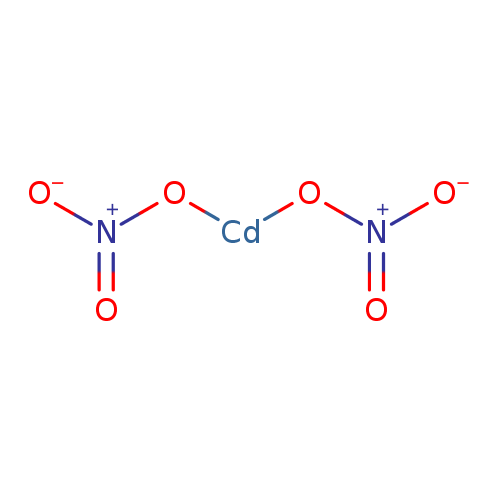
Cadmium nitrate is a nitrate of cadmium used mainly to prepare other cadmium salts. It is also used for coloring glass and porcelain and as a flash powder in photography. Cadmium is a transition metal and chemical element with the symbol Cd and atomic number 48. It is found naturally in the earth's crust, though rarely on it's own. Nitrite is a toxic compound known to cause methemoglobinemia. (13, 5, 12)
belongs to the class of inorganic compounds known as transition metal nitrates. These are inorganic compounds in which the largest oxoanion is nitrate, and in which the heaviest atom not in an oxoanion is a transition metal.
Cadmium initially binds to metallothionein and is transported to the kidney. Toxic effects are observed once the concentration of cadmium exceeds that of available metallothionein, and it has also been shown that the cadmium-metallothionein complex may be damaging. Accumulation of cadmium in the kidney results in increased excretion of vital low and high weight molecular proteins. Cadmium is a high affinity zinc analog and can interfere in its biological processes. It also binds to and activates the estrogen receptor, likely stimulating the growth of certain types of cancer cells and causing other estrogenic effects, such as reproductive dysfunction. Cadmium causes cell apoptosis by activating mitogen-activated protein kinases. Nitrate's toxicity is a result of it's conversion to nitrite once in the body. Nitrite causes the autocatalytic oxidation of oxyhemoglobin to hydrogen peroxide and methemoglobin. This elevation of methemoglobin levels is a condition known as methemoglobinemia, and is characterized by tissue hypoxia, as methemoglobin cannot bind oxygen. (4, 14, 6, 1, 2, 3)
Metabolism
Cadmium is absorbed from oral, inhalation, and dermal routes. Cadmium initially binds to metallothionein and albumin and is transported mainly to the kidney and liver. Toxic effects are observed once the concentration of cadmium exceeds that of available metallothionein, and it has also been shown that the cadmium-metallothionein complex may be damaging. Cadmium is not known to undergo any direct metabolic conversion and is excreted unchanged, mainly in the urine. Intake of some amount of nitrates and nitrites is a normal part of the nitrogen cycle in humans. In vivo conversion of nitrates to nitrites can occur in the gastrointestional tract under the right conditions, significantly enhancing nitrates' toxic potency. The major metabolic pathway for nitrate is conversion to nitrite, and then to ammonia. Nitrites, nitrates, and their metabolites are excreted in the urine. (13, 5)
Cadmium nitrate is used mainly to prepare other cadmium salts. It is also used for coloring glass and porcelain and as a flash powder in photography. (12)
Chronic exposure to cadmium fumes can cause chemical pneumonitis, pulmonary edema, and lung diseases such as bronchitis and emphysema. Cadmium also accumulates in the kidneys, causing permanent damage. Loss of bone density also occurs. Nitrate and nitrite poisoning causes methemoglobinemia. Nitrites may cause pregnancy complications and developmental effects. They may also be carcinogenic. (13, 5)
Symptoms
Acute inhalation of cadmium fumes results in metal fume fever, which is characterized by chills, fever, headache, weakness, dryness of the nose and throat, chest pain, and coughing. Ingestion of cadmium causes vomiting and diarrhea. Nitrate and nitrite poisoning causes methemoglobinemia. Symptoms include cyanosis, cardiac dysrhythmias and circulatory failure, and progressive central nervous system (CNS) effects. CNS effects can range from mild dizziness and lethargy to coma and convulsions. (13, 5)
Treatment
Cadmium poisoning is treated by removal from exposure and supportive care. If ingested, induced vomiting or gastric lavage may be performed. Methemoglobinemia can be treated with supplemental oxygen and methylene blue 1% solution administered intravenously slowly over five minutes followed by IV flush with normal saline. Methylene blue restores the iron in hemoglobin to its normal (reduced) oxygen-carrying state. (14, 10)