Record Information
Version1.0
Creation Date2009-03-06 18:58:23 UTC
Update Date2026-03-31 19:11:21 UTC
Accession NumberCHEM000222
Identification
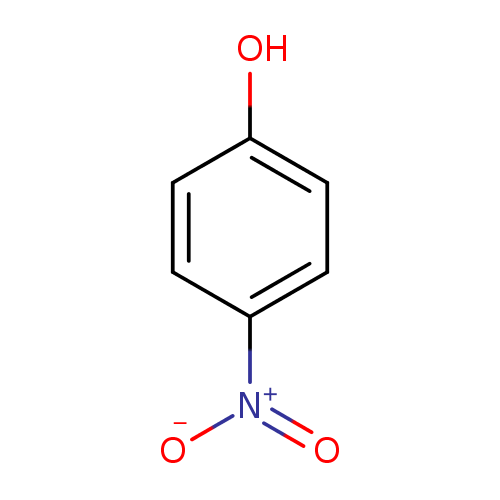
Common Name4-Nitrophenol
ClassSmall Molecule
Description4-Nitrophenol is a phenolic compound that is used mainly to make fungicides and dyes, and to darken leather. It is also used in the synthesis of drugs such as paracetamol, phenetidine, and acetophenetidine. 4-Nitrophenol measurement in urine is used in biological monitoring for establishing the presence and magnitude of exposures to pesticides. (3) (Methods in Biotechnology, 2006,61-78) (22, 23)
Contaminant Sources
  • Clean Air Act Chemicals
  • FooDB Chemicals
  • HMDB Contaminants - Urine
  • HPV EPA Chemicals
  • My Exposome Chemicals
  • STOFF IDENT Compounds
  • Sludge Chemicals
  • Suspected Compounds – Schymanski Project
  • T3DB toxins
  • ToxCast & Tox21 Chemicals
Contaminant Type
  • Aromatic Hydrocarbon
  • Food Toxin
  • Industrial Precursor/Intermediate
  • Industrial/Workplace Toxin
  • Metabolite
  • Nitrite
  • Organic Compound
  • Pesticide
  • Pollutant
  • Synthetic Compound
Chemical Structure
Thumb
Synonyms
ValueSource
4-HydroxynitrobenzeneChEBI
NiphenChEBI
p-HydroxynitrobenzeneChEBI
p-NitrophenolChEBI
ParanitrophenolChEBI
PNPChEBI
MononitrophenolHMDB
1-Hydroxy-4-nitrobenzeneHMDB
4-Nitrophenol, (18)O-labeled CPDHMDB
4-Nitrophenol, 1-(13)C-labeled CPDHMDB
4-Nitrophenol, manganese (2+) saltHMDB
4-Nitrophenol, silver(2+) saltHMDB
4-Nitrophenol, sodium salt, (2:1), dihydrateHMDB
4-Nitrophenol, tin (4+) saltHMDB
4-Nitrophenol, 2,6-(13)C2-labeled CPDHMDB
4-Nitrophenol, 2-(14)C-labeled CPDHMDB
4-Nitrophenol, copper(1+) saltHMDB
4-Nitrophenol, potassium saltHMDB
4-Nitrophenol, tin (2+) saltHMDB
4-Nitrophenol, 14C-labeled CPDHMDB
4-Nitrophenol, ammonium saltHMDB
4-Nitrophenol, ion(1-)HMDB
4-Nitrophenol, ion(1-) hydrideHMDB
4-Nitrophenol, sodium saltHMDB
4-Nitrophenol, 2,6-(14)C2-labeled CPDHMDB
4-Nitrophenol, aluminum saltHMDB
4-Nitrophenol, cesium saltHMDB
4-Nitrophenol, iron(3+) saltHMDB
4-Nitrophenol, lithium saltHMDB
4-Nitrophenol, manganese saltHMDB
4-Nitrophenol, zinc saltHMDB
4-Hydroxy-1-nitrobenzeneHMDB
4-NitrophenolateHMDB
4-NitrophenolHMDB
Chemical FormulaC6H5NO3
Average Molecular Mass139.109 g/mol
Monoisotopic Mass139.027 g/mol
CAS Registry Number100-02-7
IUPAC Name4-nitrophenol
Traditional NameP-nitrophenol
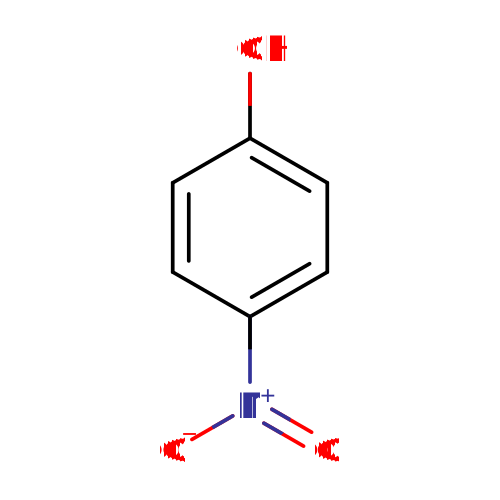
SMILESOC1=CC=C(C=C1)[N+]([O-])=O
InChI IdentifierInChI=1S/C6H5NO3/c8-6-3-1-5(2-4-6)7(9)10/h1-4,8H
InChI KeyBTJIUGUIPKRLHP-UHFFFAOYSA-N
Chemical Taxonomy
Description belongs to the class of organic compounds known as nitrophenols. Nitrophenols are compounds containing a nitrophenol moiety, which consists of a benzene ring bearing both a hydroxyl group and a nitro group on two different ring carbon atoms.
KingdomOrganic compounds
Super ClassBenzenoids
ClassPhenols
Sub ClassNitrophenols
Direct ParentNitrophenols
Alternative Parents
Substituents
  • Nitrophenol
  • Nitrobenzene
  • Nitroaromatic compound
  • 1-hydroxy-2-unsubstituted benzenoid
  • Monocyclic benzene moiety
  • C-nitro compound
  • Organic nitro compound
  • Organic oxoazanium
  • Allyl-type 1,3-dipolar organic compound
  • Propargyl-type 1,3-dipolar organic compound
  • Organic 1,3-dipolar compound
  • Organooxygen compound
  • Organonitrogen compound
  • Organic oxide
  • Organic nitrogen compound
  • Organic oxygen compound
  • Organopnictogen compound
  • Hydrocarbon derivative
  • Aromatic homomonocyclic compound
Molecular FrameworkAromatic homomonocyclic compounds
External Descriptors
Biological Properties
StatusDetected and Not Quantified
OriginExogenous
Cellular Locations
  • Cytoplasm
  • Extracellular
Biofluid LocationsNot Available
Tissue Locations
  • Intestine
  • Liver
  • Placenta
  • Platelet
PathwaysNot Available
ApplicationsNot Available
Biological Roles
Chemical RolesNot Available
Physical Properties
StateSolid
AppearanceColorless to light yellow solid.
Experimental Properties
PropertyValue
Melting Point113.8°C
Boiling PointNot Available
Solubility11.6 mg/mL at 20°C [SCHWARZENBACH,RP et al.(1988)]
Predicted Properties
PropertyValueSource
Water Solubility3.6 g/LALOGPS
logP1.93ALOGPS
logP1.61ChemAxon
logS-1.6ALOGPS
pKa (Strongest Acidic)7.07ChemAxon
pKa (Strongest Basic)-7.1ChemAxon
Physiological Charge0ChemAxon
Hydrogen Acceptor Count3ChemAxon
Hydrogen Donor Count1ChemAxon
Polar Surface Area63.37 ŲChemAxon
Rotatable Bond Count1ChemAxon
Refractivity34.36 m³·mol⁻¹ChemAxon
Polarizability12.22 ųChemAxon
Number of Rings1ChemAxon
Bioavailability1ChemAxon
Rule of FiveYesChemAxon
Ghose FilterNoChemAxon
Veber's RuleNoChemAxon
MDDR-like RuleNoChemAxon
Spectra
Spectra
Spectrum TypeDescriptionSplash KeyView
GC-MSGC-MS Spectrum - EI-B (Non-derivatized)splash10-00kr-9200000000-6a367c2627bf30cad163Spectrum
GC-MSGC-MS Spectrum - EI-B (Non-derivatized)splash10-00or-9500000000-a23a22fc322241325904Spectrum
GC-MSGC-MS Spectrum - EI-B (Non-derivatized)splash10-000i-9400000000-670d24ff2b2b121a7ab8Spectrum
GC-MSGC-MS Spectrum - EI-B (Non-derivatized)splash10-000i-9400000000-b5aea5436a88b29179e9Spectrum
GC-MSGC-MS Spectrum - EI-B (Non-derivatized)splash10-05n0-9300000000-f284a324180bf4d7ffc2Spectrum
GC-MSGC-MS Spectrum - EI-B (Non-derivatized)splash10-0006-2009127011-85632179856636169d28Spectrum
GC-MSGC-MS Spectrum - GC-EI-TOF (Non-derivatized)splash10-0f6t-1900000000-70af7d7902cd35a26f29Spectrum
GC-MSGC-MS Spectrum - EI-B (Non-derivatized)splash10-00kr-9200000000-6a367c2627bf30cad163Spectrum
GC-MSGC-MS Spectrum - EI-B (Non-derivatized)splash10-00or-9500000000-a23a22fc322241325904Spectrum
GC-MSGC-MS Spectrum - EI-B (Non-derivatized)splash10-000i-9400000000-670d24ff2b2b121a7ab8Spectrum
GC-MSGC-MS Spectrum - EI-B (Non-derivatized)splash10-000i-9400000000-b5aea5436a88b29179e9Spectrum
GC-MSGC-MS Spectrum - EI-B (Non-derivatized)splash10-05n0-9300000000-f284a324180bf4d7ffc2Spectrum
GC-MSGC-MS Spectrum - EI-B (Non-derivatized)splash10-0006-2009127011-85632179856636169d28Spectrum
GC-MSGC-MS Spectrum - GC-EI-TOF (Non-derivatized)splash10-0f6t-1900000000-70af7d7902cd35a26f29Spectrum
GC-MSGC-MS Spectrum - EI-B (Non-derivatized)splash10-00kr-9200000000-6a367c2627bf30cad163Spectrum
GC-MSGC-MS Spectrum - EI-B (Non-derivatized)splash10-00or-9500000000-a23a22fc322241325904Spectrum
GC-MSGC-MS Spectrum - EI-B (Non-derivatized)splash10-000i-9400000000-670d24ff2b2b121a7ab8Spectrum
GC-MSGC-MS Spectrum - EI-B (Non-derivatized)splash10-000i-9400000000-b5aea5436a88b29179e9Spectrum
GC-MSGC-MS Spectrum - EI-B (Non-derivatized)splash10-05n0-9300000000-f284a324180bf4d7ffc2Spectrum
GC-MSGC-MS Spectrum - EI-B (Non-derivatized)splash10-0006-2009127011-85632179856636169d28Spectrum
GC-MSGC-MS Spectrum - GC-EI-TOF (Non-derivatized)splash10-0f6t-1900000000-70af7d7902cd35a26f29Spectrum
GC-MSGC-MS Spectrum - EI-B (Non-derivatized)splash10-00kr-9200000000-6a367c2627bf30cad163Spectrum
GC-MSGC-MS Spectrum - EI-B (Non-derivatized)splash10-00or-9500000000-a23a22fc322241325904Spectrum
Predicted GC-MSPredicted GC-MS Spectrum - GC-MS (Non-derivatized) - 70eV, Positivesplash10-000i-7900000000-d4915e2347113b56d32cSpectrum
Predicted GC-MSPredicted GC-MS Spectrum - GC-MS (1 TMS) - 70eV, Positivesplash10-00di-9800000000-7bde61a3b7f0a23ddd41Spectrum
LC-MS/MSLC-MS/MS Spectrum - Quattro_QQQ 10V, N/A (Annotated)splash10-00dl-0900000000-653240f82298b3880e70Spectrum
LC-MS/MSLC-MS/MS Spectrum - Quattro_QQQ 25V, N/A (Annotated)splash10-014l-9100000000-1dd6a69ee33aeb4207a3Spectrum
LC-MS/MSLC-MS/MS Spectrum - Quattro_QQQ 40V, N/A (Annotated)splash10-014r-9000000000-397a0913b382e58ae418Spectrum
LC-MS/MSLC-MS/MS Spectrum - EI-B (HITACHI RMU-7M) , Positivesplash10-00kr-9200000000-039471e02c3307757a0cSpectrum
LC-MS/MSLC-MS/MS Spectrum - EI-B (HITACHI RMU-6M) , Positivesplash10-00or-9500000000-a23a22fc322241325904Spectrum
LC-MS/MSLC-MS/MS Spectrum - EI-B (Unknown) , Positivesplash10-000i-9400000000-12717928037244536b6bSpectrum
LC-MS/MSLC-MS/MS Spectrum - EI-B (HITACHI M-60) , Positivesplash10-000i-9400000000-f133ed564f0a12bd3871Spectrum
LC-MS/MSLC-MS/MS Spectrum - EI-B (HITACHI M-80) , Positivesplash10-05n0-9300000000-d39a8dbf21962717a2eeSpectrum
LC-MS/MSLC-MS/MS Spectrum - LC-ESI-QTOF (UPLC Q-Tof Premier, Waters) , Positivesplash10-0002-9200000000-bff0a2a3c15629cc6ec2Spectrum
LC-MS/MSLC-MS/MS Spectrum - LC-ESI-QTOF (UPLC Q-Tof Premier, Waters) , Negativesplash10-052r-0900000000-1279a141e229fec8dbd4Spectrum
LC-MS/MSLC-MS/MS Spectrum - LC-ESI-QTOF , negativesplash10-052r-0900000000-1279a141e229fec8dbd4Spectrum
LC-MS/MSLC-MS/MS Spectrum - LC-ESI-QTOF , positivesplash10-0002-9200000000-bff0a2a3c15629cc6ec2Spectrum
LC-MS/MSLC-MS/MS Spectrum - 20V, Positivesplash10-00r6-9300000000-5cb2a9e8e318ca2474fdSpectrum
LC-MS/MSLC-MS/MS Spectrum - 10V, Positivesplash10-00di-1900000000-0c7b180f083127156f27Spectrum
LC-MS/MSLC-MS/MS Spectrum - 90V, Negativesplash10-0a4i-0900000000-c41839802d48c97c72b7Spectrum
LC-MS/MSLC-MS/MS Spectrum - 75V, Negativesplash10-0a4i-0900000000-465b86a7fa9c91aea091Spectrum
LC-MS/MSLC-MS/MS Spectrum - 15V, Negativesplash10-052r-0900000000-7545ed558dcbc5a7a386Spectrum
LC-MS/MSLC-MS/MS Spectrum - 30V, Negativesplash10-052r-0900000000-24c57afe8ccf403e589bSpectrum
LC-MS/MSLC-MS/MS Spectrum - 35V, Negativesplash10-0a4r-2900000000-396ebc9986624989747eSpectrum
Predicted LC-MS/MSPredicted LC-MS/MS Spectrum - 10V, Positivesplash10-0006-0900000000-d01a64d09fb568b883b1Spectrum
Predicted LC-MS/MSPredicted LC-MS/MS Spectrum - 20V, Positivesplash10-001i-0900000000-58e0d9a2ff9a60a8c4f6Spectrum
Predicted LC-MS/MSPredicted LC-MS/MS Spectrum - 40V, Positivesplash10-01q9-2900000000-fbf4f5da283a46ec8ed8Spectrum
Predicted LC-MS/MSPredicted LC-MS/MS Spectrum - 10V, Negativesplash10-000i-0900000000-3c17676b62ba6a9be8d5Spectrum
Predicted LC-MS/MSPredicted LC-MS/MS Spectrum - 20V, Negativesplash10-000i-0900000000-4dcec4bcef5be284e738Spectrum
Predicted LC-MS/MSPredicted LC-MS/MS Spectrum - 40V, Negativesplash10-002r-3900000000-de3f2773a5601a2eec1bSpectrum
MSMass Spectrum (Electron Ionization)splash10-00kr-9300000000-d76f14df8da868057d44Spectrum
1D NMR1H NMR SpectrumNot AvailableSpectrum
1D NMR13C NMR SpectrumNot AvailableSpectrum
1D NMR1H NMR SpectrumNot AvailableSpectrum
1D NMR13C NMR SpectrumNot AvailableSpectrum
1D NMR1H NMR SpectrumNot AvailableSpectrum
1D NMR13C NMR SpectrumNot AvailableSpectrum
1D NMR1H NMR SpectrumNot AvailableSpectrum
1D NMR13C NMR SpectrumNot AvailableSpectrum
1D NMR1H NMR SpectrumNot AvailableSpectrum
1D NMR13C NMR SpectrumNot AvailableSpectrum
1D NMR1H NMR SpectrumNot AvailableSpectrum
1D NMR13C NMR SpectrumNot AvailableSpectrum
1D NMR1H NMR SpectrumNot AvailableSpectrum
1D NMR13C NMR SpectrumNot AvailableSpectrum
1D NMR1H NMR SpectrumNot AvailableSpectrum
1D NMR13C NMR SpectrumNot AvailableSpectrum
1D NMR1H NMR SpectrumNot AvailableSpectrum
1D NMR13C NMR SpectrumNot AvailableSpectrum
1D NMR1H NMR SpectrumNot AvailableSpectrum
1D NMR13C NMR SpectrumNot AvailableSpectrum
1D NMR1H NMR SpectrumNot AvailableSpectrum
1D NMR13C NMR SpectrumNot AvailableSpectrum
1D NMR1H NMR SpectrumNot AvailableSpectrum
1D NMR13C NMR SpectrumNot AvailableSpectrum
2D NMR[1H,13C] 2D NMR SpectrumNot AvailableSpectrum
Toxicity Profile
Route of ExposureOral (22) ; inhalation (22) ; dermal (22)
Mechanism of ToxicityThe nitrite in nitrophenols causes the autocatalytic oxidation of oxyhemoglobin to hydrogen peroxide and methemoglobin. This elevation of methemoglobin levels is a condition known as methemoglobinemia, and is characterized by tissue hypoxia, as methemoglobin cannot bind oxygen. (1, 21)
MetabolismNitrophenol may be absorbed following ingestion, inhalation, or dermal exposure. The major metabolic route for nitrophenols is conjugation, with the resultant formation of either glucuronide or sulfate conjugates. Conjugates are more polar than the parent compounds and therefore are easier to excrete in the urine. (22)
Toxicity ValuesLD50: 380 mg/kg (Oral, Mouse) (24) LD50: 75 mg/kg (Intraperitoneal, Mouse) (24)
Lethal DoseNot Available
Carcinogenicity (IARC Classification)No indication of carcinogenicity to humans (not listed by IARC).
Uses/Sources4-Nitrophenol is used mainly to make fungicides and dyes, and to darken leather. It is also used in the synthesis of drugs such as paracetamol, phenetidine, and acetophenetidine. (22, 23)
Minimum Risk LevelNot Available
Health EffectsNitrophenols may cause methemoglobinemia. This is a disorder in which there is an abnormally high level of methemoglobin in the blood, resulting in a decrease in the amount of oxygen that can be carried to the tissues and organs. (22, 21)
SymptomsSymptoms of methemoglobinemia include shortness of breath, cyanosis, mental status changes, headache, fatigue, exercise intolerance, dizziness and loss of consciousness. Severe methemoglobinemia may cause dysrhythmias, seizures, coma and death. (21)
TreatmentMethemoglobinemia can be treated with supplemental oxygen and methylene blue 1% solution at 1-2mg/kg administered intravenously slowly over five minutes followed by an IV flush with normal saline. Methylene blue restores the iron in hemoglobin to its normal (reduced) oxygen-carrying state. (21)
Concentrations
StatusValueUnitSample LocationReference
DrugBank IDDB04417
HMDB IDHMDB0001232
FooDB IDFDB022503
Phenol Explorer IDNot Available
KNApSAcK IDNot Available
BiGG ID36247
BioCyc IDP-NITROPHENOL
METLIN ID4100
PDB IDNot Available
Wikipedia Link4-Nitrophenol
Chemspider ID955
ChEBI ID16836
PubChem Compound ID980
Kegg Compound IDC00870
YMDB IDYMDB00316
ECMDB IDECMDB01232
References
Synthesis ReferenceNot Available
MSDSLink
General References
1. Fache, Eric; Righini, Sebastien. Preparation of a nitrophenol. Fr. Demande (2004), 35 pp.
2. Mung D, Li L: Development of Chemical Isotope Labeling LC-MS for Milk Metabolomics: Comprehensive and Quantitative Profiling of the Amine/Phenol Submetabolome. Anal Chem. 2017 Apr 18;89(8):4435-4443. doi: 10.1021/acs.analchem.6b03737. Epub 2017 Mar 28.
3. Mung D, Li L: Applying quantitative metabolomics based on chemical isotope labeling LC-MS for detecting potential milk adulterant in human milk. Anal Chim Acta. 2018 Feb 25;1001:78-85. doi: 10.1016/j.aca.2017.11.019. Epub 2017 Nov 14.
4. Fache, Eric; Righini, Sebastien. Preparation of a nitrophenol. Fr. Demande (2004), 35 pp.
5. Ozawa S, Shimizu M, Katoh T, Miyajima A, Ohno Y, Matsumoto Y, Fukuoka M, Tang YM, Lang NP, Kadlubar FF: Sulfating-activity and stability of cDNA-expressed allozymes of human phenol sulfotransferase, ST1A3*1 ((213)Arg) and ST1A3*2 ((213)His), both of which exist in Japanese as well as Caucasians. J Biochem. 1999 Aug;126(2):271-7.
6. Sharaev PN, Gabdrakhmanova NK, Strelkova TN, Sakhabutdinova EP: [Detection of N-acetyl-beta-D-hexosaminidase in urine]. Klin Lab Diagn. 2004 May;(5):40-2.
7. Anderson RJ, Garcia MJ, Liebentritt DK, Kay HD: Localization of human blood phenol sulfotransferase activities: novel detection of the thermostable enzyme in granulocytes. J Lab Clin Med. 1991 Nov;118(5):500-9.
8. Kayamori Y, Katayama Y: Enzymatic method for assaying calcium in serum and urine with porcine pancreatic alpha-amylase. Clin Chem. 1994 May;40(5):781-4.
9. Pacifici GM, Temellini A, Castiglioni M, D'Alessandro C, Ducci A, Giuliani L: Interindividual variability of the human hepatic sulphotransferases. Chem Biol Interact. 1994 Jun;92(1-3):219-31.
10. Bowers GN Jr, McComb RB, Christensen RG, Schaffer R: High-purity 4-nitrophenol: purification, characterization, and specifications for use as a spectrophotometric reference material. Clin Chem. 1980 May;26(6):724-9.
11. Bellavite P, Andrioli G, Guzzo P, Arigliano P, Chirumbolo S, Manzato F, Santonastaso C: A colorimetric method for the measurement of platelet adhesion in microtiter plates. Anal Biochem. 1994 Feb 1;216(2):444-50.
12. Pacifici GM: Sulfation of drugs and hormones in mid-gestation human fetus. Early Hum Dev. 2005 Jul;81(7):573-81. Epub 2004 Dec 8.
13. Vitarius JA, Sultatos LG: Kinetic mechanism of the detoxification of the organophosphate paraoxon by human serum A-esterase. Drug Metab Dispos. 1994 May-Jun;22(3):472-8.
14. Pacifici GM, Marchi G: Interindividual variability of phenol- and catechol-sulphotransferases in platelets from adults and newborns. Br J Clin Pharmacol. 1993 Dec;36(6):593-7.
15. Osnes T, Sandstad O, Skar V, Osnes M: beta-Glucuronidase in common duct bile, methodological aspects, variation of pH optima and relation to gallstones. Scand J Clin Lab Invest. 1997 Jul;57(4):307-15.
16. Young WF Jr, Okazaki H, Laws ER Jr, Weinshilboum RM: Human brain phenol sulfotransferase: biochemical properties and regional localization. J Neurochem. 1984 Sep;43(3):706-15.
17. Leng G, Lewalter J: Role of individual susceptibility in risk assessment of pesticides. Occup Environ Med. 1999 Jul;56(7):449-53.
18. Belanger G, Beaulieu M, Levesque E, Hum DW, Belanger A: Expression and characterization of a novel UDP-glucuronosyltransferase, UGT2B9, from cynomolgus monkey. DNA Cell Biol. 1997 Oct;16(10):1195-205.
19. Birk AV, Broekman MJ, Gladek EM, Robertson HD, Drosopoulos JH, Marcus AJ, Szeto HH: Role of extracellular ATP metabolism in regulation of platelet reactivity. J Lab Clin Med. 2002 Sep;140(3):166-75.
20. Rossi AM, Maggini V, Fredianelli E, Di Bello D, Pietrabissa A, Mosca F, Barale R, Pacifici GM: Phenotype-genotype relationships of SULT1A1 in human liver and variations in the IC50 of the SULT1A1 inhibitor quercetin. Int J Clin Pharmacol Ther. 2004 Oct;42(10):561-7.
21. Reiter C, Mwaluko G, Dunnette J, Van Loon J, Weinshilboum R: Thermolabile and thermostable human platelet phenol sulfotransferase. Substrate specificity and physical separation. Naunyn Schmiedebergs Arch Pharmacol. 1983 Sep;324(2):140-7.
22. Bravo R, Caltabiano LM, Fernandez C, Smith KD, Gallegos M, Whitehead RD Jr, Weerasekera G, Restrepo P, Bishop AM, Perez JJ, Needham LL, Barr DB: Quantification of phenolic metabolites of environmental chemicals in human urine using gas chromatography-tandem mass spectrometry and isotope dilution quantification. J Chromatogr B Analyt Technol Biomed Life Sci. 2005 Jun 25;820(2):229-36. Epub 2005 Apr 26.
23. https://www.ncbi.nlm.nih.gov/pubmed/?term=19365648