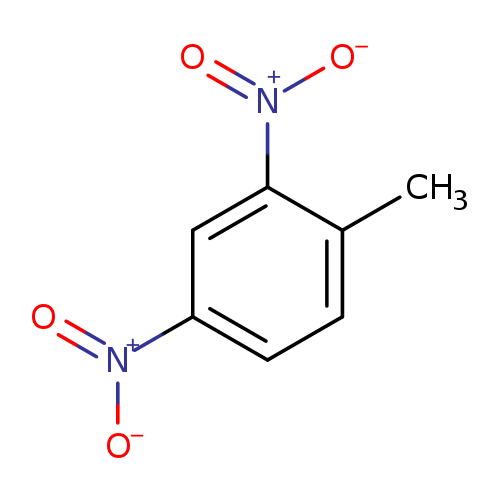
Dinitrotoluene (DNT) is a high explosive. It is one of the precursors for trinitrotoluene (TNT), which is synthesized through three separate nitrations of toluene. The first product is mononitrotoluene, DNT is the second, and TNT is the third and final product. There are 6 possible isomers of dinitrotolulene. The most common is 2,4-dinitrotoluene. (4)
belongs to the class of organic compounds known as dinitrotoluenes. These are organic aromatic compounds containing a benzene that carries a single methyl group and exactly two nitro groups.
Dinitrotoluene may cause conversion of oxyhemoglobin to methemoglobin via oxidation of iron(II) to iron(III) by its metabolites. High levels of methemoglobin are removed by catabolism, leading to the development of anemia. Some metabolites of dinitrotoluene are also transported back from the bile to the liver, where the amine group is N-hydroxylated by cytochrome P-450 to form an unstable sulfate conjugate. The sulfate conjugate is degraded into carbonium or nitrenium ions. These ions covalently bind to hepatic macromolecules (DNA, RNA), leading to mutations and subsequently liver tumors. They also bind to DNA of the lung and the intestine. (3)
Metabolism
Dinitrotoluene can be absorbed following inhalation, ingestion, or skin contact. Metabolism occurs in the liver and also in the intestine by microflora. DNT appears to be first metabolized by the liver by cytochrome P-450 enzymes, with the metabolites being excreted into the bile. The biliary metabolites are hydrolyzed and further metabolized in the intestine, then after reabsorption and circulation back to the liver they are activated and bound to macromolecules. The main urinary metabolites of dinitrotoluene are the corresponding dinitrobenzyl alcohol glucuronide, dinitrobenzoic acid, and aminonitrobenzoic acid. (3)
It is a high explosive and one of the precursors for trinitrotoluene (TNT), which is synthesized through three separate nitrations of toluene. Dinitrotoluene can affect the body if it is inhaled, comes in contact with the eyes or skin, is swallowed, or is absorbed through the skin. Even a small amount absorbed from clothes or shoes may cause toxic symptoms. It is assumed that oral ingestion could be a secondary route for occupationally exposed humans. (6, 4)
Minimum Risk Level
Not Available
Health Effects
Dinitrotoluene poisoning may cause methemoglobinemia, anemia, leukopenia, and liver necrosis. Liver injury may be more common than cyanosis. (3)
Symptoms
Symptoms of dinitrotoluene poisoning include blue lips or finger nails, blue skin, vertigo, fatigue, dizziness, weakness, nausea, vomiting, dyspnea, arthralgia, insomnia, tremor, paralysis, unconsciousness, chest pain, shortness of breath, palpitation, anorexia, and loss of weight. (7, 2)
Treatment
Following oral exposure, immediately dilute with 4 to 8 ounces (120 to 240 mL) of water or milk (not to exceed 4 ounces/120 mL in a child). Administer charcoal as a slurry. Gastric lavage and oxygen administration is recommended. Following inhalation exposure, move patient to fresh air. Monitor for respiratory distress. If cough or difficulty breathing develops, evaluate for respiratory tract irritation, bronchitis, or pneumonitis. Administer oxygen and assist ventilation as required. Treat bronchospasm with inhaled beta2 agonist and oral or parenteral corticosteroids. Following eyes exposure, irrigate exposed eyes with copious amounts of room temperature water for at least 15 minutes. Following dermal exposure, remove contaminated clothing and wash exposed area thoroughly with soap and water, and administer a benzodiazepine IV in case of irritation. In all those cases, a physician may need to examine the area if irritation or pain persists. (5)