Chromic acid generally refers to a collection of compounds generated by the acidification of solutions containing chromate and dichromate anions or the dissolving of chromium trioxide in sulfuric acid. Chromic acid contains hexavalent chromium. Hexavalent chromium refers to chromium in the +6 oxidation state, and is more toxic than other oxidation states of the chromium atom because of its greater ability to enter cells and a higher redox potential. (9) Molecular chromic acid, H2CrO4, has much in common with sulfuric acid, H2SO4 as both are classified as strong acids. Chromic acid was widely used in the instrument repair industry, due to its ability to "brighten" raw brass. A chromic acid dip leaves behind a bright yellow patina on the brass. Due to growing health and environmental concerns, many have discontinued use of this chemical in their repair shops. Most chromic acid sold or available as a 10% aqueous solution.
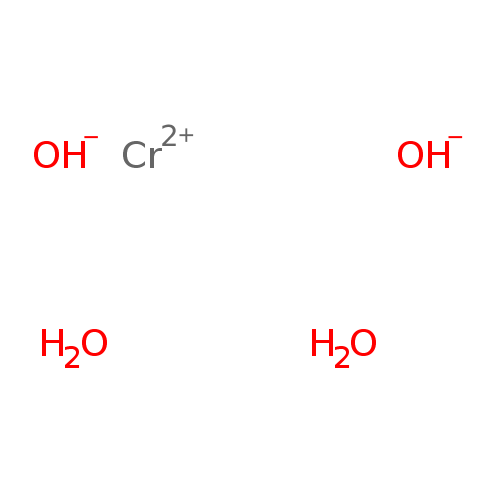
belongs to the class of inorganic compounds known as transition metal hydroxides. These are inorganic compounds in which the largest oxoanion is hydroxide, and in which the heaviest atom not in an oxoanion is a transition metal.
Chromic acid is highly corrosive and strongly oxidative. Many strong acids cause tissue burns through the denaturation of proteins and partial hydrolysis of proteins. Most proteins denature at pH values of less than 3-4. The large-scale denaturation of proteins, de-esterification of lipids and subsequent desiccation of tissues leads to chemical burns. . Symptoms include itching, bleaching or darkening of skin or tissues, blistering and burning sensations. Chromic acid also denatures proteins through inserting oxygen atoms into protein side chains. Chromic acid is also a source of chromium and especially hexavalent chromium. Hexavalent chromium compounds (including chromium trioxide, chromic acids, chromates, chlorochromates) are toxic and carcinogenic. For this reason, chromic acid oxidation is not used on an industrial scale except in the aerospace industry. Hexavalent chromium's carcinogenic effects are caused by its metabolites, pentavalent and trivalent chromium. The DNA damage may be caused by hydroxyl radicals produced during reoxidation of pentavalent chromium by hydrogen peroxide molecules present in the cell. Trivalent chromium may also form complexes with peptides, proteins, and DNA, resulting in DNA-protein crosslinks, DNA strand breaks, DNA-DNA interstrand crosslinks, chromium-DNA adducts, chromosomal aberrations and alterations in cellular signaling pathways. It has been shown to induce carcinogenesis by overstimulating cellular regulatory pathways and increasing peroxide levels by activating certain mitogen-activated protein kinases. It can also cause transcriptional repression by cross-linking histone deacetylase 1-DNA methyltransferase 1 complexes to CYP1A1 promoter chromatin, inhibiting histone modification. Chromium may increase its own toxicity by modifying metal regulatory transcription factor 1, causing the inhibition of zinc-induced metallothionein transcription. (1, 7, 2, 3, 4)
Metabolism
Skin contact with chromic acid can cause redness, pain, and severe skin burns. Chromic acid may cause severe burns to the eye and permanent eye damage. Severe and rapid corrosive burns of the mouth, gullet and gastrointestinal tract will result if chromic acid is swallowed. Symptoms include burning, choking, nausea, vomiting and severe pain. Chronic exposure to low levels of chromic acid can lead to chronic exposure to hexavalent chromium. Hexavalent chromium is a known carcinogen. Chronic inhalation especially has been linked to lung cancer. Hexavalent chromium is also known to cause reproductive and developmental defects. (1)
Skin contact with chromic acid can cause redness, pain, and severe skin burns. Chromic acid may cause severe burns to the eye and permanent eye damage. Severe and rapid corrosive burns of the mouth, gullet and gastrointestinal tract will result if chromic acid is swallowed. Symptoms include burning, choking, nausea, vomiting and severe pain. Chronic exposure to low levels of chromic acid can lead to chronic exposure to hexavalent chromium. Hexavalent chromium is a known carcinogen. Chronic inhalation especially has been linked to lung cancer. Hexavalent chromium is also known to cause reproductive and developmental defects. (1)
Symptoms
Skin contact can cause redness, pain, and severe skin burns. Chromic acid may cause severe burns to the eye and permanent eye damage. Severe and rapid corrosive burns of the mouth, gullet and gastrointestinal tract will result if chromic acid is swallowed. Symptoms include burning, choking, nausea, vomiting and severe pain.
Treatment
The mainstay of treatment of any acid burn is copious irrigation with large amounts of tap water. To be most effective, treatment should be started immediately after exposure, preferably before arrival in the emergency department. Remove any contaminated clothing. Do not attempt to neutralize the burn with weak reciprocal chemicals (i.e. alkali for acid burns), because the heat generated from the chemical reaction may cause severe thermal injury.