Record Information
Version1.0
Creation Date2009-03-06 18:58:15 UTC
Update Date2026-05-14 20:14:23 UTC
Accession NumberCHEM000171
Identification
Common NameHydrogen sulfide
ClassSmall Molecule
DescriptionHydrogen sulfide is a highly toxic and flammable gas. Because it is heavier than air it tends to accumulate at the bottom of poorly ventilated spaces. Although very pungent at first, it quickly deadens the sense of smell, so potential victims may be unaware of its presence until it is too late. H2S arises from virtually anywhere where elemental sulfur comes into contact with organic material, especially at high temperatures. Hydrogen sulfide is a covalent hydride chemically related to water (H2O) since oxygen and sulfur occur in the same periodic table group. It often results when bacteria break down organic matter in the absence of oxygen, such as in swamps, and sewers (alongside the process of anaerobic digestion). It also occurs in volcanic gases, natural gas and some well waters. It is also important to note that Hydrogen sulfide is a central participant in the sulfur cycle, the biogeochemical cycle of sulfur on Earth. As mentioned above, sulfur-reducing and sulfate-reducing bacteria derive energy from oxidizing hydrogen or organic molecules in the absence of oxygen by reducing sulfur or sulfate to hydrogen sulfide. Other bacteria liberate hydrogen sulfide from sulfur-containing amino acids. Several groups of bacteria can use hydrogen sulfide as fuel, oxidizing it to elemental sulfur or to sulfate by using oxygen or nitrate as oxidant. The purple sulfur bacteria and the green sulfur bacteria use hydrogen sulfide as electron donor in photosynthesis, thereby producing elemental sulfur. (In fact, this mode of photosynthesis is older than the mode of cyanobacteria, algae and plants which uses water as electron donor and liberates oxygen).
Contaminant Sources
  • Clean Air Act Chemicals
  • EAFUS Chemicals
  • FooDB Chemicals
  • HMDB Contaminants - Feces
  • HPV EPA Chemicals
  • OSHA Hazardous Chemicals
  • T3DB toxins
  • Tobacco Smoke Compounds
Contaminant Type
  • Bacterial Toxin
  • Household Toxin
  • Human Neurotoxin
  • Industrial Precursor/Intermediate
  • Industrial/Workplace Toxin
  • Inorganic Compound
  • Lachrymator
  • Metabolite
  • Natural Compound
  • Non-Metal
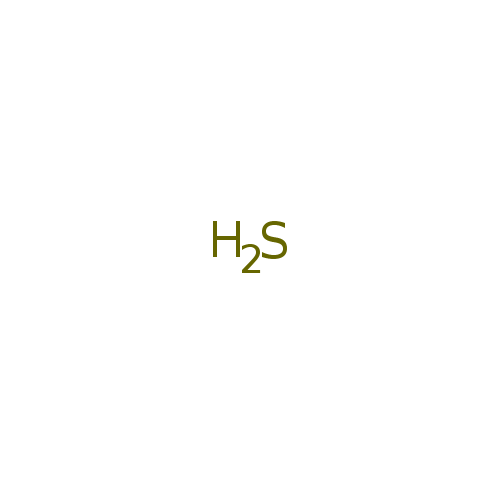
Chemical Structure
Thumb
Synonyms
ValueSource
[SH2]ChEBI
Acide sulfhydriqueChEBI
Dihydrogen monosulfideChEBI
Dihydrogen sulfideChEBI
H2SChEBI
Hydrogen monosulfideChEBI
Hydrogen sulphideChEBI
Hydrogen-sulfideChEBI
Hydrogene sulfureChEBI
HYDROsulfURIC ACIDChEBI
SchwefelwasserstoffChEBI
SulfideChEBI
Sulfure d'hydrogeneChEBI
Acide sulphhydriqueGenerator
Dihydrogen monosulphideGenerator
Dihydrogen sulphideGenerator
Hydrogen monosulphideGenerator
Hydrogen-sulphideGenerator
Hydrogene sulphureGenerator
HYDROsulfateGenerator
HYDROsulphateGenerator
HYDROsulphuric acidGenerator
SulphideGenerator
Sulphure d'hydrogeneGenerator
Dihydrogen disulfideHMDB
HepatateHMDB
Hepatic acidHMDB
Hepatic gasHMDB
HydrosulfurateHMDB
Idrogeno solforatoHMDB
Sewer gasHMDB
SiarkowodorHMDB
Sour gasHMDB
Stink dAMPHMDB
Sulfur hydrideHMDB
Sulfur hydroxideHMDB
Sulfureted hydrogenHMDB
Sulfuretted hydrogenHMDB
ZwavelwaterstofHMDB
Sulfide, hydrogenHMDB
Hydrogen sulfide (H2(SX))HMDB
Hydrogen sulfide (H2S2)HMDB
Hydrogen sulfide (H2S3)HMDB
Chemical FormulaH2S
Average Molecular Mass34.081 g/mol
Monoisotopic Mass33.988 g/mol
CAS Registry Number7783-06-04
IUPAC NameNot Available
Traditional Namehydrogen sulfide
SMILESS
InChI IdentifierInChI=1S/H2S/h1H2
InChI KeyRWSOTUBLDIXVET-UHFFFAOYSA-N
Chemical Taxonomy
Description belongs to the class of inorganic compounds known as other non-metal sulfides. These are inorganic compounds containing a sulfur atom of an oxidation state of -2, in which the heaviest atom bonded to the oxygen belongs to the class of other non-metals.
KingdomInorganic compounds
Super ClassHomogeneous non-metal compounds
ClassOther non-metal organides
Sub ClassOther non-metal sulfides
Direct ParentOther non-metal sulfides
Alternative Parents
Substituents
  • Other non-metal sulfide
  • Inorganic sulfide
Molecular FrameworkNot Available
External Descriptors
Biological Properties
StatusDetected and Not Quantified
OriginEndogenous
Cellular Locations
  • Cytoplasm
  • Extracellular
Biofluid LocationsNot Available
Tissue Locations
  • Brain
  • Colon
  • Intestine
  • Nerve Cells
  • Neuron
PathwaysNot Available
Applications
Biological Roles
Chemical RolesNot Available
Physical Properties
StateGas
AppearanceColorless gas. (18)
Experimental Properties
PropertyValue
Melting Point-85.49°C
Boiling Point-60.28 °C (212.87°K)
Solubility3.74 mg/mL at 21°C
Predicted Properties
PropertyValueSource
logP-0.038ChemAxon
Physiological Charge-1ChemAxon
Hydrogen Acceptor Count0ChemAxon
Hydrogen Donor Count1ChemAxon
Polar Surface Area0 ŲChemAxon
Rotatable Bond Count0ChemAxon
Refractivity7.36 m³·mol⁻¹ChemAxon
Polarizability3.45 ųChemAxon
Number of Rings0ChemAxon
Bioavailability1ChemAxon
Rule of FiveYesChemAxon
Ghose FilterNoChemAxon
Veber's RuleYesChemAxon
MDDR-like RuleNoChemAxon
Spectra
Spectra
Spectrum TypeDescriptionSplash KeyView
GC-MSGC-MS Spectrum - GC-MS (2 TMS)splash10-03di-1900000000-447434090a2b915c1731Spectrum
GC-MSGC-MS Spectrum - GC-MS (Non-derivatized)splash10-03di-1900000000-447434090a2b915c1731Spectrum
Predicted GC-MSPredicted GC-MS Spectrum - GC-MS (Non-derivatized) - 70eV, Positivesplash10-001i-9000000000-3a89a2549173c5c1687fSpectrum
Predicted GC-MSPredicted GC-MS Spectrum - GC-MS (Non-derivatized) - 70eV, PositiveNot AvailableSpectrum
Predicted LC-MS/MSPredicted LC-MS/MS Spectrum - 10V, Positivesplash10-001i-9000000000-2d63abb89fd699a31707Spectrum
Predicted LC-MS/MSPredicted LC-MS/MS Spectrum - 20V, Positivesplash10-001i-9000000000-2d63abb89fd699a31707Spectrum
Predicted LC-MS/MSPredicted LC-MS/MS Spectrum - 40V, Positivesplash10-001i-9000000000-2d63abb89fd699a31707Spectrum
Predicted LC-MS/MSPredicted LC-MS/MS Spectrum - 10V, Positivesplash10-001i-9000000000-2d63abb89fd699a31707Spectrum
Predicted LC-MS/MSPredicted LC-MS/MS Spectrum - 20V, Positivesplash10-001i-9000000000-2d63abb89fd699a31707Spectrum
Predicted LC-MS/MSPredicted LC-MS/MS Spectrum - 40V, Positivesplash10-001i-9000000000-2d63abb89fd699a31707Spectrum
Predicted LC-MS/MSPredicted LC-MS/MS Spectrum - 10V, Negativesplash10-001i-9000000000-05710009cb2405db27bdSpectrum
Predicted LC-MS/MSPredicted LC-MS/MS Spectrum - 20V, Negativesplash10-001i-9000000000-05710009cb2405db27bdSpectrum
Predicted LC-MS/MSPredicted LC-MS/MS Spectrum - 40V, Negativesplash10-001i-9000000000-05710009cb2405db27bdSpectrum
Predicted LC-MS/MSPredicted LC-MS/MS Spectrum - 10V, Negativesplash10-001i-9000000000-05710009cb2405db27bdSpectrum
Predicted LC-MS/MSPredicted LC-MS/MS Spectrum - 20V, Negativesplash10-001i-9000000000-05710009cb2405db27bdSpectrum
Predicted LC-MS/MSPredicted LC-MS/MS Spectrum - 40V, Negativesplash10-001i-9000000000-05710009cb2405db27bdSpectrum
Predicted LC-MS/MSPredicted LC-MS/MS Spectrum - 10V, Negativesplash10-001i-9000000000-942ac689538269d6ca7bSpectrum
Predicted LC-MS/MSPredicted LC-MS/MS Spectrum - 20V, Negativesplash10-001i-9000000000-942ac689538269d6ca7bSpectrum
Predicted LC-MS/MSPredicted LC-MS/MS Spectrum - 40V, Negativesplash10-001i-9000000000-942ac689538269d6ca7bSpectrum
Predicted LC-MS/MSPredicted LC-MS/MS Spectrum - 10V, Positivesplash10-001i-9000000000-db65f6d26b49c6300706Spectrum
Predicted LC-MS/MSPredicted LC-MS/MS Spectrum - 20V, Positivesplash10-001i-9000000000-db65f6d26b49c6300706Spectrum
Predicted LC-MS/MSPredicted LC-MS/MS Spectrum - 40V, Positivesplash10-001i-9000000000-db65f6d26b49c6300706Spectrum
MSMass Spectrum (Electron Ionization)splash10-001i-9000000000-5373be1d46feb66d09a8Spectrum
1D NMR1H NMR SpectrumNot AvailableSpectrum
Toxicity Profile
Route of ExposureOral; inhalation; dermal
Mechanism of ToxicityAlthough very pungent at first, hydrogen sulfide quickly deadens the sense of smell, so potential victims may be unaware of its presence until it is too late. Hydrogen sulfide forms a complex bond with iron in the mitochondrial cytochrome enzymes, thereby blocking oxygen from binding and stopping cellular respiration. (18)
MetabolismNot Available
Toxicity ValuesNot Available
Lethal DoseNot Available
Carcinogenicity (IARC Classification)No indication of carcinogenicity to humans (not listed by IARC).
Uses/SourcesVolcanoes and hot springs emit some hydrogen sulfide, where it probably arises via the hydrolysis of sulfide minerals. Hydrogen sulfide can be present naturally in well water; it can be removed using ozone or a filter with manganese dioxide. About 10% of total global emissions of H2S is due to human activity. By far the largest industrial route to hydrogen sulfide occurs in petroleum refineries. Other anthropogenic sources of hydrogen sulfide include coke ovens, paper mills, and tanneries. H2S arises from virtually anywhere where elemental sulfur comes into contact with organic material, especially at high temperatures. Being heavier than air, H2S tends to accumulate at the bottom of poorly ventilated spaces. (18)
Minimum Risk LevelNot Available
Health EffectsHydrogen sulfide is a highly toxic and flammable gas. Hydrogen sulfide is considered a broad-spectrum poison, meaning that it can poison several different systems in the body, although the nervous system is most affected. The toxicity of hydrogen sulfide is comparable with that of hydrogen cyanide. (18)
SymptomsExposure to lower concentrations can result in eye irritation, a sore throat and cough, nausea, shortness of breath, and fluid in the lungs; these symptoms usually go away in a few weeks. Long-term, low-level exposure may result in fatigue, loss of appetite, headaches, irritability, poor memory, and dizziness. Higher concentrations of 700-800 ppm tend to be fatal. (18)
TreatmentTreatment involves immediate inhalation of amyl nitrite, injections of sodium nitrite, inhalation of pure oxygen, administration of bronchodilators to overcome eventual bronchospasm, and in some cases hyperbaric oxygen therapy (HBO). HBO therapy has anecdotal support and remains controversial. (18)
Concentrations
Not Available
DrugBank IDNot Available
HMDB IDHMDB0003276
FooDB IDFDB030910
Phenol Explorer IDNot Available
KNApSAcK IDC00007266
BiGG IDNot Available
BioCyc IDHS
METLIN ID3193
PDB IDNot Available
Wikipedia LinkHydrogen_sulfide
Chemspider ID391
ChEBI ID16136
PubChem Compound ID402
Kegg Compound IDC00283
YMDB IDYMDB00653
ECMDB IDECMDB03276
References
Synthesis ReferenceNot Available
MSDSLink
General References
1. Vazquez-Landaverde PA, Torres JA, Qian MC: Quantification of trace volatile sulfur compounds in milk by solid-phase microextraction and gas chromatography-pulsed flame photometric detection. J Dairy Sci. 2006 Aug;89(8):2919-27. doi: 10.3168/jds.S0022-0302(06)72564-4.
2. Kage S, Takekawa K, Kurosaki K, Imamura T, Kudo K: The usefulness of thiosulfate as an indicator of hydrogen sulfide poisoning: three cases. Int J Legal Med. 1997;110(4):220-2.
3. Kaplan WD, Piez CW, Gelman RS, Laffin SM, Rosenbaum EM, Jennings CA, McCormick CA, Harris JR, Henderson IC, Atkins HL: Clinical comparison of two radiocolloids for internal mammary lymphoscintigraphy. J Nucl Med. 1985 Dec;26(12):1382-5.
4. Naidong W, Shou WZ, Addison T, Maleki S, Jiang X: Liquid chromatography/tandem mass spectrometric bioanalysis using normal-phase columns with aqueous/organic mobile phases - a novel approach of eliminating evaporation and reconstitution steps in 96-well SPE. Rapid Commun Mass Spectrom. 2002;16(20):1965-75.
5. Claesson R, Granlund-Edstedt M, Persson S, Carlsson J: Activity of polymorphonuclear leukocytes in the presence of sulfide. Infect Immun. 1989 Sep;57(9):2776-81.
6. Kresimon J, Gruter UM, Hirner AV: HG/LT-GC/ICP-MS coupling for identification of metal(loid) species in human urine after fish consumption. Fresenius J Anal Chem. 2001 Nov;371(5):586-90.
7. Quirynen M, Zhao H, Avontroodt P, Soers C, Pauwels M, Coucke W, van Steenberghe D: A salivary incubation test for evaluation of oral malodor: a pilot study. J Periodontol. 2003 Jul;74(7):937-44.
8. Jiang T, Suarez FL, Levitt MD, Nelson SE, Ziegler EE: Gas production by feces of infants. J Pediatr Gastroenterol Nutr. 2001 May;32(5):534-41.
9. Donham KJ, Zejda JE: Lung dysfunction in animal confinement workers--chairman's report to the Scientific Committee of the Third International Symposium: issues in health, safety and agriculture, held in Saskatoon, Saskatchewan, Canada, May 10-15, 1992. Pol J Occup Med Environ Health. 1992;5(3):277-9.
10. Reid JS, Beeley JA, MacDonald DG: Investigations into black extrinsic tooth stain. J Dent Res. 1977 Aug;56(8):895-9.
11. Chen X, Jhee KH, Kruger WD: Production of the neuromodulator H2S by cystathionine beta-synthase via the condensation of cysteine and homocysteine. J Biol Chem. 2004 Dec 10;279(50):52082-6. Epub 2004 Nov 1.
12. Warren YA, Citron DM, Merriam CV, Goldstein EJ: Biochemical differentiation and comparison of Desulfovibrio species and other phenotypically similar genera. J Clin Microbiol. 2005 Aug;43(8):4041-5.
13. Livermore A, Hummel T, Kobal G: Chemosensory event-related potentials in the investigation of interactions between the olfactory and the somatosensory (trigeminal) systems. Electroencephalogr Clin Neurophysiol. 1992 Sep;83(3):201-10.
14. Xu C, Li CY, Kong AN: Induction of phase I, II and III drug metabolism/transport by xenobiotics. Arch Pharm Res. 2005 Mar;28(3):249-68.
15. Jorgensen J, Mortensen PB: Hydrogen sulfide and colonic epithelial metabolism: implications for ulcerative colitis. Dig Dis Sci. 2001 Aug;46(8):1722-32.
16. Kage S, Ito S, Kishida T, Kudo K, Ikeda N: A fatal case of hydrogen sulfide poisoning in a geothermal power plant. J Forensic Sci. 1998 Jul;43(4):908-10.
17. Kage S, Kashimura S, Ikeda H, Kudo K, Ikeda N: Fatal and nonfatal poisoning by hydrogen sulfide at an industrial waste site. J Forensic Sci. 2002 May;47(3):652-5.
18. Boehning D, Snyder SH: Novel neural modulators. Annu Rev Neurosci. 2003;26:105-31.
19. CLARKE PH: Hydrogen sulphide production by bacteria. J Gen Microbiol. 1953 Jun;8(3):397-407. doi: 10.1099/00221287-8-3-397.
20. https://www.ncbi.nlm.nih.gov/pubmed/?term=11788560
21. https://www.ncbi.nlm.nih.gov/pubmed/?term=14654297
22. https://www.ncbi.nlm.nih.gov/pubmed/?term=15003943
23. https://www.ncbi.nlm.nih.gov/pubmed/?term=15607739
24. https://www.ncbi.nlm.nih.gov/pubmed/?term=16446402
25. https://www.ncbi.nlm.nih.gov/pubmed/?term=18098324
26. https://www.ncbi.nlm.nih.gov/pubmed/?term=18524810
27. https://www.ncbi.nlm.nih.gov/pubmed/?term=18948540
28. https://www.ncbi.nlm.nih.gov/pubmed/?term=19695225
29. https://www.ncbi.nlm.nih.gov/pubmed/?term=22004989
30. https://www.ncbi.nlm.nih.gov/pubmed/?term=22378060
31. https://www.ncbi.nlm.nih.gov/pubmed/?term=22448627
32. https://www.ncbi.nlm.nih.gov/pubmed/?term=22473176
33. https://www.ncbi.nlm.nih.gov/pubmed/?term=22486842
34. https://www.ncbi.nlm.nih.gov/pubmed/?term=22520971
35. https://www.ncbi.nlm.nih.gov/pubmed/?term=22787557