Record Information
Version1.0
Creation Date2009-03-06 18:58:14 UTC
Update Date2026-03-26 19:30:44 UTC
Accession NumberCHEM000168
Identification
Common Namep-Xylene
ClassSmall Molecule
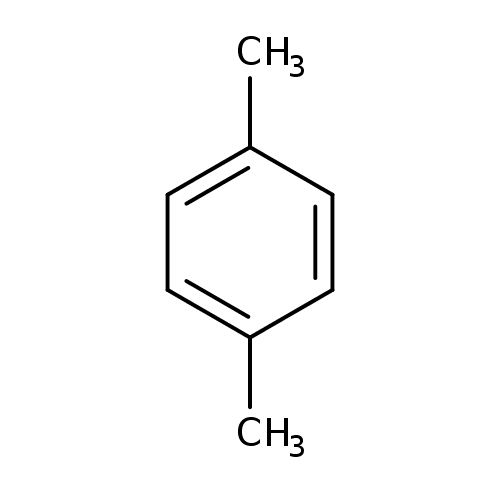
Descriptionp-Xylene is an aromatic hydrocarbon based on benzene with two methyl substituents with the chemical formula C8H10 or C6H4(CH3)2. The p stands for para, identifying the location of the methyl groups as across from one another. Overexposure of p-xylene in humans can cause headache, fatigue, dizziness, listlessness, confusion, irritability, gastrointestinal disturbances including nausea and loss of appetite, flushing of the face, and a feeling of increased body heat. p-Xylene vapor exposure over the recommended exposure limit of 100 parts per million (ppm) can cause irritation to eye, nose, and throat and possible chest tightening and an abnormal gait.
Contaminant Sources
  • Clean Air Act Chemicals
  • FooDB Chemicals
  • HMDB Contaminants - Feces
  • HPV EPA Chemicals
  • IARC Carcinogens Group 3
  • OECD HPV Chemicals
  • STOFF IDENT Compounds
  • Sludge Chemicals
  • T3DB toxins
  • ToxCast & Tox21 Chemicals
Contaminant Type
  • Aromatic Hydrocarbon
  • Food Toxin
  • Household Toxin
  • Industrial/Workplace Toxin
  • Lachrymator
  • Metabolite
  • Natural Compound
  • Organic Compound
  • Pollutant
  • Solvent
Chemical Structure
Thumb
Synonyms
ValueSource
1,4-DimethylbenzeneChEBI
1,4-DimethylbenzolChEBI
4-MethyltolueneChEBI
4-XyleneChEBI
p-DimethylbenzeneChEBI
p-MethyltolueneChEBI
p-XylolChEBI
PARA-xyleneChEBI
1,4-XyleneHMDB
ParaxyleneHMDB
Chemical FormulaC8H10
Average Molecular Mass106.165 g/mol
Monoisotopic Mass106.078 g/mol
CAS Registry Number106-42-3
IUPAC Name1,4-xylene
Traditional Namepara-xylene
SMILESCC1=CC=C(C)C=C1
InChI IdentifierInChI=1S/C8H10/c1-7-3-5-8(2)6-4-7/h3-6H,1-2H3
InChI KeyURLKBWYHVLBVBO-UHFFFAOYSA-N
Chemical Taxonomy
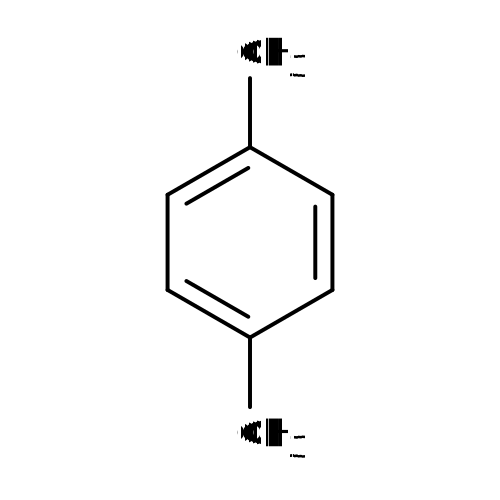
Description belongs to the class of organic compounds known as p-xylenes. These are aromatic compounds that contain a p-xylene moiety, which is a monocyclic benzene carrying exactly two methyl groups at the 1- and 4-positions.
KingdomOrganic compounds
Super ClassBenzenoids
ClassBenzene and substituted derivatives
Sub ClassXylenes
Direct Parentp-Xylenes
Alternative Parents
Substituents
  • P-xylene
  • Aromatic hydrocarbon
  • Unsaturated hydrocarbon
  • Hydrocarbon
  • Aromatic homomonocyclic compound
Molecular FrameworkAromatic homomonocyclic compounds
External Descriptors
Biological Properties
StatusDetected and Not Quantified
OriginExogenous
Cellular Locations
  • Membrane
Biofluid LocationsNot Available
Tissue LocationsNot Available
PathwaysNot Available
ApplicationsNot Available
Biological RolesNot Available
Chemical RolesNot Available
Physical Properties
StateLiquid
AppearanceColorless liquid.
Experimental Properties
PropertyValue
Melting Point13.2°C
Boiling PointNot Available
Solubility0.162 mg/mL at 25 °C [SANEMASA,I et al. (1982)]
Predicted Properties
PropertyValueSource
Water Solubility0.2 g/LALOGPS
logP3.15ALOGPS
logP3ChemAxon
logS-2.7ALOGPS
Physiological Charge0ChemAxon
Hydrogen Acceptor Count0ChemAxon
Hydrogen Donor Count0ChemAxon
Polar Surface Area0 ŲChemAxon
Rotatable Bond Count0ChemAxon
Refractivity36.14 m³·mol⁻¹ChemAxon
Polarizability13.12 ųChemAxon
Number of Rings1ChemAxon
Bioavailability1ChemAxon
Rule of FiveYesChemAxon
Ghose FilterNoChemAxon
Veber's RuleYesChemAxon
MDDR-like RuleNoChemAxon
Spectra
Spectra
Spectrum TypeDescriptionSplash KeyView
GC-MSGC-MS Spectrum - EI-B (Non-derivatized)splash10-052f-9400000000-4b2097f841009fc7a1f9Spectrum
GC-MSGC-MS Spectrum - EI-B (Non-derivatized)splash10-052f-9400000000-58e5d57804187b27c6c5Spectrum
GC-MSGC-MS Spectrum - CI-B (Non-derivatized)splash10-0a4i-0900000000-3bf7450495bd2c1b9ae3Spectrum
GC-MSGC-MS Spectrum - EI-B (Non-derivatized)splash10-052f-9400000000-4b2097f841009fc7a1f9Spectrum
GC-MSGC-MS Spectrum - EI-B (Non-derivatized)splash10-052f-9400000000-58e5d57804187b27c6c5Spectrum
GC-MSGC-MS Spectrum - CI-B (Non-derivatized)splash10-0a4i-0900000000-3bf7450495bd2c1b9ae3Spectrum
Predicted GC-MSPredicted GC-MS Spectrum - GC-MS (Non-derivatized) - 70eV, Positivesplash10-0a4i-4900000000-1ec9768719ddef2a0c60Spectrum
Predicted GC-MSPredicted GC-MS Spectrum - GC-MS (Non-derivatized) - 70eV, PositiveNot AvailableSpectrum
Predicted LC-MS/MSPredicted LC-MS/MS Spectrum - 10V, Positivesplash10-0a4i-0900000000-4772806c99a8f48026deSpectrum
Predicted LC-MS/MSPredicted LC-MS/MS Spectrum - 20V, Positivesplash10-0a4i-0900000000-8925e888b29ad16f979bSpectrum
Predicted LC-MS/MSPredicted LC-MS/MS Spectrum - 40V, Positivesplash10-0pdi-9300000000-cad6676e80b49deb4ca3Spectrum
Predicted LC-MS/MSPredicted LC-MS/MS Spectrum - 10V, Negativesplash10-0a4i-0900000000-987fa9bb840efccd55d2Spectrum
Predicted LC-MS/MSPredicted LC-MS/MS Spectrum - 20V, Negativesplash10-0a4i-0900000000-987fa9bb840efccd55d2Spectrum
Predicted LC-MS/MSPredicted LC-MS/MS Spectrum - 40V, Negativesplash10-0a4i-4900000000-5f8059855d9428f65159Spectrum
Predicted LC-MS/MSPredicted LC-MS/MS Spectrum - 10V, Positivesplash10-0a4i-4900000000-4ad4cb819bede18f8cf0Spectrum
Predicted LC-MS/MSPredicted LC-MS/MS Spectrum - 20V, Positivesplash10-004i-9100000000-cd6c0b30c7e9933348f5Spectrum
Predicted LC-MS/MSPredicted LC-MS/MS Spectrum - 40V, Positivesplash10-0fvl-9000000000-a902105af7410297b68eSpectrum
Predicted LC-MS/MSPredicted LC-MS/MS Spectrum - 10V, Negativesplash10-0a4i-0900000000-861947f0491f909a2588Spectrum
Predicted LC-MS/MSPredicted LC-MS/MS Spectrum - 20V, Negativesplash10-0a4i-0900000000-861947f0491f909a2588Spectrum
Predicted LC-MS/MSPredicted LC-MS/MS Spectrum - 40V, Negativesplash10-0a4i-3900000000-e442490a7749a4a80a2aSpectrum
MSMass Spectrum (Electron Ionization)splash10-052f-9500000000-313b5b919e2804de352eSpectrum
1D NMR1H NMR SpectrumNot AvailableSpectrum
1D NMR13C NMR SpectrumNot AvailableSpectrum
Toxicity Profile
Route of ExposureOral (10) ; inhalation (10) ; dermal (10)
Mechanism of Toxicityp-Xylene is a cholinesterase or acetylcholinesterase (AChE) inhibitor. A cholinesterase inhibitor (or 'anticholinesterase') suppresses the action of acetylcholinesterase. Because of its essential function, chemicals that interfere with the action of acetylcholinesterase are potent neurotoxins, causing excessive salivation and eye-watering in low doses, followed by muscle spasms and ultimately death. Nerve gases and many substances used in insecticides have been shown to act by binding a serine in the active site of acetylcholine esterase, inhibiting the enzyme completely. Acetylcholine esterase breaks down the neurotransmitter acetylcholine, which is released at nerve and muscle junctions, in order to allow the muscle or organ to relax. The result of acetylcholine esterase inhibition is that acetylcholine builds up and continues to act so that any nerve impulses are continually transmitted and muscle contractions do not stop. Among the most common acetylcholinesterase inhibitors are phosphorus-based compounds, which are designed to bind to the active site of the enzyme. The structural requirements are a phosphorus atom bearing two lipophilic groups, a leaving group (such as a halide or thiocyanate), and a terminal oxygen.
MetabolismXylenes are well absorbed by the inhalation and oral routes, and to a much lesser extent by dermal route. Xylene is rapidly distributed throughout the body via the systemic circulation. Its metabolites are excreted in urine. Methylhippuric acid, the primary metabolite of xylenes, is formed from conjugation with glycine and oxidation of a methyl group. Xylenol is a minor metabolite obtained from aromatic hydroxylation of xylene. Other minor metabolites found in urine include methylbenzyl alcohol and glucuronic acid conjugates of the oxidized xylene. In humans, hepatic microsomal CYP2E1 is the primary enzyme involved in metabolisation of xylene to methylbenzylalcohol, intermediate in the methylhippuric acid pathway. Unmetabolized xylene is also found in urine, and can also be exhalated. (10)
Toxicity ValuesLC50: 4740 ppm (Inhalation, Rat) (10) LC50: 3907 ppm (Inhalation, Mouse) (10)
Lethal DoseNot Available
Carcinogenicity (IARC Classification)3, not classifiable as to its carcinogenicity to humans. (9)
Uses/SourcesXylene is used as a solvent and in the printing, rubber, and leather industries. It is also used as a cleaning agent, a thinner for paint, and in paints and varnishes. It is found in small amounts in airplane fuel and gasoline. Exposure to xylene may occur from breathing it in contaminated air, drinking or eating xylene-contaminated water or food, and through dermal and eye contact with xylene containing products. (10, 10)
Minimum Risk LevelAcute Inhalation: 2 ppm (10) Intermediate Inhalation: 0.6 ppm (10) Chronic Inhalation: 0.05 ppm (10) Acute Oral: 1 mg/kg/day (10) Intermediate Oral: 0.4 mg/kg/day (10) Chronic Oral: 0.2 mg/kg/day (10)
Health EffectsAcute exposure to cholinesterase inhibitors can cause a cholinergic crisis characterized by severe nausea/vomiting, salivation, sweating, bradycardia, hypotension, collapse, and convulsions. Increasing muscle weakness is a possibility and may result in death if respiratory muscles are involved. Accumulation of ACh at motor nerves causes overstimulation of nicotinic expression at the neuromuscular junction. When this occurs symptoms such as muscle weakness, fatigue, muscle cramps, fasciculation, and paralysis can be seen. When there is an accumulation of ACh at autonomic ganglia this causes overstimulation of nicotinic expression in the sympathetic system. Symptoms associated with this are hypertension, and hypoglycemia. Overstimulation of nicotinic acetylcholine receptors in the central nervous system, due to accumulation of ACh, results in anxiety, headache, convulsions, ataxia, depression of respiration and circulation, tremor, general weakness, and potentially coma. When there is expression of muscarinic overstimulation due to excess acetylcholine at muscarinic acetylcholine receptors symptoms of visual disturbances, tightness in chest, wheezing due to bronchoconstriction, increased bronchial secretions, increased salivation, lacrimation, sweating, peristalsis, and urination can occur. Certain reproductive effects in fertility, growth, and development for males and females have been linked specifically to organophosphate pesticide exposure. Most of the research on reproductive effects has been conducted on farmers working with pesticides and insecticdes in rural areas. In females menstrual cycle disturbances, longer pregnancies, spontaneous abortions, stillbirths, and some developmental effects in offspring have been linked to organophosphate pesticide exposure. Prenatal exposure has been linked to impaired fetal growth and development. Neurotoxic effects have also been linked to poisoning with OP pesticides causing four neurotoxic effects in humans: cholinergic syndrome, intermediate syndrome, organophosphate-induced delayed polyneuropathy (OPIDP), and chronic organophosphate-induced neuropsychiatric disorder (COPIND). These syndromes result after acute and chronic exposure to OP pesticides.
SymptomsInhalation and ingestion can lead to dizziness, drowsiness, headache, and nausea. Burning sensations and abdominal pain can also result from ingestion. Dermal and eye exposure can cause skin dryness, redness, and pain. Conjunctivitis, dermatitis, respiratory tract irritation, dyspnea, anorexia, vomiting, fatigue, vertigo, incoordination, irritation, gangrene and anemia are other symptoms following xylene poisoning. (1)
TreatmentIf the compound has been ingested, rapid gastric lavage should be performed using 5% sodium bicarbonate. For skin contact, the skin should be washed with soap and water. If the compound has entered the eyes, they should be washed with large quantities of isotonic saline or water. In serious cases, atropine and/or pralidoxime should be administered. Anti-cholinergic drugs work to counteract the effects of excess acetylcholine and reactivate AChE. Atropine can be used as an antidote in conjunction with pralidoxime or other pyridinium oximes (such as trimedoxime or obidoxime), though the use of '-oximes' has been found to be of no benefit, or possibly harmful, in at least two meta-analyses. Atropine is a muscarinic antagonist, and thus blocks the action of acetylcholine peripherally.

Concentrations
Not Available
DrugBank IDNot Available
HMDB IDHMDB0059924
FooDB IDFDB005820
Phenol Explorer IDNot Available
KNApSAcK IDNot Available
BiGG IDNot Available
BioCyc IDCPD-1422
METLIN IDNot Available
PDB IDNot Available
Wikipedia LinkP-Xylene
Chemspider ID7521
ChEBI ID27417
PubChem Compound ID7809
Kegg Compound IDC06756
YMDB IDNot Available
ECMDB IDNot Available
References
Synthesis Reference

Stephen Allan Butter, “Selective production of para-xylene.” U.S. Patent US4007231, issued September, 1971.

MSDSNot Available
General References
1. https://www.ncbi.nlm.nih.gov/pubmed/?term=23316419
2. https://www.ncbi.nlm.nih.gov/pubmed/?term=24028095
3. Schneider CJ, Moubaraki B, Cashion JD, Turner DR, Leita BA, Batten SR, Murray KS: Spin crossover in di-, tri- and tetranuclear, mixed-ligand tris(pyrazolyl)methane iron(II) complexes. Dalton Trans. 2011 Jul 14;40(26):6939-51. doi: 10.1039/c0dt01725f. Epub 2011 Jun 6.
4. Grunder S, Valente C, Whalley AC, Sampath S, Portmann J, Botros YY, Stoddart JF: Molecular gauge blocks for building on the nanoscale. Chemistry. 2012 Dec 3;18(49):15632-49. doi: 10.1002/chem.201201985. Epub 2012 Oct 22.
5. Latrache H, El GA, Karroua M, Hakkou A, Ait MH, El BA, Bourlioux P: Relations between hydrophobicity tested by three methods and surface chemical composition of Escherichia coli. New Microbiol. 2002 Jan;25(1):75-82.
6. Lyons TW, Guironnet D, Findlater M, Brookhart M: Synthesis of p-xylene from ethylene. J Am Chem Soc. 2012 Sep 26;134(38):15708-11. Epub 2012 Sep 13.
7. Grunder S, Stoddart JF: Giving substance to the Losanitsch series. Chem Commun (Camb). 2012 Mar 28;48(26):3158-60. doi: 10.1039/c2cc17734j. Epub 2012 Feb 16.
8. Svecova V, Topinka J, Solansky I, Sram RJ: Personal exposure to volatile organic compounds in the Czech Republic. J Expo Sci Environ Epidemiol. 2012 Sep;22(5):455-60. doi: 10.1038/jes.2012.30. Epub 2012 Jun 6.
9. Kirimura K, Nakagawa H, Tsuji K, Matsuda K, Kurane R, Usami S: Selective and continuous degradation of carbazole contained in petroleum oil by resting cells of Sphingomonas sp. CDH-7. Biosci Biotechnol Biochem. 1999 Sep;63(9):1563-8.