Record Information
Version1.0
Creation Date2009-03-06 18:58:14 UTC
Update Date2026-03-26 20:49:06 UTC
Accession NumberCHEM000167
Identification
Common NameAcetone
ClassSmall Molecule
DescriptionAcetone is one of the ketone bodies produced during ketoacidosis. Acetone is not regarded as a waste product of metabolism. However, its physiological role in biochemical machinery is not clear. A model for the role of acetone metabolism is presented that orders the events occurring in acetonemia in sequence: in diabetic ketosis or starvation, ketone body production (b-hydroxy-butyrate, acetoacetate) provides fuel for vital organs (heart, brain .) raising the chance of survival of the metabolic catastrophe. However, when ketone body production exceeds the degrading capacity, the accumulating acetoacetic acid presents a new challenge to the pH regulatory system. Acetone production and its further degradation to C3 fragments fulfill two purposes: the maintenance of pH buffering capacity and provision of fuel for peripheral tissues. Since ketosis develops under serious metabolic circumstances, all the mechanisms that balance or moderate the effects of ketosis enhance the chance for survival. From this point of view, the theory that transportable C3 fragments can serve as additional nutrients is a novel view of acetone metabolism which introduces a new approach to the study of acetone degradation, especially in understanding its physiological function and the interrelationship between liver and peripheral tissues. (5). Acetone is typically derived from acetoacetate through the action of microbial acetoacetate decarboxylases found in gut microflora. In chemistry, acetone is the simplest representative of the ketones. Acetone is a colorless, mobile, flammable liquid readily soluble in water, ethanol, ether, etc., and itself serves as an important solvent. Acetone is an irritant and inhalation may lead to hepatotoxic effects (causing liver damage).
Contaminant Sources
  • Clean Air Act Chemicals
  • Cosmetic Chemicals
  • DEA Chemicals
  • Disinfection Byproducts
  • EAFUS Chemicals
  • EPA Endocrine Screening
  • FooDB Chemicals
  • HMDB Contaminants - Feces
  • HMDB Contaminants - Urine
  • HPV EPA Chemicals
  • OECD HPV Chemicals
  • STOFF IDENT Compounds
  • T3DB toxins
  • Tobacco Smoke Compounds
  • ToxCast & Tox21 Chemicals
Contaminant Type
  • Food Toxin
  • Household Toxin
  • Industrial Precursor/Intermediate
  • Industrial/Workplace Toxin
  • Ketone
  • Lachrymator
  • Metabolite
  • Natural Compound
  • Organic Compound
  • Solvent
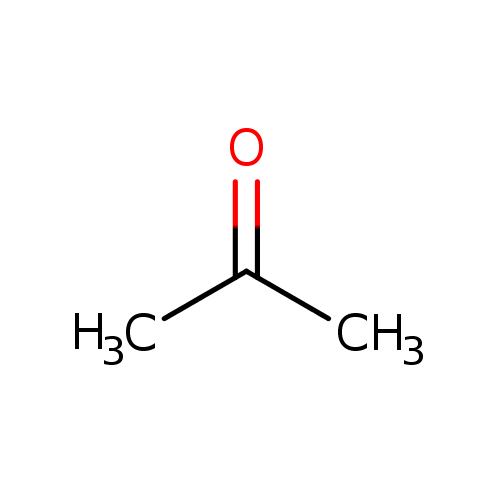
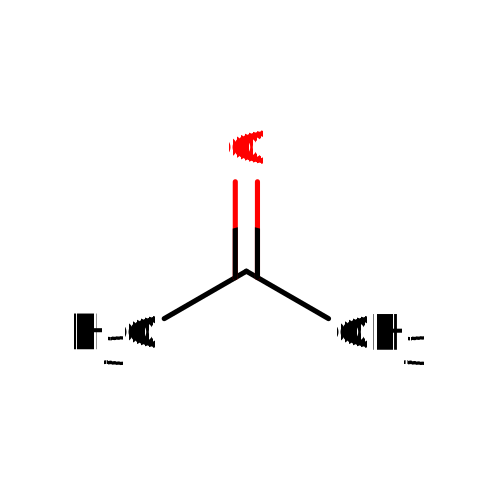
Chemical Structure
Thumb
Synonyms
ValueSource
2-PropanoneChEBI
AcetonChEBI
AzetonChEBI
beta-KetopropaneChEBI
Dimethyl ketoneChEBI
DimethylcetoneChEBI
DimethylketonChEBI
DimethylketoneChEBI
Methyl ketoneChEBI
PropanonChEBI
PropanoneChEBI
Pyroacetic etherChEBI
b-KetopropaneGenerator
Β-ketopropaneGenerator
DimethylformaldehydeHMDB
Chemical FormulaC3H6O
Average Molecular Mass58.079 g/mol
Monoisotopic Mass58.042 g/mol
CAS Registry Number67-64-1
IUPAC Namepropan-2-one
Traditional Nameacetone
SMILESCC(C)=O
InChI IdentifierInChI=1S/C3H6O/c1-3(2)4/h1-2H3
InChI KeyCSCPPACGZOOCGX-UHFFFAOYSA-N
Chemical Taxonomy
Description belongs to the class of organic compounds known as ketones. These are organic compounds in which a carbonyl group is bonded to two carbon atoms R2C=O (neither R may be a hydrogen atom). Ketones that have one or more alpha-hydrogen atoms undergo keto-enol tautomerization, the tautomer being an enol.
KingdomOrganic compounds
Super ClassOrganic oxygen compounds
ClassOrganooxygen compounds
Sub ClassCarbonyl compounds
Direct ParentKetones
Alternative Parents
Substituents
  • Ketone
  • Organic oxide
  • Hydrocarbon derivative
  • Aliphatic acyclic compound
Molecular FrameworkAliphatic acyclic compounds
External Descriptors
Biological Properties
StatusDetected and Not Quantified
OriginEndogenous
Cellular Locations
  • Cytoplasm
  • Extracellular
  • Mitochondria
Biofluid LocationsNot Available
Tissue Locations
  • Adipose Tissue
  • Adrenal Gland
  • Bladder
  • Brain
  • Fibroblasts
  • Kidney
  • Liver
  • Myelin
  • Pancreas
  • Placenta
  • Skin
  • Stratum Corneum
  • Testes
  • Thyroid Gland
Pathways
NameSMPDB LinkKEGG Link
Ketone Body MetabolismSMP00071 map00072
Applications
Biological Roles
Chemical Roles
Physical Properties
StateLiquid
AppearanceNot Available
Experimental Properties
PropertyValue
Melting Point-94.8°C
Boiling Point56.2°C (133.2°F)
Solubility1000 mg/mL at 25°C
Predicted Properties
PropertyValueSource
Water Solubility193 g/LALOGPS
logP-0.29ALOGPS
logP0.11ChemAxon
logS0.52ALOGPS
pKa (Strongest Acidic)19.51ChemAxon
pKa (Strongest Basic)-7.2ChemAxon
Physiological Charge0ChemAxon
Hydrogen Acceptor Count1ChemAxon
Hydrogen Donor Count0ChemAxon
Polar Surface Area17.07 ŲChemAxon
Rotatable Bond Count0ChemAxon
Refractivity16.19 m³·mol⁻¹ChemAxon
Polarizability6.41 ųChemAxon
Number of Rings0ChemAxon
Bioavailability1ChemAxon
Rule of FiveYesChemAxon
Ghose FilterNoChemAxon
Veber's RuleYesChemAxon
MDDR-like RuleNoChemAxon
Spectra
Spectra
Spectrum TypeDescriptionSplash KeyView
GC-MSGC-MS Spectrum - EI-B (Non-derivatized)splash10-052f-9000000000-14f33068e4ba092deb77Spectrum
GC-MSGC-MS Spectrum - EI-B (Non-derivatized)splash10-0006-9000000000-23fa1a3953b34b4d17dbSpectrum
GC-MSGC-MS Spectrum - EI-B (Non-derivatized)splash10-0006-9000000000-5de48058c986d7c07ac3Spectrum
GC-MSGC-MS Spectrum - EI-B (Non-derivatized)splash10-0002-9000000000-ac4e03d64a5d08cb0e2dSpectrum
GC-MSGC-MS Spectrum - EI-B (Non-derivatized)splash10-052f-9000000000-14f33068e4ba092deb77Spectrum
GC-MSGC-MS Spectrum - EI-B (Non-derivatized)splash10-0006-9000000000-23fa1a3953b34b4d17dbSpectrum
GC-MSGC-MS Spectrum - EI-B (Non-derivatized)splash10-0006-9000000000-5de48058c986d7c07ac3Spectrum
GC-MSGC-MS Spectrum - EI-B (Non-derivatized)splash10-0002-9000000000-ac4e03d64a5d08cb0e2dSpectrum
Predicted GC-MSPredicted GC-MS Spectrum - GC-MS (Non-derivatized) - 70eV, Positivesplash10-052f-9000000000-bc353e3a40f83275872bSpectrum
Predicted GC-MSPredicted GC-MS Spectrum - GC-MS (Non-derivatized) - 70eV, PositiveNot AvailableSpectrum
LC-MS/MSLC-MS/MS Spectrum - Quattro_QQQ 10V, Positive (Annotated)splash10-0a4i-9000000000-cbc26702df42f89389a4Spectrum
LC-MS/MSLC-MS/MS Spectrum - Quattro_QQQ 25V, Positive (Annotated)splash10-052f-9000000000-76023af14a12c4b19cf9Spectrum
LC-MS/MSLC-MS/MS Spectrum - Quattro_QQQ 40V, Positive (Annotated)splash10-0a4l-9000000000-4a0900faf782fa344db9Spectrum
LC-MS/MSLC-MS/MS Spectrum - EI-B (JEOL JMS-D-3000) , Positivesplash10-052f-9000000000-cd6003561b339cd9243fSpectrum
LC-MS/MSLC-MS/MS Spectrum - EI-B (HITACHI M-80B) , Positivesplash10-0006-9000000000-23fa1a3953b34b4d17dbSpectrum
LC-MS/MSLC-MS/MS Spectrum - EI-B (HITACHI RMU-7M) , Positivesplash10-0006-9000000000-5de48058c986d7c07ac3Spectrum
Predicted LC-MS/MSPredicted LC-MS/MS Spectrum - 10V, Positivesplash10-0a4i-9000000000-31f47c962fee2ab51810Spectrum
Predicted LC-MS/MSPredicted LC-MS/MS Spectrum - 20V, Positivesplash10-0a4i-9000000000-29f0bd4f29c752b098b1Spectrum
Predicted LC-MS/MSPredicted LC-MS/MS Spectrum - 40V, Positivesplash10-0006-9000000000-44feb4a0693788e21f10Spectrum
Predicted LC-MS/MSPredicted LC-MS/MS Spectrum - 10V, Negativesplash10-0a4i-9000000000-e3c53a345dc69a6403f2Spectrum
Predicted LC-MS/MSPredicted LC-MS/MS Spectrum - 20V, Negativesplash10-0a4i-9000000000-786aa0674415a8c32182Spectrum
Predicted LC-MS/MSPredicted LC-MS/MS Spectrum - 40V, Negativesplash10-0a4i-9000000000-3bc848ca563aa39df37eSpectrum
Predicted LC-MS/MSPredicted LC-MS/MS Spectrum - 10V, Negativesplash10-0a4i-9000000000-6e3379842f4da69e8e2bSpectrum
Predicted LC-MS/MSPredicted LC-MS/MS Spectrum - 20V, Negativesplash10-0a4i-9000000000-6e3379842f4da69e8e2bSpectrum
Predicted LC-MS/MSPredicted LC-MS/MS Spectrum - 40V, Negativesplash10-0a4i-9000000000-9251850c7854d63a048fSpectrum
Predicted LC-MS/MSPredicted LC-MS/MS Spectrum - 10V, Positivesplash10-0a4i-9000000000-7d56b578e5d5ea65f901Spectrum
Predicted LC-MS/MSPredicted LC-MS/MS Spectrum - 20V, Positivesplash10-0006-9000000000-f1d310daeae27abc7672Spectrum
Predicted LC-MS/MSPredicted LC-MS/MS Spectrum - 40V, Positivesplash10-0006-9000000000-3f1c663ba1bd7d012172Spectrum
MSMass Spectrum (Electron Ionization)splash10-0006-9000000000-e24ae6a1f2f0e7aac3e7Spectrum
1D NMR13C NMR SpectrumNot AvailableSpectrum
1D NMR1H NMR SpectrumNot AvailableSpectrum
1D NMR13C NMR SpectrumNot AvailableSpectrum
1D NMR1H NMR SpectrumNot AvailableSpectrum
1D NMR13C NMR SpectrumNot AvailableSpectrum
1D NMR1H NMR SpectrumNot AvailableSpectrum
1D NMR13C NMR SpectrumNot AvailableSpectrum
1D NMR1H NMR SpectrumNot AvailableSpectrum
1D NMR13C NMR SpectrumNot AvailableSpectrum
1D NMR1H NMR SpectrumNot AvailableSpectrum
1D NMR13C NMR SpectrumNot AvailableSpectrum
1D NMR1H NMR SpectrumNot AvailableSpectrum
1D NMR13C NMR SpectrumNot AvailableSpectrum
1D NMR1H NMR SpectrumNot AvailableSpectrum
1D NMR13C NMR SpectrumNot AvailableSpectrum
1D NMR1H NMR SpectrumNot AvailableSpectrum
1D NMR13C NMR SpectrumNot AvailableSpectrum
1D NMR1H NMR SpectrumNot AvailableSpectrum
1D NMR13C NMR SpectrumNot AvailableSpectrum
1D NMR1H NMR SpectrumNot AvailableSpectrum
1D NMR13C NMR SpectrumNot AvailableSpectrum
1D NMR1H NMR SpectrumNot AvailableSpectrum
2D NMR[1H,13C] 2D NMR SpectrumNot AvailableSpectrum
Toxicity Profile
Route of ExposureInhalation (19) ; oral (19) ; dermal (19) ; eye contact (19)
Mechanism of ToxicitySince acetone is highly water soluble, it is readily taken up by the blood and widely distributed to body tissues. Acetone may interfere with the composition of the membranes, altering their permeability to ions. Systemically, acetone is moderately toxic to the liver and produces hematological effects. The renal toxicity may be due to the metabolite, formate, which is known to be nephrotoxic and is excreted by the kidneys. One of the major effects of acetone is the potentiation of the toxicity of other chemicals. Pretreatment with acetone has been shown to potentiate the hepatotoxicity and nephrotoxicity of carbon tetrachloride and chloroform by inducing particular forms of cytochrome P-450, especially cytochrome P-45OIIE1, and associated enzyme activities. (N004)
MetabolismThe metabolic fate of acetone is independent of route of administration and involves three separate gluconeogenic pathways, with ultimate incorporation of carbon atoms into glucose and other products and substrates of intermediary metabolism with generation of carbon dioxide. The primary (major) pathway involves hepatic metabolism of acetone to acetol and hepatic metabolism of acetol to methylglyoxal, while two secondary (minor) pathways are partially extrahepatic, involving the extrahepatic reduction of acetol to L-1,2-propanediol. Subsequent conversion of acetol to methylglyoxal in microsomes is catalyzed by acetol monooxygenase (also called acetol hydroxylase), an activity also associated with cytochrome P-450IIE1, and also requires oxygen and NADPH. Methylglyoxal can then be converted to D-glucose by an unidentified pathway, and/or possibly by catalysis by glyoxalase I and II and glutathione to D-lactate, which is converted to D-glucose. Some of exogenous acetone is unmetabolized and is excreted primarily in the expired air with little acetone excreted in urine. (N004)
Toxicity ValuesLD50: 2400 mg/kg/day (Oral, Mouse) (N004)
Lethal DoseNot Available
Carcinogenicity (IARC Classification)No indication of carcinogenicity (not listed by IARC). (18)
Uses/SourcesMost acetone produced is used to make other chemicals that make plastics, fibers, and drugs. Acetone is also used to dissolve other substances. Exposure may occur from breathing air, drinking water and eating food with acetone, and through dermal and eye contact. (N004)
Minimum Risk LevelAcute Inhalation: 26 ppm (N004) Intermediate Inhalation: 13 ppm (N004) Chronic Inhalation: 13 ppm (N004)
Health EffectsPulmonary congestion and edema can follow inhalation of acetone, which irritates the mucosa. Gastrointestinal hemorrhage caused by repeated vomiting of blood has been reported. Neurobehavioral effects, indicative of narcosis, sedation, respiratory depression, ataxia, paresthesia and renal lesions can also result from acetone poisoning. (N004, A578)
SymptomsSore throat, cough, confusion, headache, dizziness, drowsiness, and unconsciousness are some signs observed after acetone poisoning. Moreover, ingestion of the product can cause nausea and vomiting. Redness, pain, blurred vision as well as corneal damage can result from eye exposure. A dry skin can be the result of dermal contact. Irritation of the nose, throat, lungs, and eyes can also occur depending on the route of exposure. (19)
TreatmentFollowing oral exposure to acetone, consider insertion of a nasogastric tube to aspirate stomach contents only after recent, large acetone ingestions; symptomatic and supportive treatment is generally all that is required. Following inhalation exposure, move patient to fresh air. Monitor for respiratory distress. If cough or difficulty breathing develops, evaluate for respiratory tract irritation, bronchitis, or pneumonitis. Administer oxygen and assist ventilation as required. Treat bronchospasm with inhaled beta2 agonist and oral or parenteral corticosteroids. Irrigate exposed eyes with copious amounts of room temperature water for at least 15 minutes in case of eye exposure to acetone. In case of dermal exposure, remove contaminated clothing and wash exposed area thoroughly with soap and water. A physician may need to examine the area if irritation or pain persists. (20)
Concentrations
Not Available
DrugBank IDNot Available
HMDB IDHMDB0001659
FooDB IDFDB008301
Phenol Explorer IDNot Available
KNApSAcK IDC00048304
BiGG ID34257
BioCyc IDACETONE
METLIN ID3745
PDB IDNot Available
Wikipedia LinkAcetone
Chemspider ID175
ChEBI ID15347
PubChem Compound ID180
Kegg Compound IDC00207
YMDB IDNot Available
ECMDB IDECMDB21435
References
Synthesis ReferenceIshizaki, Fumiaki. Acetone and butanol fermentation. Baiomasu Handobukku (2002), 166-175.
MSDSLink
General References
1. https://www.ncbi.nlm.nih.gov/pubmed/?term=17190852
2. https://www.ncbi.nlm.nih.gov/pubmed/?term=17347819
3. Ishizaki, Fumiaki. Acetone and butanol fermentation. Baiomasu Handobukku (2002), 166-175.
4. Enjalbert F, Nicot MC, Bayourthe C, Moncoulon R: Ketone bodies in milk and blood of dairy cows: relationship between concentrations and utilization for detection of subclinical ketosis. J Dairy Sci. 2001 Mar;84(3):583-9. doi: 10.3168/jds.S0022-0302(01)74511-0.
5. Toso B, Procida G, Stefanon B: Determination of volatile compounds in cows' milk using headspace GC-MS. J Dairy Res. 2002 Nov;69(4):569-77.
6. Klein MS, Almstetter MF, Schlamberger G, Nurnberger N, Dettmer K, Oefner PJ, Meyer HH, Wiedemann S, Gronwald W: Nuclear magnetic resonance and mass spectrometry-based milk metabolomics in dairy cows during early and late lactation. J Dairy Sci. 2010 Apr;93(4):1539-50. doi: 10.3168/jds.2009-2563.
7. Klein MS, Buttchereit N, Miemczyk SP, Immervoll AK, Louis C, Wiedemann S, Junge W, Thaller G, Oefner PJ, Gronwald W: NMR metabolomic analysis of dairy cows reveals milk glycerophosphocholine to phosphocholine ratio as prognostic biomarker for risk of ketosis. J Proteome Res. 2012 Feb 3;11(2):1373-81. doi: 10.1021/pr201017n. Epub 2011 Dec 9.
8. Sundekilde UK, Gustavsson F, Poulsen NA, Glantz M, Paulsson M, Larsen LB, Bertram HC: Association between the bovine milk metabolome and rennet-induced coagulation properties of milk. J Dairy Sci. 2014 Oct;97(10):6076-84. doi: 10.3168/jds.2014-8304. Epub 2014 Jul 30.
9. O'Callaghan TF, Vazquez-Fresno R, Serra-Cayuela A, Dong E, Mandal R, Hennessy D, McAuliffe S, Dillon P, Wishart DS, Stanton C, Ross RP: Pasture Feeding Changes the Bovine Rumen and Milk Metabolome. Metabolites. 2018 Apr 6;8(2). pii: metabo8020027. doi: 10.3390/metabo8020027.
10. Brigitta Gaspardo et al. Determination of volatile fractions in raw milk and ripened cheese by means of GC-MS. Results of a survey performed in the marginal area between Italy and Slovenia. Italian Jounal of Animal Science Vol 8, 377-390, 2009
11. A. Foroutan et al. The Chemical Composition of Commercial Cow's Milk (in preparation)
12. Ishizaki, Fumiaki. Acetone and butanol fermentation. Baiomasu Handobukku (2002), 166-175.
13. Subramanian A, Gupta A, Saxena S, Gupta A, Kumar R, Nigam A, Kumar R, Mandal SK, Roy R: Proton MR CSF analysis and a new software as predictors for the differentiation of meningitis in children. NMR Biomed. 2005 Jun;18(4):213-25.
14. Robinson RC, Shorr RG, Varrichio A, Park SS, Gelboin HV, Miller H, Friedman FK: Human liver cytochrome P-450 related to a rat acetone-inducible, nitrosamine-metabolizing cytochrome P-450: identification and isolation. Pharmacology. 1989;39(3):137-44.
15. Yamane N, Tsuda T, Nose K, Yamamoto A, Ishiguro H, Kondo T: Relationship between skin acetone and blood beta-hydroxybutyrate concentrations in diabetes. Clin Chim Acta. 2006 Mar;365(1-2):325-9. Epub 2005 Oct 11.
16. Palamanda J, Feng WW, Lin CC, Nomeir AA: Stimulation of tolbutamide hydroxylation by acetone and acetonitrile in human liver microsomes and in a cytochrome P-450 2C9-reconstituted system. Drug Metab Dispos. 2000 Jan;28(1):38-43.
17. Crawley SC, Hindsgaul O, Alton G, Pierce M, Palcic MM: An enzyme-linked immunosorbent assay for N-acetylglucosaminyltransferase-V. Anal Biochem. 1990 Feb 15;185(1):112-7.
18. Bairaktari E, Katopodis K, Siamopoulos KC, Tsolas O: Paraquat-induced renal injury studied by 1H nuclear magnetic resonance spectroscopy of urine. Clin Chem. 1998 Jun;44(6 Pt 1):1256-61.
19. Inoue S, Sato Y, Hasegawa H, Noguchi A, Yamada A, Kurata T, Iwasaki T: Cross-reactive antigenicity of nucleoproteins of lyssaviruses recognized by a monospecific antirabies virus nucleoprotein antiserum on paraffin sections of formalin-fixed tissues. Pathol Int. 2003 Aug;53(8):525-33.
20. Meiser JB, Nelson HS: Comparing conventional and acetone-precipitated dog allergen extract skin testing. J Allergy Clin Immunol. 2001 Apr;107(4):744-5.
21. Baum HP, Reichrath J, Theobald A, Schock G: Fixation requirements for the immunohistochemical reactivity of PCNA antibody PC10 on cryostat sections. Histochem J. 1994 Dec;26(12):929-33.
22. Benz J: Antidiabetic agents and lactation. J Hum Lact. 1992 Mar;8(1):27-8.
23. Benfeldt E, Serup J, Menne T: Effect of barrier perturbation on cutaneous salicylic acid penetration in human skin: in vivo pharmacokinetics using microdialysis and non-invasive quantification of barrier function. Br J Dermatol. 1999 Apr;140(4):739-48.
24. Paweska JT, Barnard BJ, Williams R: The use of sucrose-acetone-extracted Rift Valley fever virus antigen derived from cell culture in an indirect enzyme-linked immunosorbent assay and haemagglutination-inhibition test. Onderstepoort J Vet Res. 1995 Dec;62(4):227-33.
25. Wittmann S, Gilg T, Dietz HG, Grantzow R, Peschel O, von Meyer L: [Isopropanol and acetone level in serum after preoperative surface disinfection with antiseptics containing isopropanol]. Blutalkohol. 1992 Sep;29(5):326-35.
26. Bales JR, Higham DP, Howe I, Nicholson JK, Sadler PJ: Use of high-resolution proton nuclear magnetic resonance spectroscopy for rapid multi-component analysis of urine. Clin Chem. 1984 Mar;30(3):426-32.
27. Bird AR, Kossew B, Mulligan TP, Jacobs P: Regional thromboplastin standardisation using a human brain extract. S Afr Med J. 1989 Jun 3;75(11):538-40.
28. Kalapos MP: Possible physiological roles of acetone metabolism in humans. Med Hypotheses. 1999 Sep;53(3):236-42.
29. Abou-Zeid AA, Fouad M, Yassein M: Microbiological production of acetone-butanol by Clostridium acetobutylicum. Zentralbl Bakteriol Naturwiss. 1978;133(2):125-34.