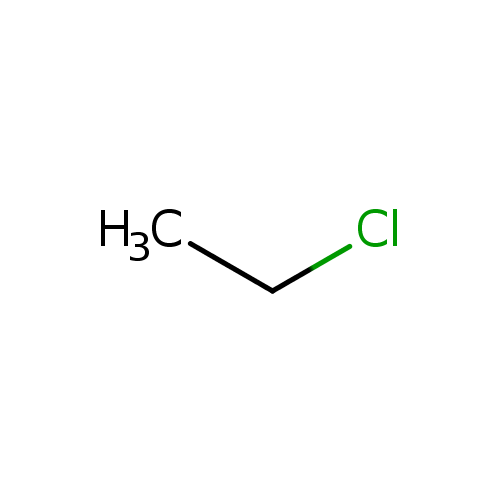
Chloroethane, also called ethyl chloride, is a colorless gas at room temperature and pressure, with a characteristically sharp odor. People can smell chloroethane in the air at levels above 4 parts chloroethane in a million parts of air by volume (ppm). It can be smelled in water at levels above 0.02 parts chloroethane in a million parts of water (ppm). In pressurized containers, chloroethane exists as a liquid. However, the liquid evaporates quickly when exposed to air. It catches fire easily and is very dangerous when exposed to heat or flame. Chloroethane does not occur naturally in the environment. It is present in the environment as a result of human activity. In the past, the largest single use for chloroethane was for the production of tetraethyl lead, which is a gasoline additive. However, production of chloroethane has decreased dramatically as a result of stricter government regulations controlling lead in gasoline. Other applications include use in the production of ethyl cellulose, dyes, medicinal drugs, and other commercial chemicals, and use as a solvent and refrigerant. It is used to numb skin prior to medical procedures such as ear piercing and skin biopsies, and it is used in the treatment of sports injuries. (3)
belongs to the class of organic compounds known as organochlorides. Organochlorides are compounds containing a chemical bond between a carbon atom and a chlorine atom.
Chloroethane targets the central nervous system and the heart. The lipophilicity of chloroethane suggests it acts upon the lipid layer of cellular membrane or the hydrophobic areas of specific membrane-bound cellular proteins. Euphoria and excitement resulting from the effects of chloroethane on the central nervous system induice catecholamine release. At levels adequate to induce anesthesia, chloroethane sensitizes the heart to the effects of catecholamines. This sensitization, along with asphyxia and hypoxia, can cause arrhythmias, and death. (3)
Metabolism
Because chloroethane is a small lipophilic compound, simple diffusion accounts for its absorption across membranes, and its higher affinity for lipids determines its distribution. Metabolism of chloroethane is believed to occur exclusively in the liver. The two major pathways are the production of acetaldehyde by cytochrome P450, and conjugation of chloroethane with glutathione to form S-ethyl-glutathione (catalyzed by glutathione S-transferase). The P450 enzyme CYP2El is responsible for chloroethane metabolism. The latter reaction is catalyzed by glutathione-S-transferase enzymes. Acetaldehyde is rapidly metabolized to acetic acid by aldehyde dehydrogenase. S-ethyl-glutathione can be furhter metabolized to S-ethyl-N-acety-L-cysteine (by γ-glutamyltranspeptidase, cysteinyl glycinase, and N-acetyltransferase, NAT) or S-ethyl-L-cysteine (by γ-glutamyltranspeptidase and cysteinyl glycinase). Chloroethane is eliminated from the body by pulmonary exhalation. (3)
3, not classifiable as to its carcinogenicity to humans. (2)
Uses/Sources
In the past, the largest single use for chloroethane was for the production of tetraethyl lead, which is a gasoline additive. However, production of chloroethane has decreased dramatically as a result of stricter government regulations controlling lead in gasoline. Other applications include use in the production of ethyl cellulose, dyes, medicinal drugs, and other commercial chemicals, and use as a solvent and refrigerant. It is used to numb skin prior to medical procedures such as ear piercing and skin biopsies, and it is used in the treatment of sports injuries. Exposure may result from breathing air containing chloroethane vapor, drinking water containing chloroethane, and through skin or eye contact. (3)
Chloroethane poisoning may cause liver and kidney damage. Decreased defensive responses against illness, neurological effects following inhalation, effects on the nervous system, and cardiac depression can result from the exposure to this toxin. Moreover, respiratory paralysis and toxic injury to the heart have been reported following anesthesia with chloroethane. (3)
Symptoms
Several sypmtoms can be manifested after inhalation of chloroethane, such as Jerking eye movements, an inability to control muscles in voluntary movements, difficulty in speaking clearly, an inability to perform finger tapping exercises, sluggish lower limb reflexes, seizures, difficulties in walking, disorientation, short-term memory loss, and hallucinations affecting sight and hearing. Moreover, dizziness, headache, feelings of drunkenness, nausea, vomiting, and abdominal cramps can occur. Redness, pain, and blurred vision can result from eye exposure. Long time skin exposure to chloroethane can cause frostbite. (3, 4)
Treatment
If the exposure occurred through inhalation, move patient to fresh air. Monitor for respiratory distress. If cough or difficulty breathing develops, evaluate for respiratory tract irritation, bronchitis, or pneumonitis. Administer oxygen and assist ventilation as required. Treat bronchospasm with inhaled beta2 agonist and oral or parenteral corticosteroids. In case of seizures, administer a benzodiazepine IV, diazepam or lorazepam; consider phenobarbital or propofol if seizures recur after diazepam. Monitor for hypotension, dysrhythmias, respiratory depression, and need for endotracheal intubation. Evaluate for hypoglycemia, electrolyte disturbances, hypoxia. Irrigate exposed eyes with copious amounts of room temperature water for at least 15 minutes if the exposure occurred through eye contact. Following dermal exposure, remove contaminated clothing and wash exposed area thoroughly with soap and water. Treat dermal irritation or burns with standard topical therapy; patients developing dermal hypersensitivity reactions may require treatment with systemic or topical corticosteroids or antihistamines. (5)