Record Information
Version1.0
Creation Date2009-03-06 18:58:13 UTC
Update Date2026-04-04 18:05:59 UTC
Accession NumberCHEM000159
Identification
Common NameCarbon disulfide
ClassSmall Molecule
DescriptionCarbon disulfide is found in kohlrabi. Obsolete fumigant against insects in stored grain and potatoes.
Contaminant Sources
  • Clean Air Act Chemicals
  • FooDB Chemicals
  • HMDB Contaminants - Feces
  • HPV EPA Chemicals
  • STOFF IDENT Compounds
  • T3DB toxins
  • Tobacco Smoke Compounds
  • ToxCast & Tox21 Chemicals
Contaminant Type
  • Food Toxin
  • Industrial/Workplace Toxin
  • Metabolite
  • Natural Compound
  • Organic Compound
  • Pollutant
  • Solvent
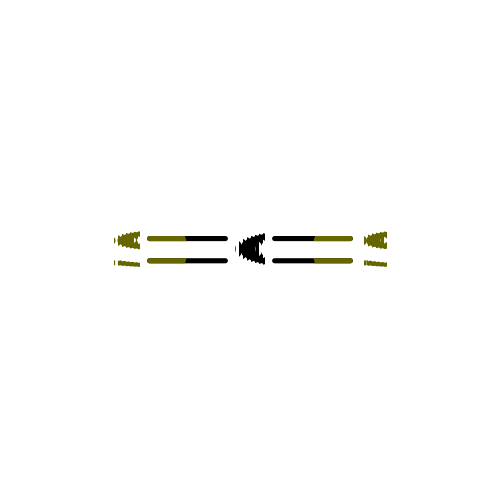
Chemical Structure
Thumb
Synonyms
ValueSource
Carbon disulphideChEBI
CS2ChEBI
Carbon bisulfideHMDB
Carbon bisulphideHMDB
Carbon disulphide, bsiHMDB
Carbon sulfide (CS2)HMDB
Dithiocarbonic anhydrideHMDB
Disulfide, carbonMeSH, HMDB
Chemical FormulaCS2
Average Molecular Mass76.141 g/mol
Monoisotopic Mass75.944 g/mol
CAS Registry Number75-15-0
IUPAC Namemethanedithione
Traditional Namecarbon disulfide
SMILESS=C=S
InChI IdentifierInChI=1S/CS2/c2-1-3
InChI KeyQGJOPFRUJISHPQ-UHFFFAOYSA-N
Chemical Taxonomy
Description belongs to the class of inorganic compounds known as other non-metal sulfides. These are inorganic compounds containing a sulfur atom of an oxidation state of -2, in which the heaviest atom bonded to the oxygen belongs to the class of other non-metals.
KingdomInorganic compounds
Super ClassHomogeneous non-metal compounds
ClassOther non-metal organides
Sub ClassOther non-metal sulfides
Direct ParentOther non-metal sulfides
Alternative Parents
Substituents
  • Other non-metal sulfide
  • Inorganic sulfide
Molecular FrameworkNot Available
External Descriptors
Biological Properties
StatusDetected and Not Quantified
OriginExogenous
Cellular Locations
  • Cytoplasm
  • Extracellular
Biofluid LocationsNot Available
Tissue LocationsNot Available
PathwaysNot Available
ApplicationsNot Available
Biological RolesNot Available
Chemical RolesNot Available
Physical Properties
StateLiquid
AppearanceNot Available
Experimental Properties
PropertyValue
Melting Point-111.6°C
Boiling Point46.3°C (115.3°F)
Solubility2.16 mg/mL at 20°C
Predicted Properties
PropertyValueSource
Water Solubility1.3 g/LALOGPS
logP2.25ALOGPS
logP1.95ChemAxon
logS-1.8ALOGPS
Physiological Charge0ChemAxon
Hydrogen Acceptor Count0ChemAxon
Hydrogen Donor Count0ChemAxon
Polar Surface Area0 ŲChemAxon
Rotatable Bond Count0ChemAxon
Refractivity22.37 m³·mol⁻¹ChemAxon
Polarizability6.79 ųChemAxon
Number of Rings0ChemAxon
Bioavailability1ChemAxon
Rule of FiveYesChemAxon
Ghose FilterNoChemAxon
Veber's RuleYesChemAxon
MDDR-like RuleNoChemAxon
Spectra
Spectra
Spectrum TypeDescriptionSplash KeyView
Predicted GC-MSPredicted GC-MS Spectrum - GC-MS (Non-derivatized) - 70eV, Positivesplash10-004i-9000000000-1be1dd1539f07de91257Spectrum
Predicted GC-MSPredicted GC-MS Spectrum - GC-MS (Non-derivatized) - 70eV, PositiveNot AvailableSpectrum
Predicted LC-MS/MSPredicted LC-MS/MS Spectrum - 10V, Positivesplash10-004i-9000000000-c32b774f5ef5f9e3b3b5Spectrum
Predicted LC-MS/MSPredicted LC-MS/MS Spectrum - 20V, Positivesplash10-004i-9000000000-c32b774f5ef5f9e3b3b5Spectrum
Predicted LC-MS/MSPredicted LC-MS/MS Spectrum - 40V, Positivesplash10-004i-9000000000-c32b774f5ef5f9e3b3b5Spectrum
Predicted LC-MS/MSPredicted LC-MS/MS Spectrum - 10V, Negativesplash10-00di-9000000000-f8b0b78f7785ba1a8d02Spectrum
Predicted LC-MS/MSPredicted LC-MS/MS Spectrum - 20V, Negativesplash10-00di-9000000000-f8b0b78f7785ba1a8d02Spectrum
Predicted LC-MS/MSPredicted LC-MS/MS Spectrum - 40V, Negativesplash10-00di-9000000000-f8b0b78f7785ba1a8d02Spectrum
Predicted LC-MS/MSPredicted LC-MS/MS Spectrum - 10V, Positivesplash10-004i-9000000000-05fa4e3edea82fd450a4Spectrum
Predicted LC-MS/MSPredicted LC-MS/MS Spectrum - 20V, Positivesplash10-004i-9000000000-05fa4e3edea82fd450a4Spectrum
Predicted LC-MS/MSPredicted LC-MS/MS Spectrum - 40V, Positivesplash10-004i-9000000000-05fa4e3edea82fd450a4Spectrum
MSMass Spectrum (Electron Ionization)splash10-004i-9000000000-4fd31585d55b0b9843c4Spectrum
1D NMR13C NMR SpectrumNot AvailableSpectrum
Toxicity Profile
Route of ExposureInhalation (9) ; oral (9) ; dermal (9) ; eye contact (9)
Mechanism of ToxicityCarbon disulfide is a potent nerve toxin and also affect liver enzymes, particularly those related to lipid metabolism. The increases in serum cholesterol that are sometimes seen following carbon disulfide exposure may be a result of increased hepatic cholesterol synthesis. The primary target of carbon disulfide appears to be the nervous system. Neurophysiological and behavioral effects as well as pathomorphology of peripheral nervous system structures have been reported in humans. Moreover, carbon disulfide metabolites of the thiocarbamate type inhibit aldehyde anhydrase. (8, 7)
MetabolismNitrogenase reduces carbon disulfide and can also be inhibited by this toxin. Carbon disulfide binds (in the form of AL CS2) mainly to hemoglobin and to a small extent to other blood proteins, such as albumin and gamma-globulin. Carbon disulfide is bioactivated by cytochrome P-450 to an unstable oxygen intermediate. The intermediate may either spontaneously degrade to atomic sulfur and carbonyl sulfide or hydrolyze to form atomic sulfur and monothiocarbonate. The atomic sulfur generated in these reactions may either covalently bind to macromolecules or be oxidized to products such as sulfate. The carbonyl sulfide formed may be converted to monothiocarbonate by carbonic anhydrase. Monothiocarbonate may further spontaneously degrade, regenerating carbonyl sulfide or forming carbon dioxide and sulfide bisulfide ion (HS-). The HS- formed can subsequently be oxidized to sulfate or other nonvolatile metabolites. Dithiocarbamates are the products of the reaction of carbon disulfide with amino acids. Most of the carbon disulfude absorbed is metabolized. Small traces of unchanged can be found in the urine. Carbon disulfide or carbonyl sulfide can conjugate with endogenous glutathione to yield thiazolidine-2-thione-4-carboxylic acid and 2-oxythiazolidine-4-carboxylic acid, respectively. Carbonic anhydrase 2 mediates the metabolism of carbon disulfide. (8, 2, 3, 4, 5, 6)
Toxicity ValuesLD50: 3020 mg/kg/day (Oral, Mouse) (8)
Lethal DoseNot Available
Carcinogenicity (IARC Classification)No indication of carcinogenicity to humans (not listed by IARC).
Uses/SourcesSeveral industries use carbon disulfide as a raw material to make such things as rayon, cellophane, and carbon tetrachloride. Exposure to carbon disulfide can results from breathing air, drinking water, or eating foods that contain it. One can also be exposed by skin contact with soil, water, or other substances that contain it. (8)
Minimum Risk LevelChronic Inhalation: 0.3 ppm (8) Acute Oral: 0.01 mg/kg/day (8)
Health EffectsFollowing inhalation, subtle and transient changes in pulmonary function can be manifested as reduced vital capacity and decreased partial pressure of arterial oxygen. Patients can developed normochromic and normocytic anemia, eosinopenia, and an increase in reticulocyte cell numbers after oral exposure . Carbon disulfide poisoning can result in central nervous system depression, coma, respiratory paralysis, and death. It also may accelerate coronary artery disease. Peripheral neuropathies, cranial nerve dysfunction, and neuropsychiatric changes are present in over 70% of chronic carbon sulfide victims. (8)
SymptomsDizziness, headache, nausea, shortness of breath, vomiting, weakness, irritability and hallucination can result from inhalation, ingestion or skin exposure to carbon disultfide. Skin and eye exposure can lead to pain, redness. Moreover, dermal exposure can lead to dryness of the skin; the carbon disulfide may be absorbed. Weak pulse, palpitations, fatigue, weakness in the legs, unsteady gait, vertigo, hyperesthesia, agitation, mania, hallucinations of sight, hearing, taste, and smell in acute are other symtoms of carbon disulfide poisoning. (9, 10)
TreatmentFollowing oral exposure, administer charcoal as a slurry (240 mL water/30 g charcoal). Consider gastric lavage after ingestion of a potentially life-threatening amount of poison if it can be performed soon after ingestion (generally within 1 hour). Intravenous urea (0.5 to 1.5 g/kg) has been recommended to inactivate free carbon disulfide in the blood. The efficacy of this treatment is unknown. Following inhalation exposure, move patient to fresh air. Monitor for respiratory distress. If cough or difficulty breathing develops, evaluate for respiratory tract irritation, bronchitis, or pneumonitis. Administer oxygen and assist ventilation as required. Treat bronchospasm with inhaled beta2 agonist and oral or parenteral corticosteroids. If the exposure occurred through eye exposure, irrigate exposed eyes with copious amounts of room temperature water for at least 15 minutes. If the exposure occurred through dermal contact, remove contaminated clothing and wash exposed area thoroughly with soap and water. (11)

Concentrations
Not Available
DrugBank IDNot Available
HMDB IDHMDB0036574
FooDB IDFDB015482
Phenol Explorer IDNot Available
KNApSAcK IDNot Available
BiGG IDNot Available
BioCyc IDNot Available
METLIN IDNot Available
PDB IDNot Available
Wikipedia LinkCarbon disulfide
Chemspider ID6108
ChEBI ID23012
PubChem Compound ID6348
Kegg Compound IDC19033
YMDB IDNot Available
ECMDB IDNot Available
References
Synthesis ReferenceNot Available
MSDSLink
General References
1. Vazquez-Landaverde PA, Torres JA, Qian MC: Quantification of trace volatile sulfur compounds in milk by solid-phase microextraction and gas chromatography-pulsed flame photometric detection. J Dairy Sci. 2006 Aug;89(8):2919-27. doi: 10.3168/jds.S0022-0302(06)72564-4.
2. Yannai, Shmuel. (2004) Dictionary of food compounds with CD-ROM: Additives, flavors, and ingredients. Boca Raton: Chapman & Hall/CRC.