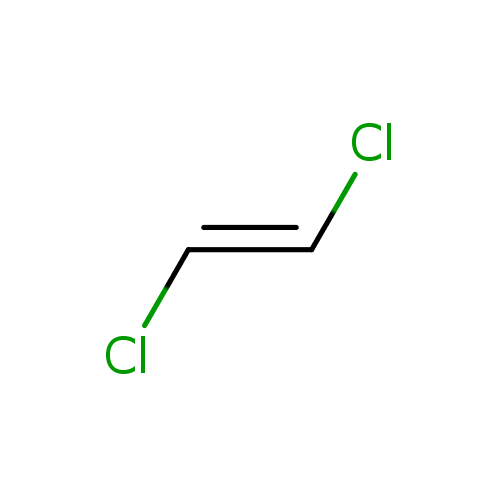
Trans-1,2-dichloroethene (1,2-DCE) is one of two isomers of 1,2-dichloroethene. It is a highly flammable, colorless liquid with a sharp, harsh odor. 1,2-DCE is used as a solvent for waxes, resins, acetylcellulose, perfumes, dyes, lacquers, thermoplastics, fats, and phenols. It is also used as an intermediate in the preparation of other chlorinated solvents. (2, 3)
Structure for CHEM000157: trans-1,2-Dichloroethene
Synonyms
Value
Source
(e)-1,2-Dichloroethylene
ChEBI
1,2-trans-Dichloroethylene
ChEBI
trans-1,2-Dichloroethylene
ChEBI
trans-Acetylene dichloride
ChEBI
trans-Dichloroethylene
ChEBI
1,2-Dichloroethylene, (Z)-isomer
MeSH
1,2-Dichloroethene
MeSH
1,2-Dichloroethylene, (e)-isomer
MeSH
1,2-Dichloroethylene
MeSH
Chemical Formula
C2H2Cl2
Average Molecular Mass
96.943 g/mol
Monoisotopic Mass
95.953 g/mol
CAS Registry Number
156-60-5
IUPAC Name
(E)-1,2-dichloroethene
Traditional Name
trans-1,2-dichloroethylene
SMILES
Cl\C=C\Cl
InChI Identifier
InChI=1S/C2H2Cl2/c3-1-2-4/h1-2H/b2-1+
InChI Key
KFUSEUYYWQURPO-OWOJBTEDSA-N
Chemical Taxonomy
Description
belongs to the class of organic compounds known as vinyl chlorides. These are vinyl halides in which a chlorine atom is bonded to an sp2-hybridised carbon atom.
Trans-1,2-dichloroethene is a volatile, lipophilic molecule that easily moves through the respiratory and gastrointestinal systems. It has a high affinity for lipids and blood, but little accumulation in tissues. 1,2-Dichloroethene isomers inhibit liver enzymes involved in metabolism and may increase the “toxic” response to other chemicals. Reactive metabolites of trans-1,2-dichloroethene modify the heme moiety of hepatic microsomal cytochrome P-450, resulting in a loss of both cytochrome P-450 and heme. Trans-1,2-dichloroethene can also mixed-function oxidase activities. Metabolism of trans-1,2-dichloroethene can lead to dose-related decrease in the levels of serum glutamicoxaloacetic transaminase (SGOT) and serum glutamic-pyruvic transaminase (SGPT). (2)
Metabolism
Metabolism of trans-1,2-dichloroethene is initially catalyzed by hepatic microsomal cytochrome P-450. This metabolism is believed to involve epoxidation of the ethylene double bond, forming dichlorinated epoxides. Dichlorinated epoxides, in turn, can undergo a non-enzymatic rearrangement. Studies on the metabolism of 1,2-dichloroethene by hepatic microsomes and hepatocytes provide evidence to suggest that dichloroacetaldehyde is the predominant metabolite of microsomal cytochrome P-450 and that it, in turn, is extensively converted to dichloroethanol and dichloroacetate by cytosolic and/or mitochondrial aldehyde and alcohol dehydrogenases present in hepatocytes. (2)
No indication of carcinogenicity (not listed by IARC). (1)
Uses/Sources
Trans-1,2-DCE is used as a solvent for waxes, resins, acetylcellulose, perfumes, dyes, lacquers, thermoplastics, fats, and phenols. It is also used as an intermediate in the preparation of other chlorinated solvents. One may be exposed by breathing contaminated air, eating, or drinking the substance, or by skin contact (2, 3).
Breathing trans-1,2-DCE can cause sever liver and kidney damages, pulmonary capillary hyperemia, as well as alveolar septal distention; depression of the central nervous sustem can occur; moderate iritis and conjunctivitis can follow eye exposure; dermatitis and irritation of mucous membranes can follow dermal exposure. Symptoms associated with lethal oral doses included decreased activity, ataxia, suppressed or total loss of righting reflex, and depressed respiration. (2)
Symptoms
Symptoms of trans-1,2-DCE exposure include nausea, dowiness, and tiredness. Mild or moderate erythema may follow dermal exposure, and skin or eye irritation can follow dermal/eye contact. (2)
Treatment
Following inhalation exposure, move patient to fresh air. Monitor for respiratory distress. If cough or difficulty breathing develops, evaluate for respiratory tract irritation, bronchitis, or pneumonitis. Administer oxygen and assist ventilation as required. Treat bronchospasm with inhaled beta2 agonist and oral or parenteral corticosteroids. In case of seizures, administer a benzodiazepine IV. Irrigate exposed eyes with copious amounts of room temperature water for at least 15 minutes in case of eye exposure. Following dermal exposure, remove contaminated clothing and wash exposed area thoroughly with soap and water. Treat dermal irritation or burns with standard topical therapy. Patients developing dermal hypersensitivity reactions may require treatment with systemic or topical corticosteroids or antihistamines. (4)