Record Information
Version1.0
Creation Date2009-03-06 18:58:12 UTC
Update Date2026-03-26 22:51:12 UTC
Accession NumberCHEM000150
Identification
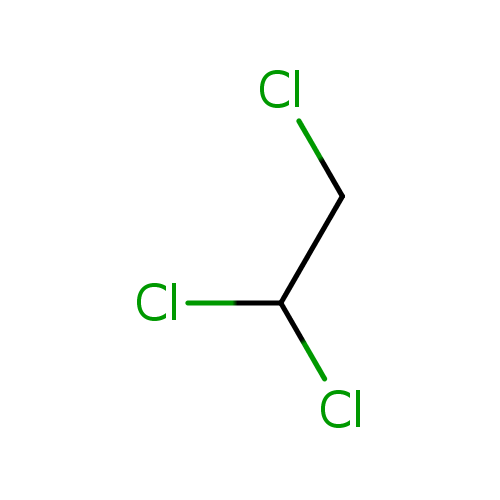
Common Name1,1,2-Trichloroethane
ClassSmall Molecule
Description1,1,2-Trichloroethane is a colorless, sweet-smelling liquid that does not burn easily and boils at a higher temperature than water. It is used mostly where 1,1-dichloroethene (vinylidene chloride) is made. 1,1,2-Trichloroethane is used as a solvent. When it is released into the environment, most 1,1,2-trichloroethane finally ends up in the air, but some may enter groundwater. Breakdown in both the air and groundwater is slow. (3)
Contaminant Sources
  • Clean Air Act Chemicals
  • HPV EPA Chemicals
  • IARC Carcinogens Group 3
  • OECD HPV Chemicals
  • STOFF IDENT Compounds
  • T3DB toxins
  • ToxCast & Tox21 Chemicals
Contaminant Type
  • Industrial/Workplace Toxin
  • Lachrymator
  • Organic Compound
  • Organochloride
  • Pollutant
  • Solvent
  • Synthetic Compound
Chemical Structure
Thumb
Synonyms
ValueSource
1,1,2-TrichloraethanChEBI
1,1,2-TrichlorethaneChEBI
1,2,2-TrichloroethaneChEBI
beta-TChEBI
beta-TrichloroethaneChEBI
b-TGenerator
β-TGenerator
b-TrichloroethaneGenerator
Β-trichloroethaneGenerator
1,1,2-Trichloroethane, 14C-2-labeledHMDB
1,1,2-Trichloroethane, 36CL-labeledHMDB
1,1,2-TrichloroethaneMeSH
Chemical FormulaC2H3Cl3
Average Molecular Mass133.404 g/mol
Monoisotopic Mass131.930 g/mol
CAS Registry Number79-00-5
IUPAC Name1,1,2-trichloroethane
Traditional Name1,1, 2-trichloroethane
SMILESClCC(Cl)Cl
InChI IdentifierInChI=1S/C2H3Cl3/c3-1-2(4)5/h2H,1H2
InChI KeyUBOXGVDOUJQMTN-UHFFFAOYSA-N
Chemical Taxonomy
Description belongs to the class of organic compounds known as organochlorides. Organochlorides are compounds containing a chemical bond between a carbon atom and a chlorine atom.
KingdomOrganic compounds
Super ClassOrganohalogen compounds
ClassOrganochlorides
Sub ClassNot Available
Direct ParentOrganochlorides
Alternative Parents
Substituents
  • Hydrocarbon derivative
  • Organochloride
  • Alkyl halide
  • Alkyl chloride
  • Aliphatic acyclic compound
Molecular FrameworkAliphatic acyclic compounds
External Descriptors
Biological Properties
StatusDetected and Not Quantified
OriginExogenous
Cellular Locations
  • Membrane
Biofluid LocationsNot Available
Tissue LocationsNot Available
PathwaysNot Available
ApplicationsNot Available
Biological RolesNot Available
Chemical RolesNot Available
Physical Properties
StateLiquid
AppearanceColorless liquid.
Experimental Properties
PropertyValue
Melting Point-36.6°C
Boiling Point110 - 115 °C
Solubility4.59 mg/mL at 25 °C [HORVATH,AL et al. (1999)]
Predicted Properties
PropertyValueSource
Water Solubility2.93 g/LALOGPS
logP2.02ALOGPS
logP2.17ChemAxon
logS-1.7ALOGPS
Physiological Charge0ChemAxon
Hydrogen Acceptor Count0ChemAxon
Hydrogen Donor Count0ChemAxon
Polar Surface Area0 ŲChemAxon
Rotatable Bond Count1ChemAxon
Refractivity25.71 m³·mol⁻¹ChemAxon
Polarizability10.43 ųChemAxon
Number of Rings0ChemAxon
Bioavailability1ChemAxon
Rule of FiveYesChemAxon
Ghose FilterNoChemAxon
Veber's RuleYesChemAxon
MDDR-like RuleNoChemAxon
Spectra
Spectra
Spectrum TypeDescriptionSplash KeyView
Predicted GC-MSPredicted GC-MS Spectrum - GC-MS (Non-derivatized) - 70eV, Positivesplash10-000t-9100000000-bf79232c76a22826ba5cSpectrum
Predicted GC-MSPredicted GC-MS Spectrum - GC-MS (Non-derivatized) - 70eV, PositiveNot AvailableSpectrum
Predicted LC-MS/MSPredicted LC-MS/MS Spectrum - 10V, Positivesplash10-001i-1900000000-3f6b6c4778619860fc19Spectrum
Predicted LC-MS/MSPredicted LC-MS/MS Spectrum - 20V, Positivesplash10-001i-1900000000-de14959b0cb16e8cd707Spectrum
Predicted LC-MS/MSPredicted LC-MS/MS Spectrum - 40V, Positivesplash10-01ot-9000000000-eece4c8a26c8a21d5fb7Spectrum
Predicted LC-MS/MSPredicted LC-MS/MS Spectrum - 10V, Negativesplash10-001i-1900000000-cc11fb3585800aaf8723Spectrum
Predicted LC-MS/MSPredicted LC-MS/MS Spectrum - 20V, Negativesplash10-0006-9400000000-bcf58e3a5f886b9be8cfSpectrum
Predicted LC-MS/MSPredicted LC-MS/MS Spectrum - 40V, Negativesplash10-0006-9200000000-9058e4afd6f1129806b2Spectrum
Predicted LC-MS/MSPredicted LC-MS/MS Spectrum - 10V, Negativesplash10-001i-0900000000-6838b4c597e6d80ac4e2Spectrum
Predicted LC-MS/MSPredicted LC-MS/MS Spectrum - 20V, Negativesplash10-001i-9000000000-c2fa753da65a4bac80a1Spectrum
Predicted LC-MS/MSPredicted LC-MS/MS Spectrum - 40V, Negativesplash10-001i-7900000000-ff817bfd636e4a77346cSpectrum
Predicted LC-MS/MSPredicted LC-MS/MS Spectrum - 10V, Positivesplash10-001i-0900000000-c8f6da92e011fc99d023Spectrum
Predicted LC-MS/MSPredicted LC-MS/MS Spectrum - 20V, Positivesplash10-001i-0900000000-c8f6da92e011fc99d023Spectrum
Predicted LC-MS/MSPredicted LC-MS/MS Spectrum - 40V, Positivesplash10-03dj-9000000000-97d9dd18a5aad6cec972Spectrum
MSMass Spectrum (Electron Ionization)splash10-0002-9000000000-316c9aca46098f901713Spectrum
1D NMR1H NMR SpectrumNot AvailableSpectrum
1D NMR13C NMR SpectrumNot AvailableSpectrum
1D NMR1H NMR SpectrumNot AvailableSpectrum
1D NMR13C NMR SpectrumNot AvailableSpectrum
1D NMR1H NMR SpectrumNot AvailableSpectrum
1D NMR13C NMR SpectrumNot AvailableSpectrum
1D NMR1H NMR SpectrumNot AvailableSpectrum
1D NMR13C NMR SpectrumNot AvailableSpectrum
1D NMR1H NMR SpectrumNot AvailableSpectrum
1D NMR13C NMR SpectrumNot AvailableSpectrum
1D NMR1H NMR SpectrumNot AvailableSpectrum
1D NMR13C NMR SpectrumNot AvailableSpectrum
1D NMR1H NMR SpectrumNot AvailableSpectrum
1D NMR13C NMR SpectrumNot AvailableSpectrum
1D NMR1H NMR SpectrumNot AvailableSpectrum
1D NMR13C NMR SpectrumNot AvailableSpectrum
1D NMR1H NMR SpectrumNot AvailableSpectrum
1D NMR13C NMR SpectrumNot AvailableSpectrum
1D NMR1H NMR SpectrumNot AvailableSpectrum
1D NMR13C NMR SpectrumNot AvailableSpectrum
1D NMR1H NMR SpectrumNot AvailableSpectrum
Toxicity Profile
Route of ExposureInhalation (4) ; oral (4) ; dermal (4)
Mechanism of ToxicityAcyl chlorides and free radicals formed during the metabolism of 1,1,2-trichloroethane are reactive metabolites that can bind to proteins and nucleic acids (DNA, RNA), and are suspected of being cytotoxic, mutagenic, and carginogenic. (3, 1)
MetabolismAfter 1,1,2-trichloroethane enters the body, it is carried by the blood to organs and tissues such as the liver, kidney, brain, heart, spleen, and fat. The primary metabolites identified are chloroacetic acid, S-carboxymethylcysteine, and thiodiacetic acid. S-carboxymethycysteine and thiodiacetic acid are formed from 1,1,2-trichloroethane following conjugation with glutathione. Chloroacetic acid is formed by hepatic cytochrome P-450. This reaction is thought to proceed via the acyl chloride. Cytochrome P-450 can also produce free radicals from 1,1,2-trichloroethane. Experiments show that most 1,1,2-trichloroethane leaves the body unchanged in the breath and as other substances that it is changed into in the urine in about 1 day. (3)
Toxicity ValuesLD50: 837 mg/kg (Oral, Rat) (5) LD50: 5.38 g/kg (Dermal, Rabbit) (5)
Lethal DoseNot Available
Carcinogenicity (IARC Classification)3, not classifiable as to its carcinogenicity to humans. (2)
Uses/Sources1,1,2-Trichloroethane is used as a solvent. Exposure to 1,1,2-trichloroethane would most likely be from breathing vapors of the chemical or from skin contact. Drinking contaminated water is also a route of exposure. (3)
Minimum Risk LevelAcute Oral: 0.3 mg/kg/day (Mouse) (3) Intermediate Oral: 0.04 mg/kg/day (Mouse) 9L422)
Health EffectsInhalation of high levels of 1,1,2-trichloroethanein can affect the nervous system and cause sleepiness. 1,1,2-Trichloroethane may also affect the liver, kidney, and digestive tract, produce skin irritation, and affect the body's ability to fight infections. (3)
SymptomsInhalation or ingestion of 1,1,2-trichloroethane can cause dizziness, drowsiness, headache, nausea, shortness of breath, and unconsciousness. The compound can be absorbed following dermal contact. Skin exposure can also lead to temporary stinging and burning pain. Other symptoms of exposure to this compound may include irritation of the skin, eyes, nose, mucous membranes, and upper respiratory tract. (4, 6)
TreatmentFollowing ingestion, administer charcoal as a slurry (240 mL water/30 g charcoal). Usual dose: 25 to 100 g in adults/adolescents, 25 to 50 g in children (1 to 12 years), and 1 g/kg in infants less than 1 year old. Consider gastric lavage after ingestion of a potentially life-threatening amount of poison if it can be performed soon after ingestion. In case of seizures, administer a benzodiazepine IV. Following inhalation exposure, move patient to fresh air. Monitor for respiratory distress. If cough or difficulty breathing develops, evaluate for respiratory tract irritation, bronchitis, or pneumonitis. Administer oxygen and assist ventilation as required. Treat bronchospasm with inhaled beta2 agonist and oral or parenteral corticosteroids. In case of eye exposure, irrigate exposed eyes with copious amounts of room temperature water for at least 15 minutes. In case of dermal exposure, remove contaminated clothing and wash exposed area thoroughly with soap and water. (7)

Concentrations
Not Available
DrugBank IDNot Available
HMDB IDHMDB0244041
FooDB IDNot Available
Phenol Explorer IDNot Available
KNApSAcK IDNot Available
BiGG IDNot Available
BioCyc IDNot Available
METLIN IDNot Available
PDB IDNot Available
Wikipedia Link1,1,2-Trichloroethane
Chemspider ID6326
ChEBI ID36018
PubChem Compound ID6574
Kegg Compound IDC19536
YMDB IDNot Available
ECMDB IDECMDB20127
References
Synthesis ReferenceNot Available
MSDSNot Available
General References
1. https://www.ncbi.nlm.nih.gov/pubmed/?term=20665324
2. https://www.ncbi.nlm.nih.gov/pubmed/?term=22375547
3. https://www.ncbi.nlm.nih.gov/pubmed/?term=23046725
4. https://www.ncbi.nlm.nih.gov/pubmed/?term=23990262
5. Barupal DK, Fiehn O: Generating the Blood Exposome Database Using a Comprehensive Text Mining and Database Fusion Approach. Environ Health Perspect. 2019 Sep;127(9):97008. doi: 10.1289/EHP4713. Epub 2019 Sep 26.