Record Information
Version1.0
Creation Date2009-03-06 18:58:11 UTC
Update Date2026-03-26 20:22:01 UTC
Accession NumberCHEM000145
Identification
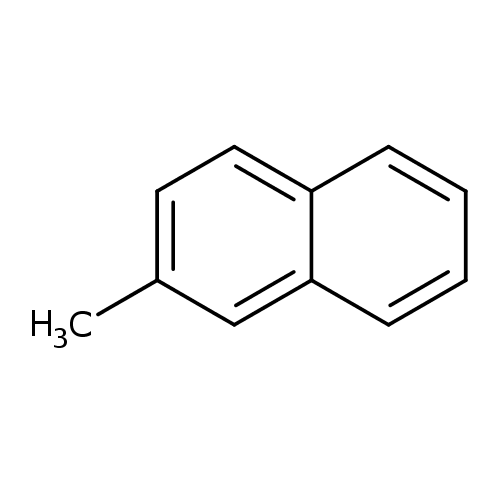
Common Name2-Methylnaphthalene
ClassSmall Molecule
Description2-Methylnaphthalene is one of over 100 different polycyclic aromatic hydrocarbons (PAHs). PAHs are chemicals that are formed during the incomplete burning organic substances, such as fossil fuels. They are usually found as a mixture containing two or more of these compounds. (4)
Contaminant Sources
  • FooDB Chemicals
  • HPV EPA Chemicals
  • My Exposome Chemicals
  • OECD HPV Chemicals
  • STOFF IDENT Compounds
  • Sludge Chemicals
  • T3DB toxins
  • ToxCast & Tox21 Chemicals
Contaminant Type
  • Aromatic Hydrocarbon
  • Food Toxin
  • Industrial By-product/Pollutant
  • Industrial/Workplace Toxin
  • Natural Compound
  • Organic Compound
  • Pollutant
  • Polycyclic Aromatic Hydrocarbon
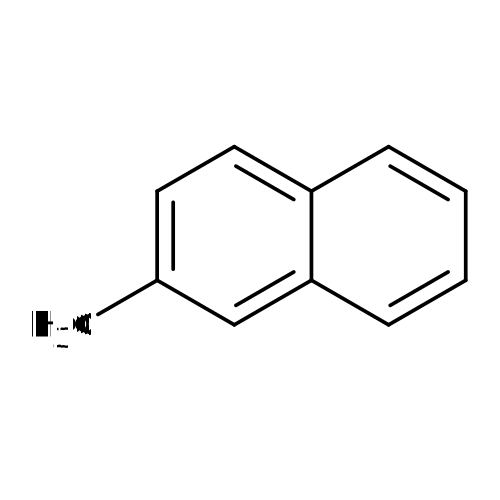
Chemical Structure
Thumb
Synonyms
ValueSource
beta-MethylnaphthaleneChEBI
b-MethylnaphthaleneGenerator
Β-methylnaphthaleneGenerator
2-Methylnaphthalene, ion(1+)MeSH
2-Methylnaphthalene, ion(1-)MeSH
2-Methylnaphthalene, lithium salt, ion(1-)MeSH
2-Methylnaphthalene, methyl-13C-labeledMeSH
2-Methylnaphthalene, naphthalene-1-(13)C-labeledMeSH
Chemical FormulaC11H10
Average Molecular Mass142.197 g/mol
Monoisotopic Mass142.078 g/mol
CAS Registry Number91-57-6
IUPAC Name2-methylnaphthalene
Traditional Name2-methylnaphthalene
SMILESCC1=CC=C2C=CC=CC2=C1
InChI IdentifierInChI=1S/C11H10/c1-9-6-7-10-4-2-3-5-11(10)8-9/h2-8H,1H3
InChI KeyQIMMUPPBPVKWKM-UHFFFAOYSA-N
Chemical Taxonomy
Description belongs to the class of organic compounds known as naphthalenes. Naphthalenes are compounds containing a naphthalene moiety, which consists of two fused benzene rings.
KingdomOrganic compounds
Super ClassBenzenoids
ClassNaphthalenes
Sub ClassNot Available
Direct ParentNaphthalenes
Alternative Parents
Substituents
  • Naphthalene
  • Aromatic hydrocarbon
  • Polycyclic hydrocarbon
  • Unsaturated hydrocarbon
  • Hydrocarbon
  • Aromatic homopolycyclic compound
Molecular FrameworkAromatic homopolycyclic compounds
External Descriptors
Biological Properties
StatusDetected and Not Quantified
OriginExogenous
Cellular Locations
  • Membrane
Biofluid LocationsNot Available
Tissue LocationsNot Available
PathwaysNot Available
ApplicationsNot Available
Biological RolesNot Available
Chemical RolesNot Available
Physical Properties
StateSolid
AppearanceWhite powder.
Experimental Properties
PropertyValue
Melting Point34.4°C
Boiling PointNot Available
Solubility0.0246 mg/mL at 25 °C [YALKOWSKY,SH & DANNENFELSER,RM (1992)]
Predicted Properties
PropertyValueSource
Water Solubility0.017 g/LALOGPS
logP3.83ALOGPS
logP3.48ChemAxon
logS-3.9ALOGPS
Physiological Charge0ChemAxon
Hydrogen Acceptor Count0ChemAxon
Hydrogen Donor Count0ChemAxon
Polar Surface Area0 ŲChemAxon
Rotatable Bond Count0ChemAxon
Refractivity47.55 m³·mol⁻¹ChemAxon
Polarizability16.78 ųChemAxon
Number of Rings2ChemAxon
Bioavailability1ChemAxon
Rule of FiveYesChemAxon
Ghose FilterNoChemAxon
Veber's RuleYesChemAxon
MDDR-like RuleNoChemAxon
Spectra
Spectra
Spectrum TypeDescriptionSplash KeyView
GC-MSGC-MS Spectrum - EI-B (Non-derivatized)splash10-0006-9800000000-1ae0df46161af462c53dSpectrum
GC-MSGC-MS Spectrum - EI-B (Non-derivatized)splash10-0006-2900000000-e3d5d8950004ca237838Spectrum
GC-MSGC-MS Spectrum - CI-B (Non-derivatized)splash10-0006-0900000000-fc999862e44e7aea8048Spectrum
Predicted GC-MSPredicted GC-MS Spectrum - GC-MS (Non-derivatized) - 70eV, Positivesplash10-0006-0900000000-f176e8ebeee029c8ad89Spectrum
Predicted LC-MS/MSPredicted LC-MS/MS Spectrum - 10V, Positivesplash10-0006-0900000000-8f9f0039a7c67ac75150Spectrum
Predicted LC-MS/MSPredicted LC-MS/MS Spectrum - 20V, Positivesplash10-0006-0900000000-58f20b5190f45805880eSpectrum
Predicted LC-MS/MSPredicted LC-MS/MS Spectrum - 40V, Positivesplash10-014l-2900000000-b954930335ee0c854ed7Spectrum
Predicted LC-MS/MSPredicted LC-MS/MS Spectrum - 10V, Negativesplash10-0006-0900000000-682acebb92e0b06e8e28Spectrum
Predicted LC-MS/MSPredicted LC-MS/MS Spectrum - 20V, Negativesplash10-0006-0900000000-682acebb92e0b06e8e28Spectrum
Predicted LC-MS/MSPredicted LC-MS/MS Spectrum - 40V, Negativesplash10-0006-0900000000-0bcf13e1acfdfe656436Spectrum
MSMass Spectrum (Electron Ionization)splash10-0006-2900000000-9ac29319d37f96c9e871Spectrum
1D NMR1H NMR SpectrumNot AvailableSpectrum
1D NMR13C NMR SpectrumNot AvailableSpectrum
Toxicity Profile
Route of ExposureOral (4) ; inhalation (4)
Mechanism of ToxicityThe ability of PAH's to bind to blood proteins such as albumin allows them to be transported throughout the body. Many PAH's induce the expression of cytochrome P450 enzymes, especially CYP1A1, CYP1A2, and CYP1B1, by binding to the aryl hydrocarbon receptor or glycine N-methyltransferase protein. These enzymes metabolize PAH's into their toxic intermediates. The reactive metabolites of PAHs (epoxide intermediates, dihydrodiols, phenols, quinones, and their various combinations) covalently bind to DNA and other cellular macromolecules, initiating mutagenesis and carcinogenesis. (4, 6, 2, 3)
MetabolismPAH metabolism occurs in all tissues, usually by cytochrome P-450 and its associated enzymes. PAHs are metabolized into reactive intermediates, which include epoxide intermediates, dihydrodiols, phenols, quinones, and their various combinations. The phenols, quinones, and dihydrodiols can all be conjugated to glucuronides and sulfate esters; the quinones also form glutathione conjugates. (4)
Toxicity ValuesLD50: 1630 mg/kg (Oral, Rat) (8)
Lethal DoseNot Available
Carcinogenicity (IARC Classification)Not directly listed by IARC. 2-Methylnaphthalene is found in coal tar mixtures, and occupational exposures during coal-tar distillation and during paving and roofing with coal-tar pitch are classified as carcinogenic to humans (Group 1). (7)
Uses/SourcesPAHs are released into the environment via the combustion of fossil fuels, coke oven emissions and vehicle exhausts, as well as naturally from forest fires and voLcanic eruptions. PAHs from these sources may contaminate nearly water systems. They are also found in coal tar and charbroiled food. 2-Methylnaphthalene is used to make other chemicals such as dyes and resins. (4, 5)
Minimum Risk LevelNot Available
Health EffectsPAHs are carcinogens and have been associated with the increased risk of skin, respiratory tract, bladder, stomach, and kidney cancers. They may also cause reproductive effects and depress the immune system. Exposure to large amounts of 2-methylnapthalene may damage or destroy the red blood cells, resulting in hemolytic anemia. (4, 5)
SymptomsAcute exposure to PAHs causes irritation and inflammation of the skin and lung tissue. Some symptoms of hemolytic anemia are fatigue, lack of appetite, restlessness, and pale skin. Exposure to large amounts of 2-methylnapthalene may also cause nausea, vomiting, diarrhea, blood in the urine, and a yellow color to the skin. (1, 5)
TreatmentThere is no known antidote for PAHs. Exposure is usually handled with symptomatic treatment. (4)

Concentrations
Not Available
DrugBank IDNot Available
HMDB IDHMDB0062000
FooDB IDFDB007631
Phenol Explorer IDNot Available
KNApSAcK IDNot Available
BiGG IDNot Available
BioCyc IDNot Available
METLIN IDNot Available
PDB IDNot Available
Wikipedia Link2-Methylnaphthalene
Chemspider IDNot Available
ChEBI ID50720
PubChem Compound ID7055
Kegg Compound IDC14098
YMDB IDNot Available
ECMDB IDM2MDB004725
References
Synthesis ReferenceNot Available
MSDSNot Available
General References
1. https://www.ncbi.nlm.nih.gov/pubmed/?term=21478643
2. https://www.ncbi.nlm.nih.gov/pubmed/?term=22002322
3. https://www.ncbi.nlm.nih.gov/pubmed/?term=22324881
4. https://www.ncbi.nlm.nih.gov/pubmed/?term=24117136
5. https://www.ncbi.nlm.nih.gov/pubmed/?term=24440761