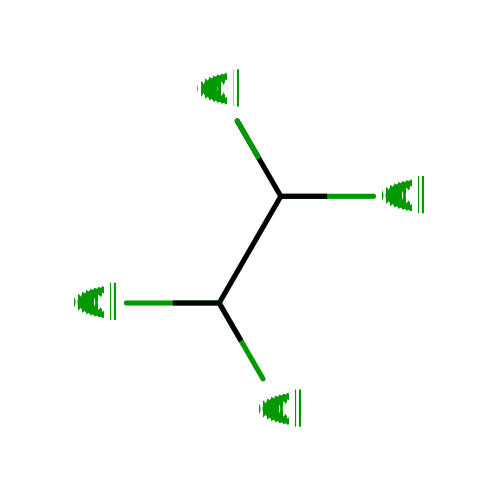
1,1,2,2-Tetrachloroethane is a chlorinated derivative of ethane. It has the highest solvent power of any chlorinated hydrocarbon. As a refrigerant, it is used under the name R-130. It was once widely used as a solvent and as an intermediate in the industrial production of trichloroethylene, tetrachloroethylene, and 1,2-dichloroethylene. 1,1,2,2-Tetrachloroethane was also used to separate fats and oils from other substances, to clean and degrease metals, and in paints and pesticides. However, 1,1,2,2-tetrachloroethane is no longer used much in the United States due to concerns about its toxicity. Less toxic chemicals are now available to replace this solvent, and largescale commercial production has stopped, although some production still occurs (3, 4).
Structure for CHEM000136: 1,1,2,2-Tetrachloroethane
Synonyms
Value
Source
1,1,2,2-Tetrachloraethan
ChEBI
1,1,2,2-Tetrachlorethane
ChEBI
1,1-Dichloro-2,2-dichloroethane
ChEBI
Acetylene tetrachloride
ChEBI
S-Tetrachloroethane
ChEBI
Sym-tetrachloroethane
ChEBI
Tetrachloroethane
ChEBI
Chemical Formula
C2H2Cl4
Average Molecular Mass
167.849 g/mol
Monoisotopic Mass
165.891 g/mol
CAS Registry Number
79-34-5
IUPAC Name
1,1,2,2-tetrachloroethane
Traditional Name
1,1,2,2-tetrachloroethane
SMILES
ClC(Cl)C(Cl)Cl
InChI Identifier
InChI=1S/C2H2Cl4/c3-1(4)2(5)6/h1-2H
InChI Key
QPFMBZIOSGYJDE-UHFFFAOYSA-N
Chemical Taxonomy
Description
belongs to the class of organic compounds known as organochlorides. Organochlorides are compounds containing a chemical bond between a carbon atom and a chlorine atom.
The presence of the functional group consisting of a terminal dichloromethyl moiety in a molecule is known to confer toxicity. Moreover, the metabolism of 1,1,2,2-tetrachloroethane to reactive products is also likely to play a key role in its toxicity. Both nuclear and microsomal cytochrome P450 enzymes (of the CYPIIA, CYPIIB, CYPIIE, and CYPIIIA subfamilies) have been implicated in the metabolism of the compound, possibly releasing a number of biologically active compounds, including aldehydes, alkenes, acids, and free radicals that may react with biological tissues. In general, the highly lipophilic nature of chlorinated hydrocarbons, such as 1,1,2,2-tetrachloroethane, allows them to cross the blood-brain barrier readily and partition into lipids in neuronal membranes. This property allows them to interfere with neural membrane function, bringing about central nervous system depression, behavioral changes, and anesthesia. 1,1,2,2-Tetrachloroethane has been shown to bind to DNA in the liver and several other organs, indicating that this mechanism may contribute to the carcinogenic process. Several studies of 1,1,2,2-tetrachloroethane toxicity have reported increases in the number of hepatocytes in mitosis, but the possible role these effects may have on the carcinogenicity of 1,1,2,2-tetrachloroethane has not been evaluated. (3)
Metabolism
1,1,2,2-tetrachloroethane appears to be distributed throughout the body, but may selectively accumulate to a degree in certain cells and tissues. Because it is a volatile, lipophilic molecule of small molecular size that appears to be readily absorbed from the respiratory and gastrointestinal tracts, passive diffusion is the most likely mechanism of absorption. The metabolism of 1,1,2,2-tetrachloroethane proceeds via multiple pathways. The predominant pathway appears to involve production of dichloroacetic acid, formed as an initial metabolite via stagewise hydrolytic cleavage of 1,1,2,2-tetrachloroethane, or by cytochrome P450-based oxidation of 1,1,2,2-tetrachloroethane. Dichloroacetic acid has been identified as the major urinary metabolite. Dichloroacetic acid can be further metabolized to glyoxylic acid, formic acid, and carbon dioxide, with carbon dioxide a potential major component of the end products. Other pathways involve the formation of trichloroethylene or tetrachloroethylene as initial metabolites, with subsequent reactions yielding trichloroethanol, trichloroacetic acid, and oxalic acid as important end products. Metabolism of 1,1,2,2-tetrachloroethane is generally extensive, with 68% or more of a total administered dose found as metabolites. Following absorption into the body, 1,1,2,2-tetrachloroethane is eliminated mainly as metabolites in the urine and as carbon dioxide and unchanged compound in expired air. (3)
1,1,2,2-Tetrachloroethane was used as a refrigerant, a solvent, and as an intermediate in the industrial production of trichloroethylene, tetrachloroethylene, and 1,2-dichloroethylene. 1,1,2,2-Tetrachloroethane was also used to separate fats and oils from other substances, to clean and degrease metals, and in paints and pesticides. Exposure may occur from breathing concentrated fumes of 1,1,2,2-tetrachloroethane, drinking contaminated water or eating contaminated food, or through skin or eye contact. (3)
Liver, gastro-intestinal tract and nervous system (central peripheral) are the targets in chronic exposure. Toxic effects are also reported in the hematopoietic system. Breathing high levels of 1,1,2,2-tetrachloroethane for a long time can cause liver damage. Drinking very large amounts of 1,1,2,2-tetrachloroethane can cause shallow breathing, faint pulse, decreased blood pressure, and possibly unconsciousness. Central nervous system effects include general anesthesia, somnolence, hallucinations, and distorted perceptions. Other effects include narcosis, acute yellow atrophy of the liver, liver cirrhosis, fatty degeneration of the kidneys and heart, brain changes, changes in the peripheral nerves, hematemesis, purpuric rashes, and blood changes, including an increase in mononuclear leukocytes, progressive anemia, and slight thrombocytosis, hemolysis, salivation, restlessness, dizziness, nausea, vomiting, coma, and death. Monocytosis, dermatitis, liver tenderness and damage, delirium and convulsions may occur. Oliguria, cyanosis, uremia, peripheral paresthesia, and hypesthesia may also occur. (3, 6)
Symptoms
Abdominal pain, cough, sore throat, headache, nausea, vomiting, dizziness, drowsiness, confusion, tremor and convulsions can occur following inhalation, ingestion, as well as dermal contact with 1,1,2,2-tetrachloroethane. Redness and dry skin can follow dermal exposure. Eye exposure can lead to redness and pain of the eye(s). Exposure may also cause prickling sensation and numbness of limbs, loss of kneejerk, an unpleasant taste in the mouth, sweating, a deep dusky coloration of the skin, weight loss, pain over the liver, dark urine, and bilirubinuria. (5, 6)
Treatment
There is no specific treatment for trichloroethane poisoning. Gastric lavage is recommended after oral exposure. Protect airway by placement in Trendelenburg and left lateral decubitus position or by endotracheal intubation. Control any seizures first. In case of seizures following ingestion, administer a benzodiazepine IV. Following inhalation, move patient to fresh air. Monitor for respiratory distress. If cough or difficulty breathing develops, evaluate for respiratory tract irritation, bronchitis, or pneumonitis. Administer oxygen and assist ventilation as required. Treat bronchospasm with inhaled beta2 agonist and oral or parenteral corticosteroids. After eye exposure, irrigate exposed eyes with copious amounts of room temperature water for at least 15 minutes. If the exposure occurs through dermal contact, remove contaminated clothing and wash exposed area thoroughly with soap and water. In any case, a physician may need to examine the area if irritation or pain persists. (7)