Record Information
Version1.0
Creation Date2009-03-06 18:58:08 UTC
Update Date2026-05-14 19:02:44 UTC
Accession NumberCHEM000118
Identification
Common NameCopper
ClassSmall Molecule
DescriptionCopper is an essential nutrient to all higher plants and animals. Physiologically, it exists as an ion in the body. In animals, it is found primarily in the bloodstream, as a cofactor in various enzymes, and in copper-based pigments. In the body, copper shifts between the cuprous (Cu1+) and cupric (Cu2+) forms, though the majority of the body's copper is in the Cu2+ form. The ability of copper to easily accept and donate electrons explains its important role in oxidation-reduction (redox) reactions and in scavenging free radicals. Copper is a critical functional component of a number of essential enzymes known as cuproenzymes. For instance, the copper-dependent enzyme, cytochrome c oxidase, plays a critical role in cellular energy production. By catalyzing the reduction of molecular oxygen (O2) to water (H2O), cytochrome c oxidase generates an electrical gradient used by the mitochondria to create the vital energy-storing molecule, ATP. Another cuproenzyme, lysyl oxidase, is required for the cross-linking of collagen and elastin, which are essential for the formation of strong and flexible connective tissue. Another cuproeznyme, Monoamine oxidase (MAO), plays a role in the metabolism of the neurotransmitters norepinephrine, epinephrine, and dopamine. MAO also functions in the degradation of the neurotransmitter serotonin, which is the basis for the use of MAO inhibitors as antidepressants. One of the most important cuproenzymes is Superoxide dismutase (SOD). SOD functions as an antioxidant by catalyzing the conversion of superoxide radicals (free radicals or ROS) to hydrogen peroxide, which can subsequently be reduced to water by other antioxidant enzymes. Two forms of SOD contain copper: 1) copper/zinc SOD is found within most cells of the body, including red blood cells, and 2) extracellular SOD is a copper-containing enzyme found at high levels in the lungs and low levels in blood plasma. In sufficient amounts, copper can be poisonous or even fatal to organisms. Copper is normally bound to cuproenzymes (such as SOD, MOA) and is thus only toxic when unsequestered and unmediated. It is believed that zinc and copper compete for absorption in the digestive tract so that a diet that is excessive in one of these minerals may result in a deficiency in the other. An imbalance of zinc and copper status might be involved in human hypertension.
Contaminant Sources
  • Clean Air Act Chemicals
  • FooDB Chemicals
  • HMDB Contaminants - Urine
  • HPV EPA Chemicals
  • OECD HPV Chemicals
  • T3DB toxins
Contaminant Type
  • Copper Compound
  • Food Toxin
  • Household Toxin
  • Human Neurotoxin
  • Industrial/Workplace Toxin
  • Inorganic Compound
  • Metabolite
  • Metal
  • Natural Compound
  • Pollutant
Chemical Structure
Thumb
Synonyms
ValueSource
COPPER (II) ionChEBI
Copper(II) cationChEBI
Copper, ion (cu2+)ChEBI
Cu(II)ChEBI
Cu2+ChEBI
Cu(2+)ChEBI
Cupric ionChEBI
CuHMDB
Chemical FormulaCu
Average Molecular Mass63.546 g/mol
Monoisotopic Mass62.930 g/mol
CAS Registry Number7440-50-8
IUPAC Namecopper
Traditional Namecopper(2+) ion
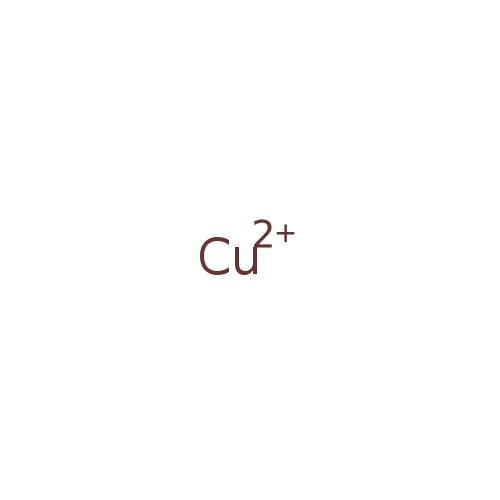
SMILES[Cu++]
InChI IdentifierInChI=1S/Cu/q+2
InChI KeyJPVYNHNXODAKFH-UHFFFAOYSA-N
Chemical Taxonomy
Description belongs to the class of inorganic compounds known as homogeneous transition metal compounds. These are inorganic compounds containing only metal atoms,with the largest atom being a transition metal atom.
KingdomInorganic compounds
Super ClassHomogeneous metal compounds
ClassHomogeneous transition metal compounds
Sub ClassNot Available
Direct ParentHomogeneous transition metal compounds
Alternative ParentsNot Available
Substituents
  • Homogeneous transition metal
Molecular FrameworkNot Available
External Descriptors
Biological Properties
StatusDetected and Not Quantified
OriginExogenous
Cellular Locations
  • Cytoplasm
  • Extracellular
Biofluid LocationsNot Available
Tissue Locations
  • Brain
  • Erythrocyte
  • Hair
  • Intestine
  • Kidney
  • Liver
PathwaysNot Available
ApplicationsNot Available
Biological Roles
Chemical RolesNot Available
Physical Properties
StateSolid
AppearanceReddish metallic solid.
Experimental Properties
PropertyValue
Melting Point1083°C
Boiling Point2595°C (4703°F)
SolubilityNot Available
Predicted Properties
PropertyValueSource
logP0.16ChemAxon
pKa (Strongest Acidic)3.09ChemAxon
Physiological Charge2ChemAxon
Hydrogen Acceptor Count0ChemAxon
Hydrogen Donor Count0ChemAxon
Polar Surface Area0 ŲChemAxon
Rotatable Bond Count0ChemAxon
Refractivity0 m³·mol⁻¹ChemAxon
Polarizability1.78 ųChemAxon
Number of Rings0ChemAxon
Bioavailability1ChemAxon
Rule of FiveYesChemAxon
Ghose FilterNoChemAxon
Veber's RuleYesChemAxon
MDDR-like RuleNoChemAxon
Spectra
Spectra
Spectrum TypeDescriptionSplash KeyView
Predicted LC-MS/MSPredicted LC-MS/MS Spectrum - 10V, Positivesplash10-03di-9000000000-59c652eccc13cc365f65Spectrum
Predicted LC-MS/MSPredicted LC-MS/MS Spectrum - 20V, Positivesplash10-03di-9000000000-59c652eccc13cc365f65Spectrum
Predicted LC-MS/MSPredicted LC-MS/MS Spectrum - 40V, Positivesplash10-03di-9000000000-59c652eccc13cc365f65Spectrum
Predicted LC-MS/MSPredicted LC-MS/MS Spectrum - 10V, Negativesplash10-03di-9000000000-9acd78ab9faeb89677a7Spectrum
Predicted LC-MS/MSPredicted LC-MS/MS Spectrum - 20V, Negativesplash10-03di-9000000000-9acd78ab9faeb89677a7Spectrum
Predicted LC-MS/MSPredicted LC-MS/MS Spectrum - 40V, Negativesplash10-03di-9000000000-9acd78ab9faeb89677a7Spectrum
Toxicity Profile
Route of ExposureOral (24) ; inhalation (24) ; dermal (24)
Mechanism of ToxicityExcess copper is sequestered within hepatocyte lysosomes, where it is complexed with metallothionein. Copper hepatotoxicity is believed to occur when the lysosomes become saturated and copper accumulates in the nucleus, causing nuclear damage. This damage is possibly a result of oxidative damage, including lipid peroxidation. Copper inhibits the sulfhydryl group enzymes such as glucose-6-phosphate 1-dehydrogenase, glutathione reductase, and paraoxonases, which protect the cell from free oxygen radicals. It also influences gene expression and is a co-factor for oxidative enzymes such as cytochrome C oxidase and lysyl oxidase. In addition, the oxidative stress induced by copper is thought to activate acid sphingomyelinase, which lead to the production of ceramide, an apoptotic signal, as well as cause hemolytic anemia. Copper-induced emesis results from stimulation of the vagus nerve. (24, 30, 1, 27)
MetabolismCopper is mainly absorbed through the gastrointestinal tract, but it can also be inhalated and absorbed dermally. It passes through the basolateral membrane, possibly via regulatory copper transporters, and is transported to the liver and kidney bound to serum albumin. The liver is the critical organ for copper homeostasis. In the liver and other tissues, copper is stored bound to metallothionein, amino acids, and in association with copper-dependent enzymes, then partitioned for excretion through the bile or incorporation into intra- and extracellular proteins. The transport of copper to the peripheral tissues is accomplished through the plasma attached to serum albumin, ceruloplasmin or low-molecular-weight complexes. Copper may induce the production of metallothionein and ceruloplasmin. The membrane-bound copper transporting adenosine triphosphatase (Cu-ATPase) transports copper ions into and out of cells. Physiologically normal levels of copper in the body are held constant by alterations in the rate and amount of copper absorption, compartmental distribution, and excretion. (24, 26)
Toxicity ValuesLD50: 3500 ug/kg (Intraperitoneal, Mouse) (29)
Lethal Dose10 to 20 grams for an adult human. (28)
Carcinogenicity (IARC Classification)No indication of carcinogenicity to humans (not listed by IARC).
Uses/SourcesCopper is used as a thermal conductor, an electrical conductor, a building material, and a constituent of various metal alloys such as brass and bronze. Copper compounds have been widely used historically as pigments in decorative art. Copper compounds are also commonly used in agriculture to treat plant diseases like mildew, for water treatment, and as preservatives for wood, leather, and fabrics. (24, 25)
Minimum Risk LevelAcute Oral: 0.01 mg/kg/day (23) Intermediate Oral: 0.01 mg/kg/day (23)
Health EffectsCopper toxicity, also called copperiedus, refers to the consequences of an excess of copper in the body. Copperiedus can occur from eating acid foods cooked in uncoated copper cookware, or from exposure to excess copper in drinking water or other environmental sources. Very-high doses of copper can damage liver and kidneys, and can even cause death. Copper may induce allergic responses in sensitive individuals. (25, 26)
SymptomsBreathing high levels of copper can cause irritation of the nose and throat. Acute symptoms of copper poisoning by ingestion include vomiting, hematemesis (vomiting of blood), hypotension (low blood pressure), melena (black "tarry" feces), coma, jaundice (yellowish pigmentation of the skin), and gastrointestinal distress. Individuals with glucose-6-phosphate deficiency may be at increased risk of hematologic effects of copper. Hemolytic anemia resulting from the treatment of burns with copper compounds is infrequent. Chronic (long-term) effects of copper exposure can damage the liver and kidneys.
TreatmentIn cases of suspected copper poisoning, penicillamine is the drug of choice, and dimercaprol, a heavy metal chelating agent, is often administered. Vinegar is not recommended, as it assists in solubilizing insoluble copper salts.

Concentrations
Not Available
DrugBank IDNot Available
HMDB IDHMDB0000657
FooDB IDFDB030749
Phenol Explorer IDNot Available
KNApSAcK IDNot Available
BiGG IDNot Available
BioCyc IDCU%2b2
METLIN IDNot Available
PDB IDNot Available
Wikipedia LinkCopper
Chemspider ID25221
ChEBI ID29036
PubChem Compound ID27099
Kegg Compound IDC00070
YMDB IDYMDB00207
ECMDB IDECMDB00657
References
Synthesis ReferenceNot Available
MSDSLink
General References
1. https://www.ncbi.nlm.nih.gov/pubmed/?term=23900424
2. https://www.ncbi.nlm.nih.gov/pubmed/?term=24168430
3. Campillo N, Vinas P, Lopez-Garcia I, Hernandez-Cordoba M: Direct determination of copper and zinc in cow milk, human milk and infant formula samples using electrothermal atomization atomic absorption spectrometry. Talanta. 1998 Aug;46(4):615-22.
4. Gaucheron F: Milk and dairy products: a unique micronutrient combination. J Am Coll Nutr. 2011 Oct;30(5 Suppl 1):400S-9S.
5. A. PECHOVÁ et al. Contents of Zn, Cu, Mn and Se in Milk in Relation to their Concentrations in Blood, Milk Yield and Stage of Lactation in Dairy Cattle. Acta Vet. Brno 2008, 77: 523-531
6. NRC. 1989. Recommended Dietary Allowances. 10th ed. Natl. Acad. Press, Washington, DC.
7. Semaghiul Birghila, Simona Dobrinas, Gabriela Stanciu and Alina Soceanu. Determination of major and minor elements in milk through ICP-AES. Environmental Engineering and Management Journal. November/December 2008, Vol.7, No.6, 805-808
8. Z. Dobrzañski et al. The Content of Microelements and Trace Elements in Raw Milk from Cows in the Silesian Region. Polish Journal of Environmental Studies Vol. 14, No 5 (2005), 685-689
9. Park, Y. W; Juárez, Manuela ; Ramos, M.; Haenlein, G. F. W.. Physico-chemical characteristics of goat and sheep milk. Small Ruminant Res.(2007) 68:88-113 doi: 10.1016/j.smallrumres.2006.09.013
10. A. Foroutan et al. The Chemical Composition of Commercial Cow's Milk (in preparation)
11. Patricia Cava-Montesinos, M. Luisa Cervera Agustín Pastor Miguel de la Guardia. 2005. Room temperature acid sonication ICP-MS multielemental analysis of milk.Analytica Chimica Acta Volume 531, Issue 1, Pages 111-123
12. Z. Dobrzański, R. Kołacz, H. Górecka, K. Chojnacka, A. Bartkowiak. 2005. The Content of Microelements and Trace Elements in Raw Milk from Cows in the Silesian Region. Pol. J. Environ. Stud. 14(5):685–689
13. Fooddata+, The Technical University of Denmark (DTU): https://frida.fooddata.dk/QueryFood.php?fn=milk&lang=en
14. Koury JC, de Olilveria AV Jr, Portella ES, de Olilveria CF, Lopes GC, Donangelo CM: Zinc and copper biochemical indices of antioxidant status in elite athletes of different modalities. Int J Sport Nutr Exerc Metab. 2004 Jun;14(3):358-72.
15. Hoogenraad TU: Paradigm shift in treatment of Wilson's disease: zinc therapy now treatment of choice. Brain Dev. 2006 Apr;28(3):141-6. Epub 2006 Feb 7.
16. Kedzierska E: [Concentrations of selected bioelements and toxic metals and their influence on health status of children and youth residing in Szczecin]. Ann Acad Med Stetin. 2003;49:131-43.
17. Dib N, Valsesia E, Malinge MC, Mauras Y, Misrahi M, Cales P: Late onset of Wilson's disease in a family with genetic haemochromatosis. Eur J Gastroenterol Hepatol. 2006 Jan;18(1):43-7.
18. Kodama H, Sato E, Gu YH, Shiga K, Fujisawa C, Kozuma T: Effect of copper and diethyldithiocarbamate combination therapy on the macular mouse, an animal model of Menkes disease. J Inherit Metab Dis. 2005;28(6):971-8.
19. Cengiz B, Soylemez F, Ozturk E, Cavdar AO: Serum zinc, selenium, copper, and lead levels in women with second-trimester induced abortion resulting from neural tube defects: a preliminary study. Biol Trace Elem Res. 2004 Mar;97(3):225-35.
20. Langner C, Denk H: Wilson disease. Virchows Arch. 2004 Aug;445(2):111-8. Epub 2004 Jun 17.
21. Kitzberger R, Madl C, Ferenci P: Wilson disease. Metab Brain Dis. 2005 Dec;20(4):295-302.
22. Chen D, Cui QC, Yang H, Dou QP: Disulfiram, a clinically used anti-alcoholism drug and copper-binding agent, induces apoptotic cell death in breast cancer cultures and xenografts via inhibition of the proteasome activity. Cancer Res. 2006 Nov 1;66(21):10425-33.
23. Briviba K, Schnabele K, Rechkemmer G, Bub A: Supplementation of a diet low in carotenoids with tomato or carrot juice does not affect lipid peroxidation in plasma and feces of healthy men. J Nutr. 2004 May;134(5):1081-3.
24. Pizent A, Jurasovic J, Telisman S: Serum calcium, zinc, and copper in relation to biomarkers of lead and cadmium in men. J Trace Elem Med Biol. 2003;17(3):199-205.
25. Squitti R, Barbati G, Rossi L, Ventriglia M, Dal Forno G, Cesaretti S, Moffa F, Caridi I, Cassetta E, Pasqualetti P, Calabrese L, Lupoi D, Rossini PM: Excess of nonceruloplasmin serum copper in AD correlates with MMSE, CSF [beta]-amyloid, and h-tau. Neurology. 2006 Jul 11;67(1):76-82.
26. Odland JO, Nieboer E, Romanova N, Thomassen Y: Elements in placenta and pregnancy outcome in arctic and subarctic areas. Int J Circumpolar Health. 2004 May;63(2):169-87.
27. Venelinov TI, Davies IM, Beattie JH: Dialysis-Chelex method for determination of exchangeable copper in human plasma. Anal Bioanal Chem. 2004 Jul;379(5-6):777-80. Epub 2004 Feb 26.
28. Attri S, Sharma N, Jahagirdar S, Thapa BR, Prasad R: Erythrocyte metabolism and antioxidant status of patients with Wilson disease with hemolytic anemia. Pediatr Res. 2006 Apr;59(4 Pt 1):593-7.
29. Jablonska-Kaszewska I, Dabrowska E, Drobinska Jurowiecka A, Falkiewicz B: Treatment of Wilson's disease. Med Sci Monit. 2003 Aug;9 Suppl 3:5-8.
30. Daniel KG, Harbach RH, Guida WC, Dou QP: Copper storage diseases: Menkes, Wilsons, and cancer. Front Biosci. 2004 Sep 1;9:2652-62.
31. Aoki T: [Genetic disorders of copper transport--diagnosis and new treatment for the patients of Wilson's disease]. No To Hattatsu. 2005 Mar;37(2):99-109.
32. Meng Y, Miyoshi I, Hirabayashi M, Su M, Mototani Y, Okamura T, Terada K, Ueda M, Enomoto K, Sugiyama T, Kasai N: Restoration of copper metabolism and rescue of hepatic abnormalities in LEC rats, an animal model of Wilson disease, by expression of human ATP7B gene. Biochim Biophys Acta. 2004 Nov 5;1690(3):208-19.
33. Gorter RW, Butorac M, Cobian EP: Examination of the cutaneous absorption of copper after the use of copper-containing ointments. Am J Ther. 2004 Nov-Dec;11(6):453-8.