Record Information
Version1.0
Creation Date2009-03-06 18:58:05 UTC
Update Date2026-03-31 18:45:25 UTC
Accession NumberCHEM000095
Identification
Common NameChlorobenzene
ClassSmall Molecule
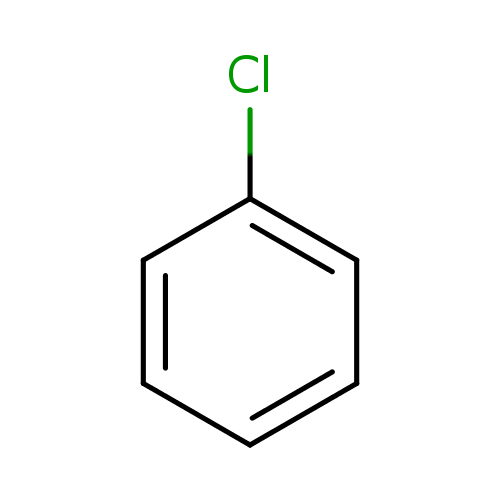
DescriptionChlorobenzene is an aromatic organic compound with the chemical formula C6H5Cl. This colorless, flammable liquid is a common solvent and a widely used intermediate in the manufacture of other chemicals. Rhodococcus phenolicus is a bacterium species able to degrade chlorobenzene as sole carbon sources. Chlorobenzene exhibits low to moderate toxicity as indicated by its LD50 of 2.9 g/kg. Chronic (long-term) exposure of humans to chlorobenzene affects the central nervous system (CNS). Signs of neurotoxicity in humans include numbness, cyanosis, hyperesthesia (increased sensation), and muscle spasms.
Contaminant Sources
  • Clean Air Act Chemicals
  • HPV EPA Chemicals
  • OECD HPV Chemicals
  • STOFF IDENT Compounds
  • Sludge Chemicals
  • T3DB toxins
  • ToxCast & Tox21 Chemicals
Contaminant Type
  • Aromatic Hydrocarbon
  • Household Toxin
  • Industrial Precursor/Intermediate
  • Industrial/Workplace Toxin
  • Metabolite
  • Organic Compound
  • Organochloride
  • Pesticide
  • Pollutant
  • Solvent
  • Synthetic Compound
Chemical Structure
Thumb
Synonyms
ValueSource
Benzene chlorideChEBI
MonochlorbenzolChEBI
MonochlorobenzeneChEBI
PHCLChEBI
Phenyl chlorideChEBI
6-Chlorobenzene-1,2,4-triolHMDB
6-ChlorohydroxyquinolHMDB
Abluton T30HMDB
ChloorbenzeenHMDB
ChlorbenzeneHMDB
ChlorbenzolHMDB
Chloro-benzeneHMDB
ChlorobenzenHMDB
Chlorobenzene (acd/name 4.0)HMDB
ChlorobenzenuHMDB
ChlorobenzolHMDB
Chlorobenzol(dot)HMDB
ClorobenzeneHMDB
IP carrier T 40HMDB
MCBHMDB
mono-ChlorobenzeneHMDB
MonochloorbenzeenHMDB
MonochlorbenzeneHMDB
MonoclorobenzeneHMDB
Tetrosin SPHMDB
Chemical FormulaC6H5Cl
Average Molecular Mass112.557 g/mol
Monoisotopic Mass112.008 g/mol
CAS Registry Number108-90-7
IUPAC Namechlorobenzene
Traditional Namechlorobenzene
SMILESClC1=CC=CC=C1
InChI IdentifierInChI=1S/C6H5Cl/c7-6-4-2-1-3-5-6/h1-5H
InChI KeyMVPPADPHJFYWMZ-UHFFFAOYSA-N
Chemical Taxonomy
Description belongs to the class of organic compounds known as chlorobenzenes. Chlorobenzenes are compounds containing one or more chlorine atoms attached to a benzene moiety.
KingdomOrganic compounds
Super ClassBenzenoids
ClassBenzene and substituted derivatives
Sub ClassHalobenzenes
Direct ParentChlorobenzenes
Alternative Parents
Substituents
  • Chlorobenzene
  • Aryl halide
  • Aryl chloride
  • Hydrocarbon derivative
  • Organochloride
  • Organohalogen compound
  • Aromatic homomonocyclic compound
Molecular FrameworkAromatic homomonocyclic compounds
External Descriptors
Biological Properties
StatusDetected and Not Quantified
OriginExogenous
Cellular Locations
  • Membrane
Biofluid LocationsNot Available
Tissue LocationsNot Available
PathwaysNot Available
Applications
Biological RolesNot Available
Chemical Roles
Physical Properties
StateLiquid
AppearanceColorless liquid.
Experimental Properties
PropertyValue
Melting Point-45.2°C
Boiling Point132°C (269.6°F)
Solubility0.498 mg/mL at 25°C
Predicted Properties
PropertyValueSource
Water Solubility0.6 g/LALOGPS
logP2.78ALOGPS
logP2.58ChemAxon
logS-2.3ALOGPS
Physiological Charge0ChemAxon
Hydrogen Acceptor Count0ChemAxon
Hydrogen Donor Count0ChemAxon
Polar Surface Area0 ŲChemAxon
Rotatable Bond Count0ChemAxon
Refractivity30.86 m³·mol⁻¹ChemAxon
Polarizability11.06 ųChemAxon
Number of Rings1ChemAxon
Bioavailability1ChemAxon
Rule of FiveYesChemAxon
Ghose FilterNoChemAxon
Veber's RuleYesChemAxon
MDDR-like RuleNoChemAxon
Spectra
Spectra
Spectrum TypeDescriptionSplash KeyView
GC-MSGC-MS Spectrum - EI-B (Non-derivatized)splash10-03fr-9700000000-82e784dca91e262a7e4dSpectrum
GC-MSGC-MS Spectrum - EI-B (Non-derivatized)splash10-03di-5900000000-0c50f1cf42286eb0397eSpectrum
GC-MSGC-MS Spectrum - EI-B (Non-derivatized)splash10-03di-9500000000-12a9a9ae9833f5dbfa91Spectrum
GC-MSGC-MS Spectrum - EI-B (Non-derivatized)splash10-03fr-9700000000-82e784dca91e262a7e4dSpectrum
GC-MSGC-MS Spectrum - EI-B (Non-derivatized)splash10-03di-5900000000-0c50f1cf42286eb0397eSpectrum
GC-MSGC-MS Spectrum - EI-B (Non-derivatized)splash10-03di-9500000000-12a9a9ae9833f5dbfa91Spectrum
Predicted GC-MSPredicted GC-MS Spectrum - GC-MS (Non-derivatized) - 70eV, Positivesplash10-03di-7900000000-f0cb54b4cd19ffd26fcfSpectrum
Predicted GC-MSPredicted GC-MS Spectrum - GC-MS (Non-derivatized) - 70eV, PositiveNot AvailableSpectrum
Predicted LC-MS/MSPredicted LC-MS/MS Spectrum - 10V, Positivesplash10-03di-0900000000-6dead520c947adb06d09Spectrum
Predicted LC-MS/MSPredicted LC-MS/MS Spectrum - 20V, Positivesplash10-03di-0900000000-6dead520c947adb06d09Spectrum
Predicted LC-MS/MSPredicted LC-MS/MS Spectrum - 40V, Positivesplash10-03di-5900000000-f0f0380b80e7b8052a43Spectrum
Predicted LC-MS/MSPredicted LC-MS/MS Spectrum - 10V, Negativesplash10-03di-0900000000-b1fbfe73227c7467ed98Spectrum
Predicted LC-MS/MSPredicted LC-MS/MS Spectrum - 20V, Negativesplash10-03di-0900000000-b1fbfe73227c7467ed98Spectrum
Predicted LC-MS/MSPredicted LC-MS/MS Spectrum - 40V, Negativesplash10-03di-3900000000-3e50515b74111df2adf3Spectrum
Predicted LC-MS/MSPredicted LC-MS/MS Spectrum - 10V, Positivesplash10-03di-0900000000-8cce8ed2d5ea8c5978d4Spectrum
Predicted LC-MS/MSPredicted LC-MS/MS Spectrum - 20V, Positivesplash10-03di-0900000000-8cce8ed2d5ea8c5978d4Spectrum
Predicted LC-MS/MSPredicted LC-MS/MS Spectrum - 40V, Positivesplash10-03fr-9800000000-02d9ca432ceef2a11bcfSpectrum
Predicted LC-MS/MSPredicted LC-MS/MS Spectrum - 10V, Negativesplash10-03di-0900000000-5d449324bbd5b43dd4b4Spectrum
Predicted LC-MS/MSPredicted LC-MS/MS Spectrum - 20V, Negativesplash10-03di-0900000000-5d449324bbd5b43dd4b4Spectrum
Predicted LC-MS/MSPredicted LC-MS/MS Spectrum - 40V, Negativesplash10-03di-0900000000-5d449324bbd5b43dd4b4Spectrum
MSMass Spectrum (Electron Ionization)splash10-03di-6900000000-2d1780378a9603646722Spectrum
1D NMR1H NMR SpectrumNot AvailableSpectrum
1D NMR13C NMR SpectrumNot AvailableSpectrum
Toxicity Profile
Route of ExposureOral (8) ; inhalation (8)
Mechanism of ToxicityThe reactive metabolites of chlorobenzene are believed to bind both liver and kidney proteins, causing direct damage. Chlorobenzene also activates nuclear factor-kappa B (NF-kappa B) and p38 mitogen-activated protein kinase, inducing the release of monocyte chemoattractant protein 1 (MCP-1) by lung epithelial cells, causing an inflammatory reponse. (10, 1)
MetabolismChlorobenzene is known to be absorbed via ingestion and inhahation. As it is a lipophilic compound, chlorobenzene distributes preferentially to adipose tissue. It is metabolized by cytochrome P-450 enzymes into its major metabolite 4-chlorocatechol. Unchanged chlorobenzene is exhalted and its metabolites are excreted mainly in the urine. (8)
Toxicity ValuesLD50: 515 mg/kg (Intraperitoneal, Mouse) (9) LD50: 2290 mg/kg (Oral, Rat) (9) LD50: 1110 mg/kg (Subcutaneous, Rat) (9)
Lethal DoseNot Available
Carcinogenicity (IARC Classification)No indication of carcinogenicity to humans (not listed by IARC).
Uses/SourcesChlorobenzene is used as a solvent for some pesticide formulations, to degrease automobile parts, and as a chemical intermediate to make several other chemicals. (8)
Minimum Risk LevelIntermediate Oral: 0.4 mg/kg/day (7)
Health EffectsEffects on the central nervous system from breathing chlorobenzene may include unconsciousness and death. Chronic exposure can cause liver and kidney damage. (8)
SymptomsSymptoms of chlorobenzene exposure include headaches, nausea, sleepiness, numbness, and vomiting. Effects on the central nervous system from breathing chlorobenzene include unconsciousness, tremors, restlessness, and death. (8)
TreatmentTreatment is mainly symptomatic and supportive. (10)
Concentrations
Not Available
DrugBank IDNot Available
HMDB IDHMDB0041855
FooDB IDNot Available
Phenol Explorer IDNot Available
KNApSAcK IDNot Available
BiGG IDNot Available
BioCyc IDCHLOROBENZENE
METLIN IDNot Available
PDB IDNot Available
Wikipedia LinkChlorobenzene
Chemspider ID7676
ChEBI ID28097
PubChem Compound ID7964
Kegg Compound IDC06990
YMDB IDYMDB15975
ECMDB IDM2MDB005368
References
Synthesis ReferenceNot Available
MSDSLink
General References
1. https://www.ncbi.nlm.nih.gov/pubmed/?term=23360185
2. https://www.ncbi.nlm.nih.gov/pubmed/?term=23957149
3. https://www.ncbi.nlm.nih.gov/pubmed/?term=24341791
4. Dutkiewicz T, Pacholuk B: [Evaluation of chlorobenzene exposure on the basis of determination of 4-chlorocatechol in urine]. Med Pr. 1980;31(4):289-95.
5. Cesarone CF, Bolognesi C, Santi L: [Influence of structure and physico-chemical properties of chemical agents in the induction of DNA alterations: nitrochlorobenzenes]. Boll Soc Ital Biol Sper. 1980 Aug 30;56(16):1680-6.
6. Santilio A, Ziemacki G, Stefanelli P, Dommarco R: Evaluation of nitrobenzenes and chlorobenzenes levels in samples of sediments from Italy: a rapid and simple method by automatic extractor and GC/MS ion trap. J Environ Sci Health A Tox Hazard Subst Environ Eng. 2008 Apr;43(5):437-42. doi: 10.1080/10934520701796150.
7. MORROW PE, MERCER TT: HYGIENIC GUIDE SERIES. CHLOROBENZENE (MONOCHLOROBENZENE, CHLOROBENZOL, PHENYL CHLORIDE). Am Ind Hyg Assoc J. 1964 Jan-Feb;25:97-9.
8. ROSENBAUM ND, BLEKH RS, et al.: [The use of chlorobenzene as a solvent from the point of view of industrial hygiene]. Gig Sanit. 1947;12(1):21-4.