Record Information
Version1.0
Creation Date2009-03-06 18:58:04 UTC
Update Date2026-03-27 00:37:07 UTC
Accession NumberCHEM000089
Identification
Common Name1,1,1-Trichloroethane
ClassSmall Molecule
Description1,1,1-Trichloroethane is generally considered as a polar solvent. Owing to its unsymmetrical structure, it is a superior solvent for organic compounds that do not dissolve well in hydrocarbons such as hexane. It is an excellent solvent for many organic materials and also one of the least toxic of the chlorinated hydrocarbons. Prior to the Montreal Protocol, it was widely used for cleaning metal parts and circuit boards, as a photoresist solvent in the electronics industry, as an aerosol propellant, as a cutting fluid additive, and as a solvent for inks, paints, adhesives and other coatings. 1,1,1-Trichloroethane is marketed with stabilizers since it is unstable with respect to dehydrochlorination and attacks some metals. Stabilizers comprise up to 8% of the formulation, including acid scavengers (epoxides, amines) and complexants. The Montreal Protocol targeted 1,1,1-trichloroethane as one of those compounds responsible for ozone depletion and banned its use beginning in 1996. Since then, its manufacture and use has been phased out throughout most of the world. The organic compound 1,1,1-trichloroethane, also known as methyl chloroform, is a chloroalkane. This colourless, sweet-smelling liquid was once produced industrially in large quantities for use as a solvent. It is regulated by the Montreal Protocol as an ozone-depleting substance and its use is being rapidly phased out.
Contaminant Sources
  • Clean Air Act Chemicals
  • HPV EPA Chemicals
  • IARC Carcinogens Group 3
  • OECD HPV Chemicals
  • STOFF IDENT Compounds
  • T3DB toxins
  • ToxCast & Tox21 Chemicals
Contaminant Type
  • Food Toxin
  • Household Toxin
  • Industrial/Workplace Toxin
  • Metabolite
  • Organic Compound
  • Organochloride
  • Pollutant
  • Solvent
  • Synthetic Compound
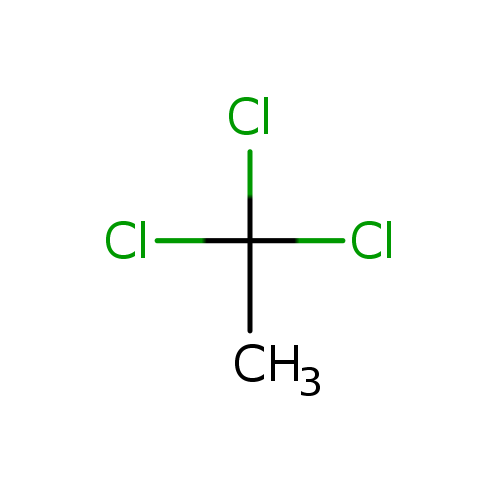
Chemical Structure
Thumb
Synonyms
ValueSource
1,1,1-TCEChEBI
1,1,1-TrichloraethanChEBI
1,1,1-TrichlorethaneChEBI
alpha-TChEBI
alpha-TrichloroethaneChEBI
MethylchloroformChEBI
MethyltrichloromethaneChEBI
Trichloro-1,1,1-ethaneChEBI
a-TGenerator
α-TGenerator
a-TrichloroethaneGenerator
Α-trichloroethaneGenerator
1,1,1 TrichloroethaneHMDB
1,1,1-TrichlorathanHMDB
1,1,1-Trichloro-2-(O-chlorophenyl)-2-(p-chlorophenyl)ethaneHMDB
1,1,1-Trichloro-ethaneHMDB
1,1,1-Trichloroethane (acd/name 4.0)HMDB
1,1,1-TricloroetanoHMDB
2-(2-Chlorophenyl)-2-(4-chlorophenyl)-1,1,1-trichloroethaneHMDB
Aerothene TTHMDB
CH3CCL3HMDB
ChloroteneHMDB
Chlorothane nuHMDB
ChlorotheneHMDB
Chlorothene nuHMDB
Chlorothene SMHMDB
Chlorothene VGHMDB
Chlorothene, inhibitedHMDB
ChlortenHMDB
CleaniteHMDB
Distillex DS1HMDB
EthanaHMDB
Ethana nuHMDB
Genklene LBHMDB
ICI-CF 2HMDB
InhibisolHMDB
Methyl-chloroformHMDB
Rcra waste number u226HMDB
Solvent 111HMDB
SolvethaneHMDB
TafcleanHMDB
Three one aHMDB
Three one SHMDB
Tri-ethaneHMDB
TrichloroethaneHMDB
TrichloromethylmethaneHMDB
Chemical FormulaC2H3Cl3
Average Molecular Mass133.404 g/mol
Monoisotopic Mass131.930 g/mol
CAS Registry Number71-55-6
IUPAC Name1,1,1-trichloroethane
Traditional Nametrichloroethane
SMILESCC(Cl)(Cl)Cl
InChI IdentifierInChI=1S/C2H3Cl3/c1-2(3,4)5/h1H3
InChI KeyUOCLXMDMGBRAIB-UHFFFAOYSA-N
Chemical Taxonomy
Description belongs to the class of organic compounds known as organochlorides. Organochlorides are compounds containing a chemical bond between a carbon atom and a chlorine atom.
KingdomOrganic compounds
Super ClassOrganohalogen compounds
ClassOrganochlorides
Sub ClassNot Available
Direct ParentOrganochlorides
Alternative Parents
Substituents
  • Hydrocarbon derivative
  • Organochloride
  • Alkyl halide
  • Alkyl chloride
  • Aliphatic acyclic compound
Molecular FrameworkAliphatic acyclic compounds
External Descriptors
Biological Properties
StatusDetected and Not Quantified
OriginExogenous
Cellular Locations
  • Membrane
Biofluid LocationsNot Available
Tissue LocationsNot Available
PathwaysNot Available
Applications
Biological RolesNot Available
Chemical Roles
Physical Properties
StateLiquid
AppearanceColorless liquid.
Experimental Properties
PropertyValue
Melting Point-30.4°C
Boiling Point74 °C (347°K, 165 °F)
Solubility1.29 mg/mL at 25°C
Predicted Properties
PropertyValueSource
Water Solubility2.13 g/LALOGPS
logP2.45ALOGPS
logP2.08ChemAxon
logS-1.8ALOGPS
Physiological Charge0ChemAxon
Hydrogen Acceptor Count0ChemAxon
Hydrogen Donor Count0ChemAxon
Polar Surface Area0 ŲChemAxon
Rotatable Bond Count0ChemAxon
Refractivity26.22 m³·mol⁻¹ChemAxon
Polarizability10.35 ųChemAxon
Number of Rings0ChemAxon
Bioavailability1ChemAxon
Rule of FiveYesChemAxon
Ghose FilterNoChemAxon
Veber's RuleYesChemAxon
MDDR-like RuleNoChemAxon
Spectra
Spectra
Spectrum TypeDescriptionSplash KeyView
GC-MSGC-MS Spectrum - EI-B (Non-derivatized)splash10-0002-9000000000-acdd1de2f2f494cc9f33Spectrum
GC-MSGC-MS Spectrum - EI-B (Non-derivatized)splash10-0002-9100000000-93c8b64bf9a3e2f74a6dSpectrum
GC-MSGC-MS Spectrum - CI-B (Non-derivatized)splash10-0002-9100000000-756b9bd2a76d828e0d45Spectrum
GC-MSGC-MS Spectrum - EI-B (Non-derivatized)splash10-0002-9000000000-acdd1de2f2f494cc9f33Spectrum
GC-MSGC-MS Spectrum - EI-B (Non-derivatized)splash10-0002-9100000000-93c8b64bf9a3e2f74a6dSpectrum
GC-MSGC-MS Spectrum - CI-B (Non-derivatized)splash10-0002-9100000000-756b9bd2a76d828e0d45Spectrum
Predicted GC-MSPredicted GC-MS Spectrum - GC-MS (Non-derivatized) - 70eV, Positivesplash10-000t-9600000000-c081dcbb807720cca52eSpectrum
Predicted GC-MSPredicted GC-MS Spectrum - GC-MS (Non-derivatized) - 70eV, PositiveNot AvailableSpectrum
Predicted LC-MS/MSPredicted LC-MS/MS Spectrum - 10V, Positivesplash10-001i-0900000000-e0c9bb24f0f03e2e03d6Spectrum
Predicted LC-MS/MSPredicted LC-MS/MS Spectrum - 20V, Positivesplash10-001i-0900000000-e0c9bb24f0f03e2e03d6Spectrum
Predicted LC-MS/MSPredicted LC-MS/MS Spectrum - 40V, Positivesplash10-001i-2900000000-86949d54288e0f2f7c23Spectrum
Predicted LC-MS/MSPredicted LC-MS/MS Spectrum - 10V, Negativesplash10-001i-0900000000-069dedae972a3a56c2ffSpectrum
Predicted LC-MS/MSPredicted LC-MS/MS Spectrum - 20V, Negativesplash10-001i-1900000000-6dca5faa37b128ac40a7Spectrum
Predicted LC-MS/MSPredicted LC-MS/MS Spectrum - 40V, Negativesplash10-0006-9100000000-53cbfa180588956738d7Spectrum
Predicted LC-MS/MSPredicted LC-MS/MS Spectrum - 10V, Positivesplash10-001i-0900000000-c8f6da92e011fc99d023Spectrum
Predicted LC-MS/MSPredicted LC-MS/MS Spectrum - 20V, Positivesplash10-001i-0900000000-c8f6da92e011fc99d023Spectrum
Predicted LC-MS/MSPredicted LC-MS/MS Spectrum - 40V, Positivesplash10-0002-9000000000-764e8b6db288ec387c28Spectrum
Predicted LC-MS/MSPredicted LC-MS/MS Spectrum - 10V, Negativesplash10-001i-0900000000-6838b4c597e6d80ac4e2Spectrum
Predicted LC-MS/MSPredicted LC-MS/MS Spectrum - 20V, Negativesplash10-001i-0900000000-6838b4c597e6d80ac4e2Spectrum
Predicted LC-MS/MSPredicted LC-MS/MS Spectrum - 40V, Negativesplash10-001i-0900000000-6838b4c597e6d80ac4e2Spectrum
MSMass Spectrum (Electron Ionization)splash10-0002-9100000000-09ba0e8b7b22dd786338Spectrum
1D NMR13C NMR SpectrumNot AvailableSpectrum
1D NMR1H NMR SpectrumNot AvailableSpectrum
1D NMR13C NMR SpectrumNot AvailableSpectrum
1D NMR1H NMR SpectrumNot AvailableSpectrum
1D NMR13C NMR SpectrumNot AvailableSpectrum
1D NMR1H NMR SpectrumNot AvailableSpectrum
1D NMR13C NMR SpectrumNot AvailableSpectrum
1D NMR1H NMR SpectrumNot AvailableSpectrum
1D NMR13C NMR SpectrumNot AvailableSpectrum
1D NMR1H NMR SpectrumNot AvailableSpectrum
1D NMR13C NMR SpectrumNot AvailableSpectrum
1D NMR1H NMR SpectrumNot AvailableSpectrum
1D NMR13C NMR SpectrumNot AvailableSpectrum
1D NMR1H NMR SpectrumNot AvailableSpectrum
1D NMR13C NMR SpectrumNot AvailableSpectrum
1D NMR1H NMR SpectrumNot AvailableSpectrum
1D NMR13C NMR SpectrumNot AvailableSpectrum
1D NMR1H NMR SpectrumNot AvailableSpectrum
1D NMR13C NMR SpectrumNot AvailableSpectrum
1D NMR1H NMR SpectrumNot AvailableSpectrum
1D NMR13C NMR SpectrumNot AvailableSpectrum
Toxicity Profile
Route of ExposureOral (18); inhalation (18) ; dermal (18)
Mechanism of Toxicity1,1,1-Trichloroethane is a cholinesterase or acetylcholinesterase (AChE) inhibitor. A cholinesterase inhibitor (or 'anticholinesterase') suppresses the action of acetylcholinesterase. Because of its essential function, chemicals that interfere with the action of acetylcholinesterase are potent neurotoxins, causing excessive salivation and eye-watering in low doses, followed by muscle spasms and ultimately death. Nerve gases and many substances used in insecticides have been shown to act by binding a serine in the active site of acetylcholine esterase, inhibiting the enzyme completely. Acetylcholine esterase breaks down the neurotransmitter acetylcholine, which is released at nerve and muscle junctions, in order to allow the muscle or organ to relax. The result of acetylcholine esterase inhibition is that acetylcholine builds up and continues to act so that any nerve impulses are continually transmitted and muscle contractions do not stop. Among the most common acetylcholinesterase inhibitors are phosphorus-based compounds, which are designed to bind to the active site of the enzyme. The structural requirements are a phosphorus atom bearing two lipophilic groups, a leaving group (such as a halide or thiocyanate), and a terminal oxygen.
MetabolismUpon first exposure, 1,1,1-trichloroethane is rapidly and efficiently absorbed by the lung, skin, and gastrointestinal tract of humans. 1,1,1-Trichloroethane is distributed by the blood to tissues and organs throughout the body, including to developing fetuses, with preferential distribution to fatty tissues. The predominant pathway of elimination of 1,1,1-trichloroethane in humans, regardless of route of exposure, is exhalation of the unchanged compound. 1,1,1-Trichloroethane is metabolized oxidatively, at low rates, to trichloroethanol and trichloroacetic acid by the cytochrome P-450 mixed-function oxidase system. These metabolites are excreted in the urine, and other minor metabolites (carbon dioxide [CO2] and acetylene) are excreted in expired air. (16)
Toxicity ValuesLD50: 11 240 mg/kg (Oral, Mouse) (16) LD50: 9470 mg/kg (Oral, Guinea pig) (16) LD50: 5660 mg/kg (Oral, Rabbit) (16)
Lethal DoseNot Available
Carcinogenicity (IARC Classification)3, not classifiable as to its carcinogenicity to humans. (19)
Uses/Sources1,1,1-Trichloroethane was often used as a solvent to dissolve other substances, such as glues and paints. In industry, it was widely used to remove oil or grease from manufactured parts. In the home, it is used as an ingredient of products such as spot cleaners, glues, and aerosol sprays. No 1,1,1-trichloroethane is supposed to be manufactured for domestic use in the United States after January 1, 2002, because it affects the ozone layer. Exposure can occur from breathing in air containing it in vapor form, drinking water or eating food containing 1,1,1-trichloroethane. (16)
Minimum Risk LevelAcute Inhalation: 2 ppm (16) Intermediate Inhalation: 0.7 ppm (Gerbil) (16) Intermediate Oral: 20 mg/kg/day (Mouse) (16)
Health EffectsAcute exposure to cholinesterase inhibitors can cause a cholinergic crisis characterized by severe nausea/vomiting, salivation, sweating, bradycardia, hypotension, collapse, and convulsions. Increasing muscle weakness is a possibility and may result in death if respiratory muscles are involved. Accumulation of ACh at motor nerves causes overstimulation of nicotinic expression at the neuromuscular junction. When this occurs symptoms such as muscle weakness, fatigue, muscle cramps, fasciculation, and paralysis can be seen. When there is an accumulation of ACh at autonomic ganglia this causes overstimulation of nicotinic expression in the sympathetic system. Symptoms associated with this are hypertension, and hypoglycemia. Overstimulation of nicotinic acetylcholine receptors in the central nervous system, due to accumulation of ACh, results in anxiety, headache, convulsions, ataxia, depression of respiration and circulation, tremor, general weakness, and potentially coma. When there is expression of muscarinic overstimulation due to excess acetylcholine at muscarinic acetylcholine receptors symptoms of visual disturbances, tightness in chest, wheezing due to bronchoconstriction, increased bronchial secretions, increased salivation, lacrimation, sweating, peristalsis, and urination can occur. Certain reproductive effects in fertility, growth, and development for males and females have been linked specifically to organophosphate pesticide exposure. Most of the research on reproductive effects has been conducted on farmers working with pesticides and insecticdes in rural areas. In females menstrual cycle disturbances, longer pregnancies, spontaneous abortions, stillbirths, and some developmental effects in offspring have been linked to organophosphate pesticide exposure. Prenatal exposure has been linked to impaired fetal growth and development. Neurotoxic effects have also been linked to poisoning with OP pesticides causing four neurotoxic effects in humans: cholinergic syndrome, intermediate syndrome, organophosphate-induced delayed polyneuropathy (OPIDP), and chronic organophosphate-induced neuropsychiatric disorder (COPIND). These syndromes result after acute and chronic exposure to OP pesticides.
SymptomsSymptoms include cough, sore throat, headache, dizziness, drowsiness, nausea, ataxia, unconsciousness. Dry skin and redness follow dermal exposure, while nausea, vomiting, abdominal pain, and diarrhoea follw ingestion. (18)
TreatmentIf the compound has been ingested, rapid gastric lavage should be performed using 5% sodium bicarbonate. For skin contact, the skin should be washed with soap and water. If the compound has entered the eyes, they should be washed with large quantities of isotonic saline or water. In serious cases, atropine and/or pralidoxime should be administered. Anti-cholinergic drugs work to counteract the effects of excess acetylcholine and reactivate AChE. Atropine can be used as an antidote in conjunction with pralidoxime or other pyridinium oximes (such as trimedoxime or obidoxime), though the use of '-oximes' has been found to be of no benefit, or possibly harmful, in at least two meta-analyses. Atropine is a muscarinic antagonist, and thus blocks the action of acetylcholine peripherally.

Concentrations
Not Available
DrugBank IDNot Available
HMDB IDHMDB0041791
FooDB IDNot Available
Phenol Explorer IDNot Available
KNApSAcK IDNot Available
BiGG IDNot Available
BioCyc IDNot Available
METLIN IDNot Available
PDB IDNot Available
Wikipedia Link1,1,1-Trichloroethane
Chemspider ID6042
ChEBI ID36015
PubChem Compound ID6278
Kegg Compound IDC18246
YMDB IDNot Available
ECMDB IDNot Available
References
Synthesis ReferenceNot Available
MSDSNot Available
General References
1. https://www.ncbi.nlm.nih.gov/pubmed/?term=16541244
2. https://www.ncbi.nlm.nih.gov/pubmed/?term=20536226
3. https://www.ncbi.nlm.nih.gov/pubmed/?term=23102696
4. He Z, Yang GP, Lu XL: Distributions and sea-to-air fluxes of volatile halocarbons in the East China Sea in early winter. Chemosphere. 2013 Jan;90(2):747-57. doi: 10.1016/j.chemosphere.2012.09.067. Epub 2012 Oct 25.
5. Pohland R, Tiemann U: Forskolin-induced cyclic AMP signaling in single adherent bovine oviductal cells: effect of dichlorodiphenyltrichloroethane (DDT) and tris(4-chlorophenyl)methanol (TCPM). Toxicol In Vitro. 2003 Jun;17(3):375-83.
6. Brown TJ, Blaustein JD: 1-(o-Chlorophenyl)-1 (p-chlorophenyl)2,2,2-trichloroethane induces functional progestin receptors in the rat hypothalamus and pituitary gland. Endocrinology. 1984 Dec;115(6):2052-8.
7. Steinmetz R, Young PC, Caperell-Grant A, Gize EA, Madhukar BV, Ben-Jonathan N, Bigsby RM: Novel estrogenic action of the pesticide residue beta-hexachlorocyclohexane in human breast cancer cells. Cancer Res. 1996 Dec 1;56(23):5403-9.
8. Palanza P, Morellini F, Parmigiani S, vom Saal FS: Prenatal exposure to endocrine disrupting chemicals: effects on behavioral development. Neurosci Biobehav Rev. 1999 Nov;23(7):1011-27.
9. Noriega NC, Hayes TB: DDT congener effects on secondary sex coloration in the reed frog Hyperolius argus: a partial evaluation of the Hyperolius argus endocrine screen. Comp Biochem Physiol B Biochem Mol Biol. 2000 Jun;126(2):231-7.
10. Legler J, van den Brink CE, Brouwer A, Murk AJ, van der Saag PT, Vethaak AD, van der Burg B: Development of a stably transfected estrogen receptor-mediated luciferase reporter gene assay in the human T47D breast cancer cell line. Toxicol Sci. 1999 Mar;48(1):55-66.
11. Bulger WH, Muccitelli RM, Kupfer D: Interactions of chlorinated hydrocarbon pesticides with the 8S estrogen-binding protein in rat testes. Steroids. 1978 Sep;32(2):165-77.
12. Bulger WH, Kupfer D: Inhibition of the 1-(o-chlorophenyl)-1-(p-chlorophenyl)-2,2,2-trichloroethane (o,p'DDT)- and estradiol-mediated induction of rat uterine ornithine decarboxylase by prior treatment with o,p'DDT estradiol, and tamoxifen. Arch Biochem Biophys. 1977 Jul;182(1):138-46.
13. Alawi MA, Ammari N, al-Shuraiki Y: Organochlorine pesticide contaminations in human milk samples from women living in Amman, Jordan. Arch Environ Contam Toxicol. 1992 Aug;23(2):235-9.
14. Palanza P, Parmigiani S, vom Saal FS: Effects of prenatal exposure to low doses of diethylstilbestrol, o,p'DDT, and methoxychlor on postnatal growth and neurobehavioral development in male and female mice. Horm Behav. 2001 Sep;40(2):252-65.
15. Kupfer D, Bulger WH: A novel in vitro method for demonstrating proestrogens. Metabolism of methoxychlor and o,p'DDT by liver microsomes in the presence of uteri and effects on intracellular distribution of estrogen receptors. Life Sci. 1979 Sep 11;25(11):975-83.
16. Bulger WH, Kupfer D: Effect of xenobiotic estrogens and structurally related compounds on 2-hydroxylation of estradiol and on other monooxygenase activities in rat liver. Biochem Pharmacol. 1983 Mar 15;32(6):1005-10.
17. Aguilar A, Borrell A: Reproductive transfer and variation of body load of organochlorine pollutants with age in fin whales (Balaenoptera physalus). Arch Environ Contam Toxicol. 1994 Nov;27(4):546-54.