Record Information
Version1.0
Creation Date2009-03-06 18:58:04 UTC
Update Date2026-03-31 19:20:47 UTC
Accession NumberCHEM000086
Identification
Common NameHexachlorobenzene
ClassSmall Molecule
DescriptionHexachlorobenzene is an agricultural fungicide, belonging to the family of Chlorobenzenes. These are compounds containing a chlorine atom attached to a benzene moiety.
Contaminant Sources
  • Clean Air Act Chemicals
  • FooDB Chemicals
  • HPV EPA Chemicals
  • IARC Carcinogens Group 2B
  • My Exposome Chemicals
  • STOFF IDENT Compounds
  • Sludge Chemicals
  • T3DB toxins
  • ToxCast & Tox21 Chemicals
Contaminant Type
  • Aromatic Hydrocarbon
  • Food Toxin
  • Metabolite
  • Organic Compound
  • Organochloride
  • Pesticide
  • Pollutant
  • Synthetic Compound
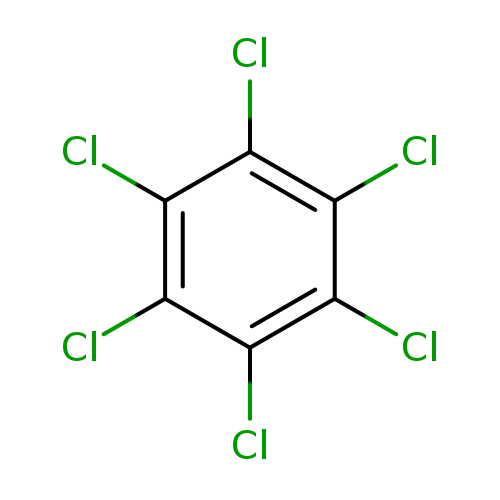
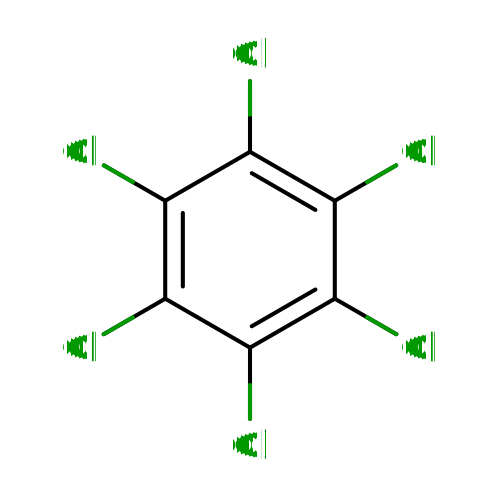
Chemical Structure
Thumb
Synonyms
ValueSource
1,2,3,4,5,6-HexachlorobenzeneChEBI
HCBChEBI
HexachlorbenzolChEBI
PerchlorobenzeneChEBI
Phenyl perchlorylChEBI
1,2,3,4,5,6-Hexachloro-benzeneHMDB
AmatinHMDB
AnticarieHMDB
Bunt-cureHMDB
Bunt-NO-moreHMDB
Ceku c.bHMDB
Ceku c.b.HMDB
CO-OP HexaHMDB
EsaclorobenzeneHMDB
GranoxHMDB
Granox NMHMDB
Hexa c.bHMDB
Hexa c.b.HMDB
Hexa CBHMDB
Hexachloro-benzeneHMDB
HexcachlorbenzenHMDB
Julen'S carbon chlorideHMDB
Julian'S carbon chlorideHMDB
Julin'S carbon chlorideHMDB
Julin'S chlorideHMDB
No buntHMDB
No bunt 40HMDB
No bunt 80HMDB
No bunt liquidHMDB
Pentachlorophenyl chlorideHMDB
S AnocideHMDB
SaatbeizfungizidHMDB
SanocidHMDB
SanocideHMDB
Smut-goHMDB
SnieciotoxHMDB
Voronit cHMDB
Chemical FormulaC6Cl6
Average Molecular Mass284.782 g/mol
Monoisotopic Mass281.813 g/mol
CAS Registry Number118-74-1
IUPAC Namehexachlorobenzene
Traditional Namehexachlorobenzene
SMILESClC1=C(Cl)C(Cl)=C(Cl)C(Cl)=C1Cl
InChI IdentifierInChI=1S/C6Cl6/c7-1-2(8)4(10)6(12)5(11)3(1)9
InChI KeyCKAPSXZOOQJIBF-UHFFFAOYSA-N
Chemical Taxonomy
Description belongs to the class of organic compounds known as chlorobenzenes. Chlorobenzenes are compounds containing one or more chlorine atoms attached to a benzene moiety.
KingdomOrganic compounds
Super ClassBenzenoids
ClassBenzene and substituted derivatives
Sub ClassHalobenzenes
Direct ParentChlorobenzenes
Alternative Parents
Substituents
  • Chlorobenzene
  • Aryl halide
  • Aryl chloride
  • Hydrocarbon derivative
  • Organochloride
  • Organohalogen compound
  • Aromatic homomonocyclic compound
Molecular FrameworkAromatic homomonocyclic compounds
External Descriptors
Biological Properties
StatusDetected and Not Quantified
OriginExogenous
Cellular Locations
  • Membrane
Biofluid LocationsNot Available
Tissue LocationsNot Available
PathwaysNot Available
Applications
Biological Roles
Chemical Roles
Physical Properties
StateSolid
AppearanceWhite powder.
Experimental Properties
PropertyValue
Melting Point226°C
Boiling Point323-326°C
Solubility6.2e-06 mg/mL at 25°C
Predicted Properties
PropertyValueSource
Water Solubility0.0002 g/LALOGPS
logP5.7ALOGPS
logP5.6ChemAxon
logS-6.2ALOGPS
Physiological Charge0ChemAxon
Hydrogen Acceptor Count0ChemAxon
Hydrogen Donor Count0ChemAxon
Polar Surface Area0 ŲChemAxon
Rotatable Bond Count0ChemAxon
Refractivity54.89 m³·mol⁻¹ChemAxon
Polarizability21.75 ųChemAxon
Number of Rings1ChemAxon
Bioavailability1ChemAxon
Rule of FiveNoChemAxon
Ghose FilterNoChemAxon
Veber's RuleYesChemAxon
MDDR-like RuleNoChemAxon
Spectra
Spectra
Spectrum TypeDescriptionSplash KeyView
GC-MSGC-MS Spectrum - GC-MS (Non-derivatized)splash10-05au-3890000000-f69d8d041047bbbd8cf6Spectrum
GC-MSGC-MS Spectrum - EI-B (Non-derivatized)splash10-001r-0390000000-97dc8f4d1e5fb325407eSpectrum
GC-MSGC-MS Spectrum - EI-B (Non-derivatized)splash10-0019-1390000000-e4057ffa68f36abf1e5cSpectrum
GC-MSGC-MS Spectrum - EI-B (Non-derivatized)splash10-001r-0290000000-be7d6414f99da634dbccSpectrum
GC-MSGC-MS Spectrum - GC-MS (Non-derivatized)splash10-05au-3890000000-f69d8d041047bbbd8cf6Spectrum
GC-MSGC-MS Spectrum - GC-EI-TOF (Non-derivatized)splash10-0537-1980000000-4d496eb3ebb555f0d5d2Spectrum
Predicted GC-MSPredicted GC-MS Spectrum - GC-MS (Non-derivatized) - 70eV, Positivesplash10-001r-0090000000-dd5c6fd778459bb7b727Spectrum
Predicted GC-MSPredicted GC-MS Spectrum - GC-MS (Non-derivatized) - 70eV, PositiveNot AvailableSpectrum
Predicted LC-MS/MSPredicted LC-MS/MS Spectrum - 10V, Positivesplash10-001i-0090000000-ac24e2bc100359502cbcSpectrum
Predicted LC-MS/MSPredicted LC-MS/MS Spectrum - 20V, Positivesplash10-001i-0090000000-ac24e2bc100359502cbcSpectrum
Predicted LC-MS/MSPredicted LC-MS/MS Spectrum - 40V, Positivesplash10-001i-0090000000-ac24e2bc100359502cbcSpectrum
Predicted LC-MS/MSPredicted LC-MS/MS Spectrum - 10V, Negativesplash10-001i-0090000000-e8ac20108d55e4950623Spectrum
Predicted LC-MS/MSPredicted LC-MS/MS Spectrum - 20V, Negativesplash10-001i-0090000000-e8ac20108d55e4950623Spectrum
Predicted LC-MS/MSPredicted LC-MS/MS Spectrum - 40V, Negativesplash10-001i-0090000000-e8ac20108d55e4950623Spectrum
Predicted LC-MS/MSPredicted LC-MS/MS Spectrum - 10V, Positivesplash10-001i-0090000000-c0992f2959227d61d8beSpectrum
Predicted LC-MS/MSPredicted LC-MS/MS Spectrum - 20V, Positivesplash10-001i-0090000000-c0992f2959227d61d8beSpectrum
Predicted LC-MS/MSPredicted LC-MS/MS Spectrum - 40V, Positivesplash10-001i-0090000000-c0992f2959227d61d8beSpectrum
MSMass Spectrum (Electron Ionization)splash10-001r-1490000000-0dacd4ae21bcd544d5a2Spectrum
1D NMR13C NMR SpectrumNot AvailableSpectrum
Toxicity Profile
Route of ExposureOral (13); inhalation (13) ; dermal (13)
Mechanism of ToxicityHexachlorobenzene causes porphyria by modifying sulfhydryl groups in the catalytic or substrate-binding sites of uroporphyrinogen decarboxylase. This inhibits uroporphyrinogen decarboxylase, resulting in a deficiency of the decarboxylation of uroporphyrinogen III and accumulation of uroporphyrins in the liver. In addition, metabolism of hexachlorobenzene by the cytochrome P-450 enzymes is believed to produce reactive electrophilic metabolites that covalently bind to cellular proteins and DNA, causing irreversible damage. Exposure to hexochlorobenzene also causes macrophages to be attracted to organs such as the spleen, lungs, and skin, where they become activated by the hexochlorobenzene. This leads to a cascade of reactions involving innate immune cells. The gene expression profiles provide evidence for the importance of macrophages and granulocytes and mediators released by these cells in the adverse inflammatory response against hexochlorobenzene. In this way, co-stimulatory or danger signals are generated that could polyclonally activate T cells. Hexachlorobenzene is a weak agonist for aryl hydrocarbon receptor and may exhibit some of its toxic effects by activating the gene-regulatory properties of this protein, possibly inducing cytochome P-450 enzymes. It may also act at certain endocrine receptors. (1, 13, 3, 4, 2)
MetabolismHexachlorobenzene is mainly absorbed via ingestion, but also through inhalation and oral routes. It preferentially distributes to adipose tissue and other organs with high fat content. In animals, hexachlorobenzene is slowly metabolized to pentachlorophenol by the hepatic cytochrome P-450 system, conjugated with glutathione to yield pentachlorothiophenol, or reductively dechlorinated to form pentachlorobenzene. Other metabolites include less chlorinated benzenes, chlorophenols, S-conjugated phenols, and benzenes. Hexachlorobenzene is slowly metabolized in mammals, and the majority of hexachlorobenzene is excreted unchanged in the feces, while metabolites are excreted in the urine. (13)
Toxicity ValuesLD50: 3500 mg/kg (Oral, Rat) (15)
Lethal DoseNot Available
Carcinogenicity (IARC Classification)2B, possibly carcinogenic to humans. (12)
Uses/SourcesHexachlorobenzene was previously used as a pesticide to protect the seeds of onions and sorghum, wheat, and other grains against fungus. It was also used to make fireworks, ammunition, and synthetic rubber. As it can persist in the environment for long periods of time, today exposure occurs mainly from contact with contaminated water, food, soil, or air. (13)
Minimum Risk LevelAcute Oral: 0.008 mg/kg/day (11) Intermediate Oral: 0.0001 mg/kg/day (11) Chronic Oral: 0.00005 mg/kg/day (11)
Health EffectsChronic exposure to hexachlorobenzene can damage the liver, thyroid, nervous system, bones, kidneys, blood, and immune and endocrine systems. It also causes a syndrome, called black sore, that is characterized by dermal blistering and epidermolysis, pigmentation and scarring, alopecia, photosensitivity, hepatomegaly, porphyria, suppurative arthritis, osteomyelitis, and osteoporosis of the bones of the hands. It may also cause a liver disease called porphyria cutanea tarda. This disease can cause red-colored urine, skin sores, change in skin color, arthritis, and problems of the liver, nervous system, and stomach. Hexachlorobenzene also affects development and results in lower survival rates of children of exposed mothers. It is also believed to be a human carcinogen. (15, 13)
SymptomsHexachlorobenzene causes a syndrome, called black sore, that is characterized by dermal blistering and epidermolysis, pigmentation and scarring, alopecia, photosensitivity, hepatomegaly, porphyria, suppurative arthritis, osteomyelitis, and osteoporosis of the bones of the hands. It may also cause a liver disease called porphyria cutanea tarda. This disease can cause red-colored urine, skin sores, change in skin color, arthritis, and problems of the liver, nervous system, and stomach. (13)
TreatmentTreatment is mainly symptomatic and may include gastric lavage, administering activated charcoal, and controlling convulsions. (14)

Concentrations
Not Available
DrugBank IDNot Available
HMDB IDHMDB0032566
FooDB IDFDB010498
Phenol Explorer IDNot Available
KNApSAcK IDNot Available
BiGG IDNot Available
BioCyc IDNot Available
METLIN IDNot Available
PDB IDNot Available
Wikipedia LinkHexachlorobenzene
Chemspider ID8067
ChEBI ID5692
PubChem Compound ID8370
Kegg Compound IDC11042
YMDB IDNot Available
ECMDB IDNot Available
References
Synthesis ReferenceNot Available
MSDSNot Available
General References
1. https://www.ncbi.nlm.nih.gov/pubmed/?term=10641019
2. https://www.ncbi.nlm.nih.gov/pubmed/?term=12117784
3. https://www.ncbi.nlm.nih.gov/pubmed/?term=17150971
4. https://www.ncbi.nlm.nih.gov/pubmed/?term=23336922
5. https://www.ncbi.nlm.nih.gov/pubmed/?term=23462309
6. https://www.ncbi.nlm.nih.gov/pubmed/?term=23627767
7. https://www.ncbi.nlm.nih.gov/pubmed/?term=23747559
8. https://www.ncbi.nlm.nih.gov/pubmed/?term=23923419
9. https://www.ncbi.nlm.nih.gov/pubmed/?term=23973543
10. https://www.ncbi.nlm.nih.gov/pubmed/?term=24148401
11. https://www.ncbi.nlm.nih.gov/pubmed/?term=24311623
12. https://www.ncbi.nlm.nih.gov/pubmed/?term=24365113
13. Hao L, Xue J: Multiresidue analysis of 18 organochlorine pesticides in traditional chinese medicine. J Chromatogr Sci. 2006 Sep;44(8):518-22.
14. Graifemberghi S, Gavazzoni R, Pozzo G, Callea F, Pizzoli G: [Chloroquine-induced lesions in the liver of healthy rats and rats with porphyria induced by hexachlorobenzene]. G Ital Dermatol Venereol. 1982 May-Jun;117(3):149-54.
15. Xue J, Hao L, Peng F: Residues of 18 organochlorine pesticides in 30 traditional Chinese medicines. Chemosphere. 2008 Apr;71(6):1051-5. Epub 2007 Dec 26.
16. Chernev K, Ivanov E, Adzharov D: [Induction of mixed microsomal oxidase in experimental hexachlorobenzene porphyria in rabbits]. Eksp Med Morfol. 1981;20(1):8-11.
17. Polese L, Ribeiro ML: Methods for determination of hexachlorobenzene and pentachlorophenol in soil samples. Talanta. 1998 Aug;46(5):915-20.
18. Michielsen C, Boeren S, Rietjens I, van Mil F, Vos J, Bloksma N: The mercapturic acid biotransformation pathway of hexachlorobenzene is not involved in the induction of splenomegaly, or skin and lung lesions in the Brown Norway rat. Arch Toxicol. 2000 Dec;74(10):609-17.
19. Yannai, Shmuel. (2004) Dictionary of food compounds with CD-ROM: Additives, flavors, and ingredients. Boca Raton: Chapman & Hall/CRC.