Record Information
Version1.0
Creation Date2009-03-06 18:58:03 UTC
Update Date2026-03-31 19:11:23 UTC
Accession NumberCHEM000081
Identification
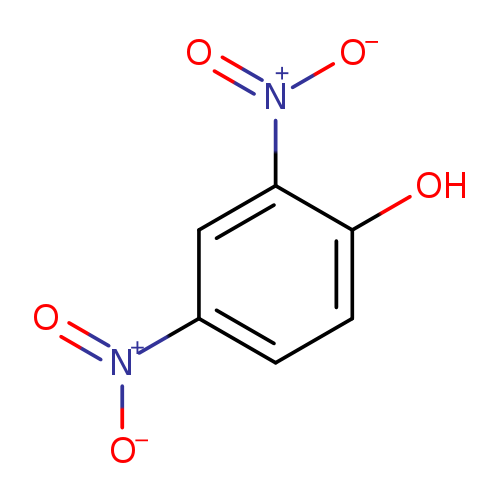
Common Name2,4-Dinitrophenol
ClassSmall Molecule
Description2,4-Dinitrophenol, also called DNP is a yellow solid with no known smell. It dissolves slightly in water. DNP present in water and soil as a pollutant does not easily evaporate to air. It uncouples oxidative phosphorylation by carrying protons across the mitochondrial membrane, leading to a rapid consumption of energy without generation of ATP. 2,4-DNP was used in the 1930s as a weightreduction drug, but this was discontinued in 1938 because of the many reports of adverse effects in people who used it. (3, 4)
Contaminant Sources
  • Clean Air Act Chemicals
  • HPV EPA Chemicals
  • OECD HPV Chemicals
  • STOFF IDENT Compounds
  • Sludge Chemicals
  • T3DB toxins
  • ToxCast & Tox21 Chemicals
Contaminant Type
  • Aromatic Hydrocarbon
  • Food Toxin
  • Industrial Precursor/Intermediate
  • Industrial/Workplace Toxin
  • Nitrite
  • Organic Compound
  • Pesticide
  • Pollutant
  • Synthetic Compound
Chemical Structure
Thumb
Synonyms
ValueSource
1-Hydroxy-2,4-dinitrobenzeneChEBI
2,4-DNPChEBI
alpha-DinitrophenolChEBI
a-DinitrophenolGenerator
Α-dinitrophenolGenerator
2,4 DinitrophenolHMDB
Chemical FormulaC6H4N2O5
Average Molecular Mass184.106 g/mol
Monoisotopic Mass184.012 g/mol
CAS Registry Number51-28-5
IUPAC Name2,4-dinitrophenol
Traditional Name2,4-dinitrophenol
SMILESOC1=CC=C(C=C1[N+]([O-])=O)[N+]([O-])=O
InChI IdentifierInChI=1S/C6H4N2O5/c9-6-2-1-4(7(10)11)3-5(6)8(12)13/h1-3,9H
InChI KeyUFBJCMHMOXMLKC-UHFFFAOYSA-N
Chemical Taxonomy
Description belongs to the class of organic compounds known as dinitrophenols. These are organic aromatic compounds containing a benzene that carries a single phenol group and exactly two nitro groups.
KingdomOrganic compounds
Super ClassBenzenoids
ClassPhenols
Sub ClassNitrophenols
Direct ParentDinitrophenols
Alternative Parents
Substituents
  • Dinitrophenol
  • Nitrobenzene
  • Nitroaromatic compound
  • 1-hydroxy-2-unsubstituted benzenoid
  • Monocyclic benzene moiety
  • C-nitro compound
  • Organic nitro compound
  • Organic oxoazanium
  • Allyl-type 1,3-dipolar organic compound
  • Propargyl-type 1,3-dipolar organic compound
  • Organic 1,3-dipolar compound
  • Organic nitrogen compound
  • Organooxygen compound
  • Organonitrogen compound
  • Organic oxygen compound
  • Organopnictogen compound
  • Organic oxide
  • Hydrocarbon derivative
  • Aromatic homomonocyclic compound
Molecular FrameworkAromatic homomonocyclic compounds
External Descriptors
Biological Properties
StatusDetected and Not Quantified
OriginExogenous
Cellular Locations
  • Cytoplasm
  • Extracellular
Biofluid LocationsNot Available
Tissue LocationsNot Available
PathwaysNot Available
ApplicationsNot Available
Biological RolesNot Available
Chemical Roles
Physical Properties
StateSolid
AppearanceYellow, crystalline solid.
Experimental Properties
PropertyValue
Melting Point115.5°C
Boiling PointNot Available
Solubility2.79 mg/mL at 20 °C [SCHWARZENBACH,RP et al.(1988)]
Predicted Properties
PropertyValueSource
Water Solubility0.38 g/LALOGPS
logP1.89ALOGPS
logP1.55ChemAxon
logS-2.7ALOGPS
pKa (Strongest Acidic)4.04ChemAxon
pKa (Strongest Basic)-7.8ChemAxon
Physiological Charge-1ChemAxon
Hydrogen Acceptor Count5ChemAxon
Hydrogen Donor Count1ChemAxon
Polar Surface Area111.87 ŲChemAxon
Rotatable Bond Count2ChemAxon
Refractivity42.69 m³·mol⁻¹ChemAxon
Polarizability14.48 ųChemAxon
Number of Rings1ChemAxon
Bioavailability1ChemAxon
Rule of FiveYesChemAxon
Ghose FilterNoChemAxon
Veber's RuleNoChemAxon
MDDR-like RuleNoChemAxon
Spectra
Spectra
Spectrum TypeDescriptionSplash KeyView
GC-MSGC-MS Spectrum - EI-B (Non-derivatized)splash10-0w33-9300000000-b1719d21caddddc047cbSpectrum
GC-MSGC-MS Spectrum - CI-B (Non-derivatized)splash10-001i-0900000000-5413dbaa2e83c8f4b557Spectrum
GC-MSGC-MS Spectrum - EI-B (Non-derivatized)splash10-0gz9-9200000000-e0169c5ed661f777992dSpectrum
Predicted GC-MSPredicted GC-MS Spectrum - GC-MS (Non-derivatized) - 70eV, Positivesplash10-001i-4900000000-ce56c5b5949f3aab9691Spectrum
Predicted GC-MSPredicted GC-MS Spectrum - GC-MS (Non-derivatized) - 70eV, PositiveNot AvailableSpectrum
Predicted GC-MSPredicted GC-MS Spectrum - GC-MS (TMS_1_1) - 70eV, PositiveNot AvailableSpectrum
Predicted GC-MSPredicted GC-MS Spectrum - GC-MS (TBDMS_1_1) - 70eV, PositiveNot AvailableSpectrum
LC-MS/MSLC-MS/MS Spectrum - LC-ESI-QQ , negativesplash10-001i-0900000000-d0edc53122fee24d0bfeSpectrum
LC-MS/MSLC-MS/MS Spectrum - LC-ESI-QQ , negativesplash10-001i-0900000000-c84e9386e3bb5b82491bSpectrum
LC-MS/MSLC-MS/MS Spectrum - LC-ESI-QQ , negativesplash10-0abi-1900000000-68bdd4eb6e5974914142Spectrum
LC-MS/MSLC-MS/MS Spectrum - LC-ESI-QQ , negativesplash10-0a4i-3900000000-e783e75f0ce9280a1b98Spectrum
LC-MS/MSLC-MS/MS Spectrum - LC-ESI-QQ , negativesplash10-0a4j-9700000000-57819c29c3eccdb05da8Spectrum
LC-MS/MSLC-MS/MS Spectrum - LC-ESI-QFT , negativesplash10-001i-0900000000-3a8e56d08e6de49313c9Spectrum
LC-MS/MSLC-MS/MS Spectrum - LC-ESI-QFT , negativesplash10-001i-0900000000-1aa1a96cd6fcabd2e8b2Spectrum
LC-MS/MSLC-MS/MS Spectrum - 30V, Positivesplash10-0kni-0900000000-6c09fc4d338e70cb4b9aSpectrum
LC-MS/MSLC-MS/MS Spectrum - 90V, Positivesplash10-0002-9400000000-949db2bc026efd65141fSpectrum
LC-MS/MSLC-MS/MS Spectrum - 45V, Positivesplash10-0ff0-1900000000-d1a55aa76504fcb44ac7Spectrum
LC-MS/MSLC-MS/MS Spectrum - 90V, Negativesplash10-0002-9400000000-e4966146e05cfb905744Spectrum
LC-MS/MSLC-MS/MS Spectrum - 10V, Negativesplash10-001i-0900000000-d89518c468c772833363Spectrum
LC-MS/MSLC-MS/MS Spectrum - 20V, Negativesplash10-001i-0900000000-375c8b23676295f4a72eSpectrum
LC-MS/MSLC-MS/MS Spectrum - 15V, Negativesplash10-001i-0900000000-7eebbd1f8d1c19262f24Spectrum
LC-MS/MSLC-MS/MS Spectrum - 30V, Negativesplash10-0kni-0900000000-b8457945572cb0bba339Spectrum
LC-MS/MSLC-MS/MS Spectrum - 60V, Negativesplash10-00dj-4900000000-d636858c5fa0177786b6Spectrum
LC-MS/MSLC-MS/MS Spectrum - 75V, Negativesplash10-006t-9800000000-baa2c216f658519b7c8aSpectrum
LC-MS/MSLC-MS/MS Spectrum - 45V, Negativesplash10-0ff0-1900000000-6cc0f71e284b84d0d9bdSpectrum
LC-MS/MSLC-MS/MS Spectrum - 30V, Negativesplash10-001i-0900000000-0b477cb117894262ceb7Spectrum
Predicted LC-MS/MSPredicted LC-MS/MS Spectrum - 10V, Positivesplash10-000i-0900000000-8b19bd45fc3bc7108e52Spectrum
Predicted LC-MS/MSPredicted LC-MS/MS Spectrum - 20V, Positivesplash10-0a6r-0900000000-86c912316d1b4d196b34Spectrum
Predicted LC-MS/MSPredicted LC-MS/MS Spectrum - 40V, Positivesplash10-0a6r-0900000000-6861ad0b3afd4816d4fbSpectrum
Predicted LC-MS/MSPredicted LC-MS/MS Spectrum - 10V, Negativesplash10-001i-0900000000-71e294edac43369a7499Spectrum
Predicted LC-MS/MSPredicted LC-MS/MS Spectrum - 20V, Negativesplash10-001i-0900000000-d0ede4cd1dcdcd43e021Spectrum
Predicted LC-MS/MSPredicted LC-MS/MS Spectrum - 40V, Negativesplash10-0059-0900000000-7bd4205875eb081f25fbSpectrum
MSMass Spectrum (Electron Ionization)splash10-0gx0-9400000000-1a15393a48ca40633fc2Spectrum
1D NMR13C NMR SpectrumNot AvailableSpectrum
Toxicity Profile
Route of ExposureOral (5); inhalation (5) ; dermal (5)
Mechanism of ToxicityAcute 2,4-dinitrophenol poisoning (from ingestion) involves uncoupling of oxidative phosphorylation, which presumably reduces body's reservoirs of high-energy phosphate. This stimulates oxidative metabolism and, in turn, the heat production of the body. Oxygen consumption, body temperature, respiration and heart rate are all increased. 2,4-Dinitrophenol has been suggested to bind serum proteins such as transthyretin. In fact it was proposed as a therapeutic agent for the prevention/inhibition of amyloid diseases through stabilization of the native fold of transthyretin. (7, 1, 2)
Metabolism2,4-DNP can readily enter the body through inhalation and ingestion. It can probably be absorbed through the skin also. Animal studies show that after 2,4-DNP enters the body, the blood can carry it to organs and tissues such as the liver, the kidneys, and the eyes. DNP does not build up in organs and tissues, but it is metabolized via reduction of the nitro groups or broken down to other chemicals. The parent compound and metabolites such as 2-amino-4-nitrophenol, 4-amino-2-nitrophenol and diaminophenol are excreted in the urine. 2,4-DNP is also excreted by mammals, partially unchanged, partially conjugated with glucuronic acid and probably as 2,4-diamenolphenol. (3, 8)
Toxicity ValuesLD50: 14-43 mg/kg (Oral, Human) (8)
Lethal DoseNot Available
Carcinogenicity (IARC Classification)No indication of carcinogenicity to humans (not listed by IARC).
Uses/Sources2,4-Dinitrophenol has been used to make dyes, other organic chemicals, and wood preservatives. It has also been used to make photographic developer, explosives, and pesticides. 2,4-Dinitrophenol exposure may occur from breathing contaminated air, drinking contaminated water, eating contaminated food, or by contact with contaminated soil. (3, 4)
Minimum Risk LevelAcute Oral: 0.01 mg/kg/day (3)
Health Effects2,4-DNP can cause cataracts following ingestion of a small dose for short or long periods. This condition could lead to blindness in both eyes. Breathing in, swallowing, or having skin contact with large amounts of DNP can lead to death.(3)
SymptomsDermal contact may results in redness, roughness, yellow staining of the skin. Nausea, vomiting, palpitations, collapse, sweating occur after inhalation or ingestion. (5)
TreatmentThere is no specific antidote for 2,4-DNP poisoning. Symptomatic treatment includes replacing oxygen and fluids, controlling temperature by administering sponge baths and ice packs, and using a fan to promote air flow and evaporation. In fully conscious patients, administer cold, sugar-containing liquids by mouth as tolerated. In cases of skin contact, bathe and shampoo contaminated skin and hair promptly. (6)
Concentrations
Not Available
DrugBank IDDB04528
HMDB IDHMDB0245462
FooDB IDNot Available
Phenol Explorer IDNot Available
KNApSAcK IDNot Available
BiGG IDNot Available
BioCyc IDCPD-8179
METLIN IDNot Available
PDB IDNot Available
Wikipedia Link2,4-Dinitrophenol
Chemspider ID1448
ChEBI ID42017
PubChem Compound ID1493
Kegg Compound IDC02496
YMDB IDNot Available
ECMDB IDNot Available
References
Synthesis Reference

Otto Arndt, Theodor Papenfuhs, “Process for the preparation of 6-chloro-2,4-dinitrophenol.” U.S. Patent US4540832, issued September, 1984.

MSDSNot Available
General References
1. https://www.ncbi.nlm.nih.gov/pubmed/?term=10509480
2. https://www.ncbi.nlm.nih.gov/pubmed/?term=10888472
3. https://www.ncbi.nlm.nih.gov/pubmed/?term=13532746
4. https://www.ncbi.nlm.nih.gov/pubmed/?term=15307184
5. https://www.ncbi.nlm.nih.gov/pubmed/?term=16661637
6. https://www.ncbi.nlm.nih.gov/pubmed/?term=18505478
7. https://www.ncbi.nlm.nih.gov/pubmed/?term=25281383
8. https://www.ncbi.nlm.nih.gov/pubmed/?term=5959282
9. https://www.ncbi.nlm.nih.gov/pubmed/?term=9129253
10. Barupal DK, Fiehn O: Generating the Blood Exposome Database Using a Comprehensive Text Mining and Database Fusion Approach. Environ Health Perspect. 2019 Sep;127(9):97008. doi: 10.1289/EHP4713. Epub 2019 Sep 26.