Record Information
Version1.0
Creation Date2009-03-06 18:58:02 UTC
Update Date2026-03-26 21:52:41 UTC
Accession NumberCHEM000076
Identification
Common NameDichloromethane
ClassSmall Molecule
DescriptionDichloromethane is used as an extraction solvent in the preparation of decaffeinated coffee, hop extracts and spice oleoresins. Diluent for colour additives and inks for marking fruit and vegetables The output of these processes is a mixture of methyl chloride, dichloromethane, chloroform, and carbon tetrachloride. These compounds are separated by distillation. Dichloromethane has been shown to exhibit anti-tumor, anti-proliferative, analgesic, anti-fungal and antibiotic functions (1, 2, 3, 4, 5). Dichloromethane belongs to the family of Organochlorides. These are organic compounds containing a chlorine atom.
Contaminant Sources
  • Clean Air Act Chemicals
  • Disinfection Byproducts
  • EAFUS Chemicals
  • FooDB Chemicals
  • HMDB Contaminants - Feces
  • HPV EPA Chemicals
  • IARC Carcinogens Group 2A
  • OECD HPV Chemicals
  • STOFF IDENT Compounds
  • T3DB toxins
  • ToxCast & Tox21 Chemicals
Contaminant Type
  • Food Toxin
  • Household Toxin
  • Industrial/Workplace Toxin
  • Metabolite
  • Organic Compound
  • Organochloride
  • Pesticide
  • Pollutant
  • Solvent
  • Synthetic Compound
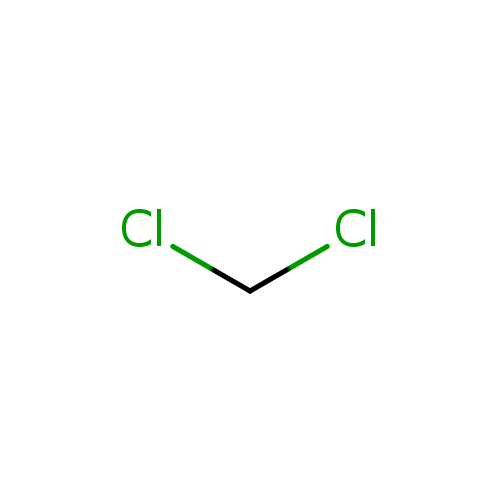
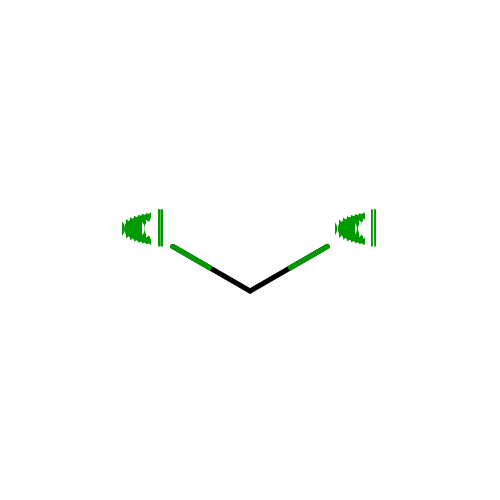
Chemical Structure
Thumb
Synonyms
ValueSource
Chlorure de methyleneChEBI
DCMChEBI
DichlormethanChEBI
Methane dichlorideChEBI
MethylenchloridChEBI
Methylene bichlorideChEBI
Methylene chlorideChEBI
Methylene dichlorideChEBI
AerotheneHMDB
Aerothene MMHMDB
Bichloride, methyleneHMDB
CH2CL2HMDB
Chloride, methyleneHMDB
Dichloride, methyleneHMDB
Dichloro-methaneHMDB
Dichloromethane, acsHMDB
Dichloromethane, NFHMDB
Distillex DS3HMDB
DriveritHMDB
Freon 30HMDB
m-Clean DHMDB
MethokloneHMDB
Metylenu chlorekHMDB
NarkotilHMDB
NevolinHMDB
R 30HMDB
SalesthinHMDB
SolaesthinHMDB
SolmethineHMDB
Chemical FormulaCH2Cl2
Average Molecular Mass84.933 g/mol
Monoisotopic Mass83.953 g/mol
CAS Registry Number1975-09-02
IUPAC Namedichloromethane
Traditional Namemethylene chloride
SMILESClCCl
InChI IdentifierInChI=1S/CH2Cl2/c2-1-3/h1H2
InChI KeyYMWUJEATGCHHMB-UHFFFAOYSA-N
Chemical Taxonomy
Description belongs to the class of organic compounds known as halomethanes. These are organic compounds in which at least one of the four hydrogen atoms of methane (CH4) are replaced by halogen atoms.
KingdomOrganic compounds
Super ClassOrganohalogen compounds
ClassAlkyl halides
Sub ClassHalomethanes
Direct ParentHalomethanes
Alternative Parents
Substituents
  • Halomethane
  • Hydrocarbon derivative
  • Organochloride
  • Alkyl chloride
  • Aliphatic acyclic compound
Molecular FrameworkAliphatic acyclic compounds
External Descriptors
Biological Properties
StatusDetected and Not Quantified
OriginExogenous
Cellular Locations
  • Cytoplasm
  • Extracellular
Biofluid LocationsNot Available
Tissue LocationsNot Available
PathwaysNot Available
Applications
Biological Roles
Chemical Roles
Physical Properties
StateLiquid
AppearanceColorless liquid.
Experimental Properties
PropertyValue
Melting Point-96.8°C
Boiling PointNot Available
Solubility13 mg/mL at 25°C
Predicted Properties
PropertyValueSource
Water Solubility17.5 g/LALOGPS
logP1.12ALOGPS
logP1.29ChemAxon
logS-0.69ALOGPS
Physiological Charge0ChemAxon
Hydrogen Acceptor Count0ChemAxon
Hydrogen Donor Count0ChemAxon
Polar Surface Area0 ŲChemAxon
Rotatable Bond Count0ChemAxon
Refractivity16.44 m³·mol⁻¹ChemAxon
Polarizability6.53 ųChemAxon
Number of Rings0ChemAxon
Bioavailability1ChemAxon
Rule of FiveYesChemAxon
Ghose FilterNoChemAxon
Veber's RuleYesChemAxon
MDDR-like RuleNoChemAxon
Spectra
Spectra
Spectrum TypeDescriptionSplash KeyView
GC-MSGC-MS Spectrum - EI-B (Non-derivatized)splash10-0002-9000000000-fea8e21d8ce299fd6c73Spectrum
GC-MSGC-MS Spectrum - EI-B (Non-derivatized)splash10-000t-9000000000-3c727a0b79ead1d0afc9Spectrum
GC-MSGC-MS Spectrum - EI-B (Non-derivatized)splash10-0002-9000000000-fea8e21d8ce299fd6c73Spectrum
GC-MSGC-MS Spectrum - EI-B (Non-derivatized)splash10-000t-9000000000-3c727a0b79ead1d0afc9Spectrum
Predicted GC-MSPredicted GC-MS Spectrum - GC-MS (Non-derivatized) - 70eV, Positivesplash10-001i-9000000000-a20182f85c9e395e5511Spectrum
Predicted GC-MSPredicted GC-MS Spectrum - GC-MS (Non-derivatized) - 70eV, PositiveNot AvailableSpectrum
Predicted LC-MS/MSPredicted LC-MS/MS Spectrum - 10V, Positivesplash10-001i-9000000000-9fdeb81f96b30affd700Spectrum
Predicted LC-MS/MSPredicted LC-MS/MS Spectrum - 20V, Positivesplash10-001i-9000000000-9fdeb81f96b30affd700Spectrum
Predicted LC-MS/MSPredicted LC-MS/MS Spectrum - 40V, Positivesplash10-001i-9000000000-9fdeb81f96b30affd700Spectrum
Predicted LC-MS/MSPredicted LC-MS/MS Spectrum - 10V, Negativesplash10-001i-9000000000-3641e00693a6eab28168Spectrum
Predicted LC-MS/MSPredicted LC-MS/MS Spectrum - 20V, Negativesplash10-001i-9000000000-3641e00693a6eab28168Spectrum
Predicted LC-MS/MSPredicted LC-MS/MS Spectrum - 40V, Negativesplash10-001i-9000000000-3641e00693a6eab28168Spectrum
Predicted LC-MS/MSPredicted LC-MS/MS Spectrum - 10V, Negativesplash10-001i-9000000000-cd27483dddc3a8ea1a54Spectrum
Predicted LC-MS/MSPredicted LC-MS/MS Spectrum - 20V, Negativesplash10-001i-9000000000-cd27483dddc3a8ea1a54Spectrum
Predicted LC-MS/MSPredicted LC-MS/MS Spectrum - 40V, Negativesplash10-001i-9000000000-cd27483dddc3a8ea1a54Spectrum
Predicted LC-MS/MSPredicted LC-MS/MS Spectrum - 10V, Positivesplash10-001i-9000000000-fddbf58cbca8e803abceSpectrum
Predicted LC-MS/MSPredicted LC-MS/MS Spectrum - 20V, Positivesplash10-001i-9000000000-fddbf58cbca8e803abceSpectrum
Predicted LC-MS/MSPredicted LC-MS/MS Spectrum - 40V, Positivesplash10-001j-9000000000-ed36dd35150f69631b13Spectrum
MSMass Spectrum (Electron Ionization)splash10-000t-9000000000-6ce0b546ffcfe5b5cf7eSpectrum
1D NMR1H NMR SpectrumNot AvailableSpectrum
1D NMR13C NMR SpectrumNot AvailableSpectrum
1D NMR1H NMR SpectrumNot AvailableSpectrum
1D NMR13C NMR SpectrumNot AvailableSpectrum
1D NMR1H NMR SpectrumNot AvailableSpectrum
1D NMR13C NMR SpectrumNot AvailableSpectrum
1D NMR1H NMR SpectrumNot AvailableSpectrum
1D NMR13C NMR SpectrumNot AvailableSpectrum
1D NMR1H NMR SpectrumNot AvailableSpectrum
1D NMR13C NMR SpectrumNot AvailableSpectrum
1D NMR1H NMR SpectrumNot AvailableSpectrum
1D NMR13C NMR SpectrumNot AvailableSpectrum
1D NMR1H NMR SpectrumNot AvailableSpectrum
1D NMR13C NMR SpectrumNot AvailableSpectrum
1D NMR1H NMR SpectrumNot AvailableSpectrum
1D NMR13C NMR SpectrumNot AvailableSpectrum
1D NMR1H NMR SpectrumNot AvailableSpectrum
1D NMR13C NMR SpectrumNot AvailableSpectrum
1D NMR1H NMR SpectrumNot AvailableSpectrum
1D NMR13C NMR SpectrumNot AvailableSpectrum
Toxicity Profile
Route of ExposureOral (8) ; inhalation (8) ; dermal (8)
Mechanism of ToxicityMethylene chloride targets the lungs, blood system, and nervous system. In the lungs its metabolites damage Clara cells. It is also metabolized into carbon monoxide, which binds to hemoglobin to produce dose-dependent increases in carboxyhemoglobin. This results in the reduced oxygen transport and neurological dysfunction characteristic of carboxyhemoglobinemia (carbon monoxide poisoning). Methylene chloride is also believed to cause neurotoxicity by interfering with signal transmission in a manner similar to general anesthetics. Certain metabolites, such as formaldehyde, may result in carcinogenic effects by causing DNA single strand breaks, DNA-protein crosslinks, and other mutations. (11, 8)
MetabolismAbsorption mainly occurs via inhalation, but may also result from oral or dermal exposure. Methylene chloride is mainly distributed to the adipose tissue and liver. It may be metabolized by cytochrome P-450 2E1, which ultimately produces carbon monoxide and carbon dioxide via formyl chloride. Methylene chloride can also be metabolized by theta glutathione-S-transferase, which produces carbon dioxide via a postulated glutathione conjugate (S-chloromethyl glutathione) and formaldehyde. Both pathways produce toxic metabolites which are excreted mainly in expired air, but also in the urine. (11, 8)
Toxicity ValuesLD50: 437 mg/kg (Intraperitoneal, Mouse) (12) LD50: 6460 mg/kg (Subcutaneous, Mouse) (12) LD50: 1600 mg/kg (Oral, Rat) (13) LC50: 14 400 ppm over 7 hours (Inhalation, Mouse) (12)
Lethal Dose357 mg/kg (oral) or 50 000 ppm (inhalation) for an adult human. (14)
Carcinogenicity (IARC Classification)2A, probably carcinogenic to humans. (7)
Uses/SourcesMethylene chloride is widely used as a solvent in industrial processes, paint stripper, and degreaser. It is also used in food preparation, aerosol propellants, pesticides, and the manufacture of photographic film. (11, 8)
Minimum Risk LevelAcute Inhalation: 0.6 ppm (6) Intermediate Inhalation: 0.3 ppm (6) Chronic Inhalation: 0.3 ppm (6) Acute Oral: 0.2 mg/kg/day (6) Chronic Oral: 0.06 mg/kg/day (6)
Health EffectsExposure to methylene chloride may cause optic neuropathy and hepatitis. Very high concentrations can lead to unconciousness, coma, and death. It is metabolized to carbon monoxide, potentially leading to carbon monoxide poisoning. Methylene chloride also causes liver and kidney injury, and may be a carcinogen. (11, 9)
SymptomsBreathing large amounts of methylene chloride causes dizziness, nausea, tingling or numbness of the finger and toes, loss of concentration, and reduced hand-eye coordination. Very high concentrations can lead to unconciousness, coma, and death. Skin contact with methylene chloride causes burning and redness of the skin. (8, 9)
TreatmentTreatment of methylene chloride exposure is mainly symptomatic. Ingested methylene chloride may be removed by emesis and/or gastric lavage, and activated charcoal. Hyperbaric oxygen may be used to treat the carbon monoxide poisoning that can result from inhalation of methylene chloride. (10)
Concentrations
Not Available
DrugBank IDNot Available
HMDB IDHMDB0031548
FooDB IDFDB008159
Phenol Explorer IDNot Available
KNApSAcK IDNot Available
BiGG IDNot Available
BioCyc IDCPD-681
METLIN IDNot Available
PDB IDNot Available
Wikipedia LinkDichloromethane
Chemspider ID6104
ChEBI ID15767
PubChem Compound ID6344
Kegg Compound IDC02271
YMDB IDNot Available
ECMDB IDNot Available
References
Synthesis ReferenceNot Available
MSDSNot Available
General References
1. https://www.ncbi.nlm.nih.gov/pubmed/?term=11884241
2. https://www.ncbi.nlm.nih.gov/pubmed/?term=19091298
3. https://www.ncbi.nlm.nih.gov/pubmed/?term=8465711
4. Jin W, Shi Q, Hong C, Cheng Y, Ma Z, Qu H: Cytotoxic properties of thiophenes from Echinops grijissi Hance. Phytomedicine. 2008 Sep;15(9):768-74. Epub 2008 Feb 20.
5. Barreiro Arcos ML, Cremaschi G, Werner S, Coussio J, Ferraro G, Anesini C: Tilia cordata Mill. Extracts and scopoletin (isolated compound): differential cell growth effects on lymphocytes. Phytother Res. 2006 Jan;20(1):34-40.
6. Matheus ME, Berrondo LF, Vieitas EC, Menezes FS, Fernandes PD: Evaluation of the antinociceptive properties from Brillantaisia palisotii Lindau stems extracts. J Ethnopharmacol. 2005 Dec 1;102(3):377-81. Epub 2005 Aug 1.
7. Khan MR, Omoloso AD: Antibacterial and antifungal activities of Dracontomelon dao. Fitoterapia. 2002 Jul;73(4):327-30.
8. Meyer JJ, Dilika F: Antibacterial activity of Helichrysum pedunculatum used in circumcision rites. J Ethnopharmacol. 1996 Jul 26;53(1):51-4.
9. Yannai, Shmuel. (2004) Dictionary of food compounds with CD-ROM: Additives, flavors, and ingredients. Boca Raton: Chapman & Hall/CRC.