Record Information
Version1.0
Creation Date2009-03-06 18:58:02 UTC
Update Date2026-03-31 16:44:22 UTC
Accession NumberCHEM000074
Identification
Common NameNaphthalene
ClassSmall Molecule
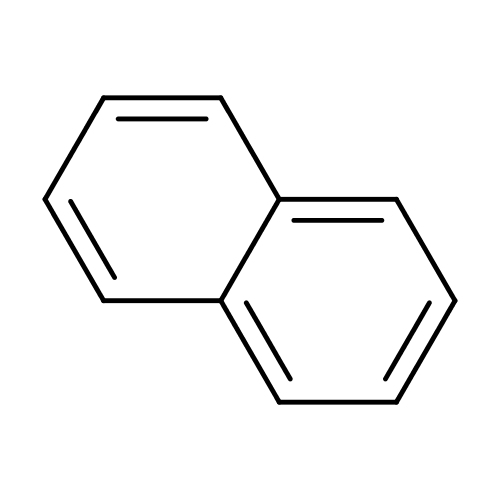
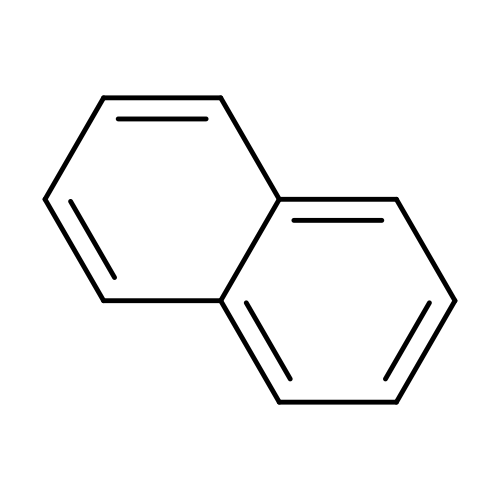
DescriptionNaphthalene is the simplest polyaromatic hydrocarbon (PAH) consisting of two fused benzene rings. It has a distinct, pungent odor that can be detected at levels as low as 0.08 ppm. Naphthalene is the most abundant single component of coal tar so most of it is now industrially derived from coal tar. From the 1960s until the 1990s, significant amounts of naphthalene were also produced from heavy petroleum fractions during petroleum refining, but today petroleum-derived naphthalene represents only a minor component of naphthalene production. Naphthalene is also produced naturally with trace amounts of naphthalene being produced by black walnuts, magnolias and specific types of deer, as well as the Formosan subterranean termite. Some strains of the endophytic fungus (Muscodor albus) also produce naphthalene. Naphthalene and other polycyclic aromatic hydrocarbons (PAHs) are released from incomplete combustion processes originating in industry, cigarette smoke and motor vehicle exhaust, as well as natural events such as forest fires. Industrially, naphthalene is used in the production of phthalic anhydride, as a solvent for chemical reactions, as a wetting agent and as a fumigant. It is also used in pyrotechnic special effects such as the generation of black smoke and simulated explosions. In the past, naphthalene was administered orally to kill parasitic worms in livestock. Naphthalene was once the primary ingredient in mothballs, though its use has largely been replaced in favor of alternatives such as 1,4-dichlorobenzene. In a sealed container containing naphthalene pellets, naphthalene vapors build up to levels that are toxic to both the adult and larval forms of many moths. Naphthalene has been shown to exhibit apoptotic and catabolic functions (4, 5). Exposure to large amounts of naphthalene may damage or destroy red blood cells. Humans, in particular children, have developed this condition, known as hemolytic anemia, after ingesting mothballs or deodorant blocks containing naphthalene.
Contaminant Sources
  • Clean Air Act Chemicals
  • EAFUS Chemicals
  • FooDB Chemicals
  • HMDB Contaminants - Feces
  • HPV EPA Chemicals
  • IARC Carcinogens Group 2B
  • My Exposome Chemicals
  • OECD HPV Chemicals
  • STOFF IDENT Compounds
  • T3DB toxins
  • Tobacco Smoke Compounds
  • ToxCast & Tox21 Chemicals
Contaminant Type
  • Aromatic Hydrocarbon
  • Food Toxin
  • Household Toxin
  • Industrial By-product/Pollutant
  • Industrial/Workplace Toxin
  • Metabolite
  • Natural Compound
  • Organic Compound
  • Pollutant
  • Polycyclic Aromatic Hydrocarbon
Chemical Structure
Thumb
Synonyms
ValueSource
NaftalenoChEBI
NaftalinaChEBI
NaphtaleneChEBI
NaphtalineChEBI
NaphthalenChEBI
NaphthalinChEBI
AlbocarbonHMDB
Camphor tarHMDB
Moth ballsHMDB
Moth flakesHMDB
MothballsHMDB
NaftalenHMDB
NaphthalineHMDB
NaphtheneHMDB
Tar camphorHMDB
TolboxaneHMDB
White tarHMDB
Chemical FormulaC10H8
Average Molecular Mass128.171 g/mol
Monoisotopic Mass128.063 g/mol
CAS Registry Number91-20-3
IUPAC Namenaphthalene
Traditional Namenaphthalene
SMILESC1=CC2=CC=CC=C2C=C1
InChI IdentifierInChI=1S/C10H8/c1-2-6-10-8-4-3-7-9(10)5-1/h1-8H
InChI KeyUFWIBTONFRDIAS-UHFFFAOYSA-N
Chemical Taxonomy
Description belongs to the class of organic compounds known as naphthalenes. Naphthalenes are compounds containing a naphthalene moiety, which consists of two fused benzene rings.
KingdomOrganic compounds
Super ClassBenzenoids
ClassNaphthalenes
Sub ClassNot Available
Direct ParentNaphthalenes
Alternative Parents
Substituents
  • Naphthalene
  • Aromatic hydrocarbon
  • Polycyclic hydrocarbon
  • Unsaturated hydrocarbon
  • Hydrocarbon
  • Aromatic homopolycyclic compound
Molecular FrameworkAromatic homopolycyclic compounds
External Descriptors
Biological Properties
StatusDetected and Not Quantified
OriginExogenous
Cellular Locations
  • Membrane
Biofluid LocationsNot Available
Tissue LocationsNot Available
PathwaysNot Available
ApplicationsNot Available
Biological Roles
Chemical Roles
Physical Properties
StateSolid
AppearanceWhite crystals.
Experimental Properties
PropertyValue
Melting Point80.3°C
Boiling Point218°C (424.4°F)
Solubility0.031 mg/mL at 25°C
Predicted Properties
PropertyValueSource
Water Solubility0.066 g/LALOGPS
logP3.33ALOGPS
logP2.96ChemAxon
logS-3.3ALOGPS
Physiological Charge0ChemAxon
Hydrogen Acceptor Count0ChemAxon
Hydrogen Donor Count0ChemAxon
Polar Surface Area0 ŲChemAxon
Rotatable Bond Count0ChemAxon
Refractivity42.51 m³·mol⁻¹ChemAxon
Polarizability14.56 ųChemAxon
Number of Rings2ChemAxon
Bioavailability1ChemAxon
Rule of FiveYesChemAxon
Ghose FilterNoChemAxon
Veber's RuleYesChemAxon
MDDR-like RuleNoChemAxon
Spectra
Spectra
Spectrum TypeDescriptionSplash KeyView
GC-MSGC-MS Spectrum - EI-B (Non-derivatized)splash10-004i-4900000000-28274068093bf0319e30Spectrum
GC-MSGC-MS Spectrum - EI-B (Non-derivatized)splash10-004i-4900000000-10810744223497787156Spectrum
GC-MSGC-MS Spectrum - EI-B (Non-derivatized)splash10-004i-0900000000-f640b15d5ebd285008e9Spectrum
GC-MSGC-MS Spectrum - EI-B (Non-derivatized)splash10-004i-2900000000-837afe39d2806871be73Spectrum
GC-MSGC-MS Spectrum - EI-B (Non-derivatized)splash10-004i-5900000000-262e4b8e72f3d3fa0593Spectrum
GC-MSGC-MS Spectrum - EI-B (Non-derivatized)splash10-004i-3900000000-0e32d0a2d4bb6373bea3Spectrum
GC-MSGC-MS Spectrum - EI-B (Non-derivatized)splash10-004i-4900000000-34ade0e20ab7aa4d4e7fSpectrum
GC-MSGC-MS Spectrum - EI-B (Non-derivatized)splash10-004i-4900000000-c780f74ca6838fbab7d8Spectrum
GC-MSGC-MS Spectrum - EI-B (Non-derivatized)splash10-000i-4900000000-b2e474b4d7508faeddc3Spectrum
GC-MSGC-MS Spectrum - EI-B (Non-derivatized)splash10-004i-7900000000-43781a61560faeff786dSpectrum
GC-MSGC-MS Spectrum - EI-B (Non-derivatized)splash10-000i-0900000000-7a87251d344c519a4335Spectrum
GC-MSGC-MS Spectrum - CI-B (Non-derivatized)splash10-004i-0900000000-0532459557fd0c543587Spectrum
GC-MSGC-MS Spectrum - GC-EI-TOF (Non-derivatized)splash10-004i-1900000000-5a22b095f0a190f1b978Spectrum
GC-MSGC-MS Spectrum - EI-B (Non-derivatized)splash10-004i-4900000000-28274068093bf0319e30Spectrum
GC-MSGC-MS Spectrum - EI-B (Non-derivatized)splash10-004i-4900000000-10810744223497787156Spectrum
GC-MSGC-MS Spectrum - EI-B (Non-derivatized)splash10-004i-0900000000-f640b15d5ebd285008e9Spectrum
GC-MSGC-MS Spectrum - EI-B (Non-derivatized)splash10-004i-2900000000-837afe39d2806871be73Spectrum
GC-MSGC-MS Spectrum - EI-B (Non-derivatized)splash10-004i-5900000000-262e4b8e72f3d3fa0593Spectrum
GC-MSGC-MS Spectrum - EI-B (Non-derivatized)splash10-004i-3900000000-0e32d0a2d4bb6373bea3Spectrum
GC-MSGC-MS Spectrum - EI-B (Non-derivatized)splash10-004i-4900000000-34ade0e20ab7aa4d4e7fSpectrum
GC-MSGC-MS Spectrum - EI-B (Non-derivatized)splash10-004i-4900000000-c780f74ca6838fbab7d8Spectrum
GC-MSGC-MS Spectrum - EI-B (Non-derivatized)splash10-000i-4900000000-b2e474b4d7508faeddc3Spectrum
GC-MSGC-MS Spectrum - EI-B (Non-derivatized)splash10-004i-7900000000-43781a61560faeff786dSpectrum
GC-MSGC-MS Spectrum - EI-B (Non-derivatized)splash10-000i-0900000000-7a87251d344c519a4335Spectrum
Predicted GC-MSPredicted GC-MS Spectrum - GC-MS (Non-derivatized) - 70eV, Positivesplash10-004i-1900000000-35bf92cf7a210b27759bSpectrum
Predicted LC-MS/MSPredicted LC-MS/MS Spectrum - 10V, Positivesplash10-004i-0900000000-9058dd9b60d558e52773Spectrum
Predicted LC-MS/MSPredicted LC-MS/MS Spectrum - 20V, Positivesplash10-004i-0900000000-9058dd9b60d558e52773Spectrum
Predicted LC-MS/MSPredicted LC-MS/MS Spectrum - 40V, Positivesplash10-004i-1900000000-91e4df79f1f59e0c0465Spectrum
Predicted LC-MS/MSPredicted LC-MS/MS Spectrum - 10V, Negativesplash10-004i-0900000000-8575b97da509996b8151Spectrum
Predicted LC-MS/MSPredicted LC-MS/MS Spectrum - 20V, Negativesplash10-004i-0900000000-8575b97da509996b8151Spectrum
Predicted LC-MS/MSPredicted LC-MS/MS Spectrum - 40V, Negativesplash10-004i-0900000000-ff7fd755c09159064a33Spectrum
Predicted LC-MS/MSPredicted LC-MS/MS Spectrum - 10V, Positivesplash10-004i-0900000000-71e8922109bea9aa624aSpectrum
Predicted LC-MS/MSPredicted LC-MS/MS Spectrum - 20V, Positivesplash10-004i-6900000000-6558deffdb05b27a632eSpectrum
Predicted LC-MS/MSPredicted LC-MS/MS Spectrum - 40V, Positivesplash10-004i-3900000000-f1f49df790d7f67edbc0Spectrum
Predicted LC-MS/MSPredicted LC-MS/MS Spectrum - 10V, Negativesplash10-004i-0900000000-ec6816397577a7beb93fSpectrum
Predicted LC-MS/MSPredicted LC-MS/MS Spectrum - 20V, Negativesplash10-004i-0900000000-ec6816397577a7beb93fSpectrum
Predicted LC-MS/MSPredicted LC-MS/MS Spectrum - 40V, Negativesplash10-004i-0900000000-ec6816397577a7beb93fSpectrum
MSMass Spectrum (Electron Ionization)splash10-004i-2900000000-1f03568d4331683921b4Spectrum
1D NMR1H NMR SpectrumNot AvailableSpectrum
1D NMR13C NMR SpectrumNot AvailableSpectrum
1D NMR1H NMR SpectrumNot AvailableSpectrum
1D NMR13C NMR SpectrumNot AvailableSpectrum
1D NMR1H NMR SpectrumNot AvailableSpectrum
1D NMR13C NMR SpectrumNot AvailableSpectrum
1D NMR1H NMR SpectrumNot AvailableSpectrum
1D NMR13C NMR SpectrumNot AvailableSpectrum
1D NMR1H NMR SpectrumNot AvailableSpectrum
1D NMR13C NMR SpectrumNot AvailableSpectrum
1D NMR1H NMR SpectrumNot AvailableSpectrum
1D NMR13C NMR SpectrumNot AvailableSpectrum
1D NMR1H NMR SpectrumNot AvailableSpectrum
1D NMR13C NMR SpectrumNot AvailableSpectrum
1D NMR1H NMR SpectrumNot AvailableSpectrum
1D NMR13C NMR SpectrumNot AvailableSpectrum
1D NMR1H NMR SpectrumNot AvailableSpectrum
1D NMR13C NMR SpectrumNot AvailableSpectrum
1D NMR1H NMR SpectrumNot AvailableSpectrum
1D NMR13C NMR SpectrumNot AvailableSpectrum
1D NMR1H NMR SpectrumNot AvailableSpectrum
Toxicity Profile
Route of ExposureOral (7); inhalation (7)
Mechanism of ToxicityPAH's such as naphthalene are transported throughout the body after binding blood proteins such as albumin. Binding to the aryl hydrocarbon receptor or glycine N-methyltransferase induces the expression of cytochrome P450 enzymes (especially CYP1A1, CYP1A2, and CYP1B1). These cytochrome enzymes metabolize PAH's into various toxic intermediates (epoxide intermediates, dihydrodiols, phenols, quinones, and their various combinations). The reactive metabolites of PAHs covalently bind to DNA and other cellular macromolecules, initiating mutagenesis and carcinogenesis. (10, 12, 2, 3). In humans, the metabolite alpha-naphthol has been linked to the development of hemolytic anemia in some cases following ingestion or extensive dermal or inhalation exposure. Susceptibility appears to be exacerbated by a deficiency in the glucose 6-phosphate dehydrogenase enzyme, or G-6-PD. Over 400 million people have an inherited condition called glucose-6-phosphate dehydrogenase deficiency. Exposure to naphthalene is more harmful for these people and may cause hemolytic anemia at lower doses. Some naphthalene metabolites deplete glutathione stores in affected tissues such as the lungs, leading to toxicity. The metabolites responsible for glutathione depletion have been identified as naphthalene oxide or 1,2-naphthoquinone and 1,4-naphthoquinone.
MetabolismPAH metabolism occurs in all tissues, usually by cytochrome P-450 and its associated enzymes. PAHs are metabolized into reactive intermediates, which include epoxide intermediates, dihydrodiols, phenols, quinones, and their various combinations. The phenols, quinones, and dihydrodiols can be conjugated to glucuronides and sulfate esters; and the quinones can form glutathione conjugates. (7)
Toxicity ValuesLD50: 490 mg/kg (Oral, Rat) (12) LD50: >20 g/kg (Dermal, Rabbit) (12) LD50: 150 mg/kg (Intraperitoneal, Mouse) (11) LD50: 969 mg/kg (Subcutaneous, Mouse) (11) LD50: 100 mg/kg (Intravenous, Mouse) (11)
Lethal DoseNot Available
Carcinogenicity (IARC Classification)2B, possibly carcinogenic to humans. (10)
Uses/SourcesIndustrially, naphthalene is used in the production of phthalic anhydride, as a solvent for chemical reactions, as a wetting agent and as a fumigant. Naphthalene is produced industrially via coal tar and naturally with trace amounts of naphthalene being produced by black walnuts, magnolias and specific types of deer.
Minimum Risk LevelNot Available
Health EffectsInhalation of naphthalene vapor has been associated with headaches, nausea, vomiting and dizziness. Hemolysis, the abnormal breakdown of red blood cells, may occur following ingestion or sufficient dermal exposure to either naphthalene or to naphthalene-treated fabric. In humans, cataracts and other ocular injury have been reported following acute and chronic occupational exposure to naphthalene. Additional signs of toxicity in children include convulsions and coma. Infants may develop encephalopathy and kernicterus, a form of brain damage, due to the presence of increased levels of methemoglobin, hemoglobin, and bilirubin in their plasma. Naphthalene appears to be mildly carcinogenic. Rats exposed to naphthalene vapors at 10, 30, or 60 ppm for 6 hours a day, five days a week for two years developed respiratory epithelial adenomas and olfactory epithelial neuroblastomas.
SymptomsSymptoms of hemolytic anemia include fatigue, lack of appetite, restlessness, and pale skin. Exposure to large amounts of naphthalene may cause confusion, nausea, vomiting, diarrhea, blood in the urine, and jaundice (yellow coloration of the skin).
TreatmentThere is no known antidote for PAHs. Exposure is usually handled with symptomatic treatment. (7)
Concentrations
Not Available
DrugBank IDNot Available
HMDB IDHMDB0029751
FooDB IDFDB000954
Phenol Explorer IDNot Available
KNApSAcK IDC00001259
BiGG IDNot Available
BioCyc IDNAPHTHALENE
METLIN IDNot Available
PDB IDNPY
Wikipedia LinkNaphthalene
Chemspider ID906
ChEBI ID16482
PubChem Compound ID931
Kegg Compound IDC00829
YMDB IDYMDB01393
ECMDB IDNot Available
References
Synthesis ReferenceNot Available
MSDSLink
General References
1. https://www.ncbi.nlm.nih.gov/pubmed/?term=10814889
2. https://www.ncbi.nlm.nih.gov/pubmed/?term=11202734
3. https://www.ncbi.nlm.nih.gov/pubmed/?term=16220979
4. https://www.ncbi.nlm.nih.gov/pubmed/?term=16699520
5. https://www.ncbi.nlm.nih.gov/pubmed/?term=17850896
6. https://www.ncbi.nlm.nih.gov/pubmed/?term=26875834
7. https://www.ncbi.nlm.nih.gov/pubmed/?term=26895256
8. https://www.ncbi.nlm.nih.gov/pubmed/?term=27439360
9. Pandya U, Saini MK, Jin GF, Awasthi S, Godley BF, Awasthi YC: Dietary curcumin prevents ocular toxicity of naphthalene in rats. Toxicol Lett. 2000 Jun 5;115(3):195-204.
10. Yen KM, Serdar CM: Genetics of naphthalene catabolism in pseudomonads. Crit Rev Microbiol. 1988;15(3):247-68.
11. Yannai, Shmuel. (2004) Dictionary of food compounds with CD-ROM: Additives, flavors, and ingredients. Boca Raton: Chapman & Hall/CRC.