Record Information
Version1.0
Creation Date2009-03-06 18:58:01 UTC
Update Date2026-05-14 19:10:31 UTC
Accession NumberCHEM000067
Identification
Common NameToluene
ClassSmall Molecule
DescriptionToluene is found in allspice. Toluene is isolated from distilled tolu balsam (Myroxylon balsamum). Minor constituent of lime oil (Citrus aurantifolia).Toluene, formerly known as toluol, is a clear, water-insoluble liquid with the typical smell of paint thinners. It is an aromatic hydrocarbon that is widely used as an industrial feedstock and as a solvent. (Wikipedia) Toluene has been shown to exhibit beta-oxidant, depressant, hepatoprotective, anesthetic and neurotransmitter functions (3, 4, 5, 6, 7).
Contaminant Sources
  • Clean Air Act Chemicals
  • DEA Chemicals
  • EPA Endocrine Screening
  • FooDB Chemicals
  • HMDB Contaminants - Feces
  • HMDB Contaminants - Urine
  • HPV EPA Chemicals
  • IARC Carcinogens Group 3
  • OECD HPV Chemicals
  • STOFF IDENT Compounds
  • T3DB toxins
  • Tobacco Smoke Compounds
  • ToxCast & Tox21 Chemicals
Contaminant Type
  • Aromatic Hydrocarbon
  • Cosmetic Toxin
  • Food Toxin
  • Household Toxin
  • Human Neurotoxin
  • Industrial Precursor/Intermediate
  • Industrial/Workplace Toxin
  • Metabolite
  • Natural Compound
  • Organic Compound
  • Pollutant
  • Solvent
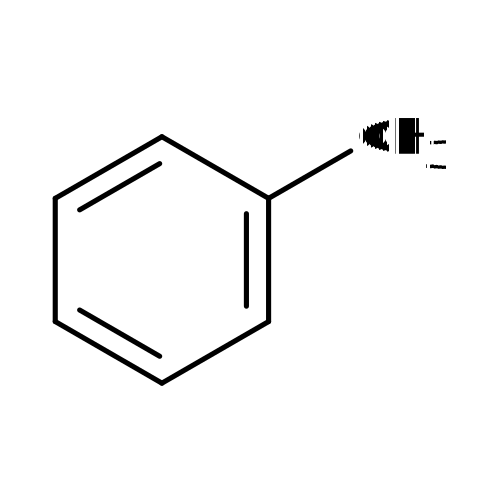
Chemical Structure
Thumb
Synonyms
ValueSource
MethylbenzeneChEBI
PhenylmethaneChEBI
ToluenChEBI
ToluolChEBI
Methyl-benzeneHMDB
Methylbenzene, 9ciHMDB
MethylbenzolHMDB
Monomethyl benzeneHMDB
Phenyl-methaneHMDB
Chemical FormulaC7H8
Average Molecular Mass92.138 g/mol
Monoisotopic Mass92.063 g/mol
CAS Registry Number108-88-3
IUPAC Nametoluene
Traditional Nametoluene
SMILESCC1=CC=CC=C1
InChI IdentifierInChI=1S/C7H8/c1-7-5-3-2-4-6-7/h2-6H,1H3
InChI KeyYXFVVABEGXRONW-UHFFFAOYSA-N
Chemical Taxonomy
Description belongs to the class of organic compounds known as toluenes. Toluenes are compounds containing a benzene ring which bears a methane group.
KingdomOrganic compounds
Super ClassBenzenoids
ClassBenzene and substituted derivatives
Sub ClassToluenes
Direct ParentToluenes
Alternative Parents
Substituents
  • Toluene
  • Aromatic hydrocarbon
  • Unsaturated hydrocarbon
  • Hydrocarbon
  • Aromatic homomonocyclic compound
Molecular FrameworkAromatic homomonocyclic compounds
External Descriptors
Biological Properties
StatusDetected and Not Quantified
OriginExogenous
Cellular Locations
  • Membrane
Biofluid LocationsNot Available
Tissue LocationsNot Available
PathwaysNot Available
Applications
Biological Roles
Chemical Roles
Physical Properties
StateLiquid
AppearanceColorless liquid.
Experimental Properties
PropertyValue
Melting Point-95°C
Boiling Point110.6°C (231.1°F)
Solubility0.526 mg/mL at 25°C
Predicted Properties
PropertyValueSource
Water Solubility0.51 g/LALOGPS
logP2.56ALOGPS
logP2.49ChemAxon
logS-2.3ALOGPS
Physiological Charge0ChemAxon
Hydrogen Acceptor Count0ChemAxon
Hydrogen Donor Count0ChemAxon
Polar Surface Area0 ŲChemAxon
Rotatable Bond Count0ChemAxon
Refractivity31.1 m³·mol⁻¹ChemAxon
Polarizability10.97 ųChemAxon
Number of Rings1ChemAxon
Bioavailability1ChemAxon
Rule of FiveYesChemAxon
Ghose FilterNoChemAxon
Veber's RuleYesChemAxon
MDDR-like RuleNoChemAxon
Spectra
Spectra
Spectrum TypeDescriptionSplash KeyView
GC-MSGC-MS Spectrum - EI-B (Non-derivatized)splash10-0006-9000000000-21366c9a473a72238c27Spectrum
GC-MSGC-MS Spectrum - EI-B (Non-derivatized)splash10-0006-9000000000-52239a45c9c9b566eb6bSpectrum
GC-MSGC-MS Spectrum - EI-B (Non-derivatized)splash10-0006-9000000000-9484aa3a95c9d0168f91Spectrum
GC-MSGC-MS Spectrum - CI-B (Non-derivatized)splash10-0006-9200000000-40a95d60297275bbf5b7Spectrum
GC-MSGC-MS Spectrum - EI-B (Non-derivatized)splash10-0006-9000000000-21366c9a473a72238c27Spectrum
GC-MSGC-MS Spectrum - EI-B (Non-derivatized)splash10-0006-9000000000-52239a45c9c9b566eb6bSpectrum
GC-MSGC-MS Spectrum - EI-B (Non-derivatized)splash10-0006-9000000000-9484aa3a95c9d0168f91Spectrum
GC-MSGC-MS Spectrum - CI-B (Non-derivatized)splash10-0006-9200000000-40a95d60297275bbf5b7Spectrum
Predicted GC-MSPredicted GC-MS Spectrum - GC-MS (Non-derivatized) - 70eV, Positivesplash10-0006-9000000000-4e58dd253dfd47768489Spectrum
Predicted GC-MSPredicted GC-MS Spectrum - GC-MS (Non-derivatized) - 70eV, PositiveNot AvailableSpectrum
Predicted LC-MS/MSPredicted LC-MS/MS Spectrum - 10V, Positivesplash10-0006-9000000000-1f40b8989b6d02b683a7Spectrum
Predicted LC-MS/MSPredicted LC-MS/MS Spectrum - 20V, Positivesplash10-0006-9000000000-55a3cd8f1a8934fefca2Spectrum
Predicted LC-MS/MSPredicted LC-MS/MS Spectrum - 40V, Positivesplash10-00kf-9000000000-32369d8d8789022995d6Spectrum
Predicted LC-MS/MSPredicted LC-MS/MS Spectrum - 10V, Negativesplash10-0006-9000000000-ac6c69ea19d94fcc4befSpectrum
Predicted LC-MS/MSPredicted LC-MS/MS Spectrum - 20V, Negativesplash10-0006-9000000000-ac6c69ea19d94fcc4befSpectrum
Predicted LC-MS/MSPredicted LC-MS/MS Spectrum - 40V, Negativesplash10-0006-9000000000-65b85e7431f79c0337cfSpectrum
Predicted LC-MS/MSPredicted LC-MS/MS Spectrum - 10V, Positivesplash10-0006-9000000000-6c595507c6d341fba2bbSpectrum
Predicted LC-MS/MSPredicted LC-MS/MS Spectrum - 20V, Positivesplash10-0006-9000000000-874dba65aad314ac5cbdSpectrum
Predicted LC-MS/MSPredicted LC-MS/MS Spectrum - 40V, Positivesplash10-016r-9000000000-38f2d3fc1e4ca15d775cSpectrum
Predicted LC-MS/MSPredicted LC-MS/MS Spectrum - 10V, Negativesplash10-0006-9000000000-5671d4c535a6553aaf0dSpectrum
Predicted LC-MS/MSPredicted LC-MS/MS Spectrum - 20V, Negativesplash10-0006-9000000000-5671d4c535a6553aaf0dSpectrum
Predicted LC-MS/MSPredicted LC-MS/MS Spectrum - 40V, Negativesplash10-0006-9000000000-d6e15df8624d98b1dd9cSpectrum
MSMass Spectrum (Electron Ionization)splash10-0006-9000000000-93f195a62ea6129f7e07Spectrum
1D NMR1H NMR SpectrumNot AvailableSpectrum
1D NMR13C NMR SpectrumNot AvailableSpectrum
1D NMR1H NMR SpectrumNot AvailableSpectrum
1D NMR13C NMR SpectrumNot AvailableSpectrum
1D NMR1H NMR SpectrumNot AvailableSpectrum
1D NMR13C NMR SpectrumNot AvailableSpectrum
1D NMR1H NMR SpectrumNot AvailableSpectrum
1D NMR13C NMR SpectrumNot AvailableSpectrum
1D NMR1H NMR SpectrumNot AvailableSpectrum
1D NMR13C NMR SpectrumNot AvailableSpectrum
1D NMR1H NMR SpectrumNot AvailableSpectrum
1D NMR13C NMR SpectrumNot AvailableSpectrum
1D NMR1H NMR SpectrumNot AvailableSpectrum
1D NMR13C NMR SpectrumNot AvailableSpectrum
1D NMR1H NMR SpectrumNot AvailableSpectrum
1D NMR13C NMR SpectrumNot AvailableSpectrum
1D NMR1H NMR SpectrumNot AvailableSpectrum
1D NMR13C NMR SpectrumNot AvailableSpectrum
1D NMR1H NMR SpectrumNot AvailableSpectrum
1D NMR13C NMR SpectrumNot AvailableSpectrum
1D NMR1H NMR SpectrumNot AvailableSpectrum
Toxicity Profile
Route of ExposureOral (10) ; inhalation (10) ; dermal (10)
Mechanism of ToxicityToluene is a cholinesterase or acetylcholinesterase (AChE) inhibitor. A cholinesterase inhibitor (or 'anticholinesterase') suppresses the action of acetylcholinesterase. Because of its essential function, chemicals that interfere with the action of acetylcholinesterase are potent neurotoxins, causing excessive salivation and eye-watering in low doses, followed by muscle spasms and ultimately death. Nerve gases and many substances used in insecticides have been shown to act by binding a serine in the active site of acetylcholine esterase, inhibiting the enzyme completely. Acetylcholine esterase breaks down the neurotransmitter acetylcholine, which is released at nerve and muscle junctions, in order to allow the muscle or organ to relax. The result of acetylcholine esterase inhibition is that acetylcholine builds up and continues to act so that any nerve impulses are continually transmitted and muscle contractions do not stop. Among the most common acetylcholinesterase inhibitors are phosphorus-based compounds, which are designed to bind to the active site of the enzyme. The structural requirements are a phosphorus atom bearing two lipophilic groups, a leaving group (such as a halide or thiocyanate), and a terminal oxygen.
MetabolismInhalation and ingestion are the primary routes of exposure, though toluene may also be absorbed through the skin. It accumulates rapidly in the brain and is subsequently deposited in other tissues according to their lipid content, with the highest levels attained in adipose tissue. The primary initial steps in toluene metabolism is side-chain hydroxylation catalyzed predominately by the cytochrome P450 isozyme CYP2E1, followed by oxidation to benzoic acid. Most of the benzoic acid is then conjugated with glycine to form hippuric acid, but a small portion can be conjugated with UDP-glucuronate to form the acyl-glucuronide. A very small portion of absorbed toluene can be converted by CYP1A2, CYP2B2, or CYP2E1 to ortho- or para-cresol. These metabolites are excreted in the urine, and the remaining toluene is exhaled unchanged. (11, 10)
Toxicity ValuesLD50: 5000 mg/kg (Oral, Rat) (12) LD50: 1332 mg/kg (Intraperitoneal, Rat) (12) LD50: 1960 mg/kg (Intravenous, Rat) (12) LD50: 2250 mg/kg (Subcutaneous, Mouse) (12) LD50: 12 124 mg/kg (Dermal, Rabbit) (12) LC50: 400 ppm over 24 hours (Inhalation, Mouse) (12)
Lethal Dose50 mg/kg for an adult human. (13)
Carcinogenicity (IARC Classification)3, not classifiable as to its carcinogenicity to humans. (9)
Uses/SourcesToluene is used in paints, paint thinners, fingernail polish, lacquers, adhesives, and rubber and in some printing and leather tanning processes. Gasoline, which contains 5 to 7 perfect toluene by weight, is the largest source of atmospheric emissions and exposure of the general populace. (11, 10)
Minimum Risk LevelAcute Inhalation: 1 ppm (8) Chronic Inhalation: 0.08 ppm (8) Acute Oral: 0.8 mg/kg/day (8) Intermediate Oral: 0.02 mg/kg/day (8)
Health EffectsAcute exposure to cholinesterase inhibitors can cause a cholinergic crisis characterized by severe nausea/vomiting, salivation, sweating, bradycardia, hypotension, collapse, and convulsions. Increasing muscle weakness is a possibility and may result in death if respiratory muscles are involved. Accumulation of ACh at motor nerves causes overstimulation of nicotinic expression at the neuromuscular junction. When this occurs symptoms such as muscle weakness, fatigue, muscle cramps, fasciculation, and paralysis can be seen. When there is an accumulation of ACh at autonomic ganglia this causes overstimulation of nicotinic expression in the sympathetic system. Symptoms associated with this are hypertension, and hypoglycemia. Overstimulation of nicotinic acetylcholine receptors in the central nervous system, due to accumulation of ACh, results in anxiety, headache, convulsions, ataxia, depression of respiration and circulation, tremor, general weakness, and potentially coma. When there is expression of muscarinic overstimulation due to excess acetylcholine at muscarinic acetylcholine receptors symptoms of visual disturbances, tightness in chest, wheezing due to bronchoconstriction, increased bronchial secretions, increased salivation, lacrimation, sweating, peristalsis, and urination can occur. Certain reproductive effects in fertility, growth, and development for males and females have been linked specifically to organophosphate pesticide exposure. Most of the research on reproductive effects has been conducted on farmers working with pesticides and insecticdes in rural areas. In females menstrual cycle disturbances, longer pregnancies, spontaneous abortions, stillbirths, and some developmental effects in offspring have been linked to organophosphate pesticide exposure. Prenatal exposure has been linked to impaired fetal growth and development. Neurotoxic effects have also been linked to poisoning with OP pesticides causing four neurotoxic effects in humans: cholinergic syndrome, intermediate syndrome, organophosphate-induced delayed polyneuropathy (OPIDP), and chronic organophosphate-induced neuropsychiatric disorder (COPIND). These syndromes result after acute and chronic exposure to OP pesticides.
SymptomsThe central nervous system is the primary target organ of toluene and other alkylbenzenes. Manifestations of exposure range from slight dizziness and headache to unconciousness, respiratory depression and death. Other symptoms include tiredness, confusion, weakness, memory loss, nausea, loss of appetite, and hearing and color vision loss. These symptoms usually disappear when exposure is stopped. (11, 10)
TreatmentIf the compound has been ingested, rapid gastric lavage should be performed using 5% sodium bicarbonate. For skin contact, the skin should be washed with soap and water. If the compound has entered the eyes, they should be washed with large quantities of isotonic saline or water. In serious cases, atropine and/or pralidoxime should be administered. Anti-cholinergic drugs work to counteract the effects of excess acetylcholine and reactivate AChE. Atropine can be used as an antidote in conjunction with pralidoxime or other pyridinium oximes (such as trimedoxime or obidoxime), though the use of '-oximes' has been found to be of no benefit, or possibly harmful, in at least two meta-analyses. Atropine is a muscarinic antagonist, and thus blocks the action of acetylcholine peripherally.
Concentrations
Not Available
DrugBank IDDB11558
HMDB IDHMDB0034168
FooDB IDFDB012454
Phenol Explorer IDNot Available
KNApSAcK IDC00051588
BiGG IDNot Available
BioCyc IDNot Available
METLIN IDNot Available
PDB IDMBN
Wikipedia LinkToluene
Chemspider ID1108
ChEBI ID17578
PubChem Compound ID1140
Kegg Compound IDC01455
YMDB IDYMDB16088
ECMDB IDM2MDB004633
References
Synthesis Reference

Gregoire Kalopissis, Andree Bugaut, “2-Carbamylmethyl-or (diethylcarbamyl)methyl-amino-4-hydroxy toluene and process for preparing the same.” U.S. Patent US4101576, issued August, 1905.

MSDSLink
General References
1. https://www.ncbi.nlm.nih.gov/pubmed/?term=11182169
2. https://www.ncbi.nlm.nih.gov/pubmed/?term=11314682
3. https://www.ncbi.nlm.nih.gov/pubmed/?term=11846266
4. https://www.ncbi.nlm.nih.gov/pubmed/?term=11991009
5. https://www.ncbi.nlm.nih.gov/pubmed/?term=12062755
6. https://www.ncbi.nlm.nih.gov/pubmed/?term=12213539
7. https://www.ncbi.nlm.nih.gov/pubmed/?term=12237258
8. https://www.ncbi.nlm.nih.gov/pubmed/?term=12784113
9. https://www.ncbi.nlm.nih.gov/pubmed/?term=12876426
10. https://www.ncbi.nlm.nih.gov/pubmed/?term=14512097
11. https://www.ncbi.nlm.nih.gov/pubmed/?term=14559343
12. https://www.ncbi.nlm.nih.gov/pubmed/?term=14605898
13. https://www.ncbi.nlm.nih.gov/pubmed/?term=15015825
14. https://www.ncbi.nlm.nih.gov/pubmed/?term=15019953
15. https://www.ncbi.nlm.nih.gov/pubmed/?term=15119846
16. https://www.ncbi.nlm.nih.gov/pubmed/?term=15193425
17. https://www.ncbi.nlm.nih.gov/pubmed/?term=15542760
18. https://www.ncbi.nlm.nih.gov/pubmed/?term=15567510
19. https://www.ncbi.nlm.nih.gov/pubmed/?term=15695158
20. https://www.ncbi.nlm.nih.gov/pubmed/?term=15796064
21. https://www.ncbi.nlm.nih.gov/pubmed/?term=16316648
22. https://www.ncbi.nlm.nih.gov/pubmed/?term=16348226
23. https://www.ncbi.nlm.nih.gov/pubmed/?term=16601996
24. https://www.ncbi.nlm.nih.gov/pubmed/?term=17145141
25. https://www.ncbi.nlm.nih.gov/pubmed/?term=17175136
26. https://www.ncbi.nlm.nih.gov/pubmed/?term=17497535
27. https://www.ncbi.nlm.nih.gov/pubmed/?term=17725881
28. https://www.ncbi.nlm.nih.gov/pubmed/?term=18397809
29. https://www.ncbi.nlm.nih.gov/pubmed/?term=18832024
30. https://www.ncbi.nlm.nih.gov/pubmed/?term=19261054
31. https://www.ncbi.nlm.nih.gov/pubmed/?term=19384711
32. https://www.ncbi.nlm.nih.gov/pubmed/?term=19429395
33. https://www.ncbi.nlm.nih.gov/pubmed/?term=19635754
34. https://www.ncbi.nlm.nih.gov/pubmed/?term=19765629
35. https://www.ncbi.nlm.nih.gov/pubmed/?term=19825861
36. https://www.ncbi.nlm.nih.gov/pubmed/?term=19928203
37. https://www.ncbi.nlm.nih.gov/pubmed/?term=19969016
38. https://www.ncbi.nlm.nih.gov/pubmed/?term=20347282
39. https://www.ncbi.nlm.nih.gov/pubmed/?term=20837561
40. https://www.ncbi.nlm.nih.gov/pubmed/?term=21430649
41. https://www.ncbi.nlm.nih.gov/pubmed/?term=21655021
42. https://www.ncbi.nlm.nih.gov/pubmed/?term=21731073
43. https://www.ncbi.nlm.nih.gov/pubmed/?term=21802510
44. https://www.ncbi.nlm.nih.gov/pubmed/?term=21840036
45. Toso B, Procida G, Stefanon B: Determination of volatile compounds in cows' milk using headspace GC-MS. J Dairy Res. 2002 Nov;69(4):569-77.
46. Biegert T, Fuchs G, Heider J: Evidence that anaerobic oxidation of toluene in the denitrifying bacterium Thauera aromatica is initiated by formation of benzylsuccinate from toluene and fumarate. Eur J Biochem. 1996 Jun 15;238(3):661-8.
47. Hougaard KS, Hansen AM, Hass U, Lund SP: Toluene depresses plasma corticosterone in pregnant rats. Pharmacol Toxicol. 2003 Mar;92(3):148-52.
48. Tas U, Ogeturk M, Meydan S, Kus I, Kuloglu T, Ilhan N, Kose E, Sarsilmaz M: Hepatotoxic activity of toluene inhalation and protective role of melatonin. Toxicol Ind Health. 2011 Jun;27(5):465-73. doi: 10.1177/0748233710389853. Epub 2011 Feb 22.
49. Aono J, Takimoto E, Komatsu T, Takeda A, Ueda W, Hirakawa M: [Anesthetic care of a patient intoxicated with thinner]. Masui. 1990 Mar;39(3):388-90.
50. Win-Shwe TT, Mitsushima D, Nakajima D, Ahmed S, Yamamoto S, Tsukahara S, Kakeyama M, Goto S, Fujimaki H: Toluene induces rapid and reversible rise of hippocampal glutamate and taurine neurotransmitter levels in mice. Toxicol Lett. 2007 Jan 10;168(1):75-82. Epub 2006 Dec 4.
51. Yannai, Shmuel. (2004) Dictionary of food compounds with CD-ROM: Additives, flavors, and ingredients. Boca Raton: Chapman & Hall/CRC.