Record Information
Version1.0
Creation Date2009-03-06 18:57:59 UTC
Update Date2026-03-31 18:32:24 UTC
Accession NumberCHEM000048
Identification
Common NameDibutyl phthalate
ClassSmall Molecule
DescriptionDibutyl phthalate is found in cloves. DBP was added to the California Proposition 65 (1986) list of suspected teratogens in November 2006. It is a suspected endocrine disruptor. It was used in some nail polishes; all major producers began eliminating this chemical from nail polishes in the Fall of 2006. Dibutyl phthalate (DBP) is a commonly used plasticizer. It is also used as an additive to adhesives or printing inks. It is soluble in various organic solvents, e.g. in alcohol, ether and benzene. DBP is also used as an ectoparasiticide.
Contaminant Sources
  • Clean Air Act Chemicals
  • Cosmetic Chemicals
  • ECHA Toxic for reproduction
  • EPA Endocrine Screening
  • FooDB Chemicals
  • HPV EPA Chemicals
  • My Exposome Chemicals
  • OECD HPV Chemicals
  • STOFF IDENT Compounds
  • Suspected Compounds – Schymanski Project
  • T3DB toxins
  • ToxCast & Tox21 Chemicals
Contaminant Type
  • Aromatic Hydrocarbon
  • Cosmetic Toxin
  • Ester
  • Ether
  • Food Toxin
  • Household Toxin
  • Industrial/Workplace Toxin
  • Metabolite
  • Natural Compound
  • Organic Compound
  • Phthalate
  • Plasticizer
  • Pollutant
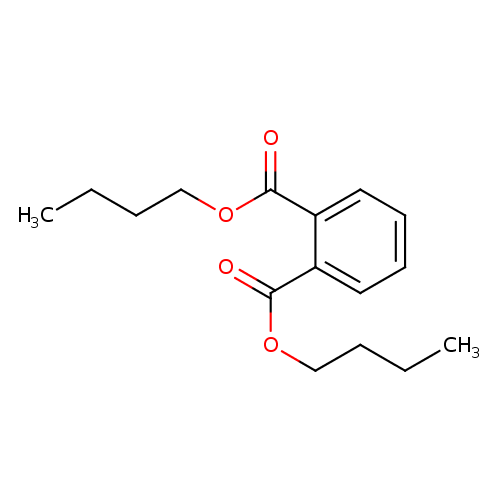
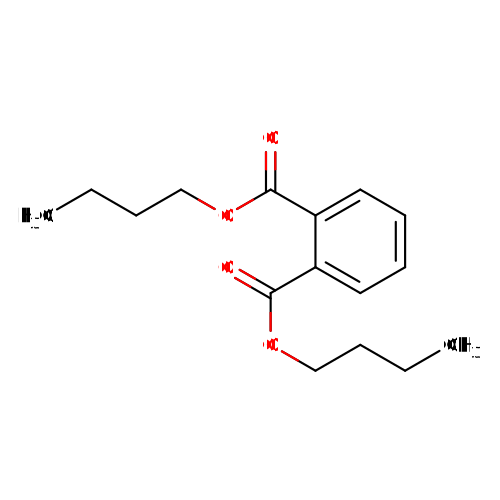
Chemical Structure
Thumb
Synonyms
ValueSource
1,2-Benzenedicarboxylic acid dibutyl esterChEBI
Benzene-O-dicarboxylic acid di-N-butyl esterChEBI
Benzenedicarboxylic acid dibutyl esterChEBI
Butyl phthalateChEBI
DBPChEBI
Di-N-butyl phthalateChEBI
Dibutyl 1,2-benzenedicarboxylateChEBI
Dibutyl O-phthalateChEBI
Dibutyl-O-phthalateChEBI
N-Butyl phthalateChEBI
O-Benzenedicarboxylic acid dibutyl esterChEBI
Phthalic acid di-N-butyl esterChEBI
Phthalic acid dibutyl esterChEBI
1,2-Benzenedicarboxylate dibutyl esterGenerator
Benzene-O-dicarboxylate di-N-butyl esterGenerator
Benzenedicarboxylate dibutyl esterGenerator
Butyl phthalic acidGenerator
Di-N-butyl phthalic acidGenerator
Dibutyl 1,2-benzenedicarboxylic acidGenerator
Dibutyl O-phthalic acidGenerator
Dibutyl-O-phthalic acidGenerator
N-Butyl phthalic acidGenerator
O-Benzenedicarboxylate dibutyl esterGenerator
Phthalate di-N-butyl esterGenerator
Phthalate dibutyl esterGenerator
Dibutyl phthalic acidGenerator
Di N butyl phthalateMeSH
Phthalate, butylMeSH
Phthalate, di-N-butylMeSH
Phthalate, dibutylMeSH
1,2-Benzenedicarboxylic acid, 1,2-dibutyl esterHMDB
1,2-Benzenedicarboxylic acid, dibutyl esterHMDB
Araldite 502HMDB
Benzene-O-dicarboxylic acid, di-N-butyl esterHMDB
Benzenedicarboxylic acid, dibutyl esterHMDB
BUFAHMDB
Celluflex DPBHMDB
DBP (Ester)HMDB
Di-N-butyl phthalate (dbup)HMDB
Di-N-butylester kyseliny ftaloveHMDB
Di-N-butylorthophthalateHMDB
Dibutyl 1, 2-benzenedicarboxylateHMDB
Dibutyl ester OF 1,2-benzenedicarboxylic acidHMDB
Dibutyl phthalatedHMDB
Dibutyl-1,2-benzenedicarboxylateHMDB
Dibutyl-phthalateHMDB
Dibutyll phthalateHMDB
DibutylphthatlateHMDB
ElaolHMDB
Ergoplast FDBHMDB
Ersoplast fdaHMDB
Genoplast bHMDB
Hatcol DBPHMDB
Hexaplas m/bHMDB
Kodaflex DBPHMDB
Morflex 240HMDB
N-ButylphthalateHMDB
O-Benzenedicarboxylic acid, dibutyl esterHMDB
ortho-Dibutyl phthalateHMDB
Phthalic acid, dibutyl esterHMDB
Polycizer DBPHMDB
Rapidcelltrade markpHMDB
RC Plasticizer DBPHMDB
Staflex DBPHMDB
Uniflex DBPHMDB
Unimoll DBHMDB
Uniplex 150HMDB
Witcizer 300HMDB
Dibutylphthalic acidGenerator
Chemical FormulaC16H22O4
Average Molecular Mass278.344 g/mol
Monoisotopic Mass278.152 g/mol
CAS Registry Number84-74-2
IUPAC Name1,2-dibutyl benzene-1,2-dicarboxylate
Traditional Namedibutyl-phthalate
SMILESCCCCOC(=O)C1=CC=CC=C1C(=O)OCCCC
InChI IdentifierInChI=1S/C16H22O4/c1-3-5-11-19-15(17)13-9-7-8-10-14(13)16(18)20-12-6-4-2/h7-10H,3-6,11-12H2,1-2H3
InChI KeyDOIRQSBPFJWKBE-UHFFFAOYSA-N
Chemical Taxonomy
Description belongs to the class of organic compounds known as benzoic acid esters. These are ester derivatives of benzoic acid.
KingdomOrganic compounds
Super ClassBenzenoids
ClassBenzene and substituted derivatives
Sub ClassBenzoic acids and derivatives
Direct ParentBenzoic acid esters
Alternative Parents
Substituents
  • Benzoate ester
  • Benzoyl
  • Dicarboxylic acid or derivatives
  • Carboxylic acid ester
  • Carboxylic acid derivative
  • Organic oxygen compound
  • Organic oxide
  • Hydrocarbon derivative
  • Organooxygen compound
  • Aromatic homomonocyclic compound
Molecular FrameworkAromatic homomonocyclic compounds
External Descriptors
Biological Properties
StatusDetected and Not Quantified
OriginExogenous
Cellular Locations
  • Membrane
Biofluid LocationsNot Available
Tissue LocationsNot Available
PathwaysNot Available
Applications
Biological Roles
Chemical Roles
Physical Properties
StateSolid
AppearanceColorless oily liquid.
Experimental Properties
PropertyValue
Melting Point35°C
Boiling Point340 °C
Solubility0.0112 mg/mL at 25°C
Predicted Properties
PropertyValueSource
Water Solubility0.006 g/LALOGPS
logP4.53ALOGPS
logP4.63ChemAxon
logS-4.7ALOGPS
pKa (Strongest Basic)-6.7ChemAxon
Physiological Charge0ChemAxon
Hydrogen Acceptor Count2ChemAxon
Hydrogen Donor Count0ChemAxon
Polar Surface Area52.6 ŲChemAxon
Rotatable Bond Count10ChemAxon
Refractivity77.86 m³·mol⁻¹ChemAxon
Polarizability32.15 ųChemAxon
Number of Rings1ChemAxon
Bioavailability1ChemAxon
Rule of FiveYesChemAxon
Ghose FilterYesChemAxon
Veber's RuleNoChemAxon
MDDR-like RuleNoChemAxon
Spectra
Spectra
Spectrum TypeDescriptionSplash KeyView
GC-MSGC-MS Spectrum - CI-B (Non-derivatized)splash10-0a6s-0490000000-bb10c8ff49d65e9fbcfdSpectrum
GC-MSGC-MS Spectrum - EI-B (Non-derivatized)splash10-0002-1910000000-964b3411de1f914de4daSpectrum
GC-MSGC-MS Spectrum - EI-B (Non-derivatized)splash10-0002-0910000000-97464fdc3b8040ec3d36Spectrum
GC-MSGC-MS Spectrum - CI-B (Non-derivatized)splash10-052b-0960000000-7a12a722da333ebed5e0Spectrum
GC-MSGC-MS Spectrum - EI-B (Non-derivatized)splash10-0002-5900000000-bb309d93583ab774d1f9Spectrum
GC-MSGC-MS Spectrum - CI-B (Non-derivatized)splash10-0a6s-0490000000-bb10c8ff49d65e9fbcfdSpectrum
GC-MSGC-MS Spectrum - EI-B (Non-derivatized)splash10-0002-1910000000-964b3411de1f914de4daSpectrum
GC-MSGC-MS Spectrum - EI-B (Non-derivatized)splash10-0002-0910000000-97464fdc3b8040ec3d36Spectrum
GC-MSGC-MS Spectrum - CI-B (Non-derivatized)splash10-052b-0960000000-7a12a722da333ebed5e0Spectrum
GC-MSGC-MS Spectrum - EI-B (Non-derivatized)splash10-0002-5900000000-bb309d93583ab774d1f9Spectrum
Predicted GC-MSPredicted GC-MS Spectrum - GC-MS (Non-derivatized) - 70eV, Positivesplash10-0a4i-5190000000-8daed01d42925467217cSpectrum
Predicted GC-MSPredicted GC-MS Spectrum - GC-MS (Non-derivatized) - 70eV, PositiveNot AvailableSpectrum
LC-MS/MSLC-MS/MS Spectrum - LC-ESI-QFT , negativesplash10-004i-0590000000-d7fd13586fba8d9bcbb8Spectrum
LC-MS/MSLC-MS/MS Spectrum - LC-ESI-QFT , negativesplash10-003r-0900000000-26a0280d411587ad0406Spectrum
LC-MS/MSLC-MS/MS Spectrum - LC-ESI-QFT , negativesplash10-003r-0900000000-01dec35be5d4cb24d183Spectrum
LC-MS/MSLC-MS/MS Spectrum - LC-ESI-QFT , negativesplash10-00b9-1900000000-0a9f876d83f5cdff62beSpectrum
LC-MS/MSLC-MS/MS Spectrum - LC-ESI-QFT , negativesplash10-004i-6900000000-88c2bba04cf08d8a94e7Spectrum
LC-MS/MSLC-MS/MS Spectrum - LC-ESI-QFT , negativesplash10-004i-9300000000-6e11d76c309a036870daSpectrum
LC-MS/MSLC-MS/MS Spectrum - LC-ESI-QFT , negativesplash10-004i-9000000000-24ad78f1c73dbed6290dSpectrum
LC-MS/MSLC-MS/MS Spectrum - LC-ESI-QFT , negativesplash10-004i-9000000000-2d5177b1586a4461b278Spectrum
LC-MS/MSLC-MS/MS Spectrum - LC-ESI-QFT , negativesplash10-004i-9000000000-4516fb7c10721dc8cedbSpectrum
LC-MS/MSLC-MS/MS Spectrum - LC-ESI-QFT , positivesplash10-0002-0910000000-7702573da14ce44e4e73Spectrum
LC-MS/MSLC-MS/MS Spectrum - LC-ESI-QFT , positivesplash10-0002-0900000000-78eaf490a7fb4d87b419Spectrum
LC-MS/MSLC-MS/MS Spectrum - LC-ESI-QFT , positivesplash10-0002-0900000000-5c75cf8111466a2bd813Spectrum
LC-MS/MSLC-MS/MS Spectrum - LC-ESI-QFT , positivesplash10-0002-0900000000-a0747aefa385c43d47b1Spectrum
LC-MS/MSLC-MS/MS Spectrum - LC-ESI-QFT , positivesplash10-006t-1900000000-29635db4a2da5e62db7fSpectrum
LC-MS/MSLC-MS/MS Spectrum - LC-ESI-QFT , positivesplash10-00xs-5900000000-02c97dee9727d0badc2eSpectrum
LC-MS/MSLC-MS/MS Spectrum - LC-ESI-QFT , positivesplash10-014i-9200000000-2b0820b30884f0f997a5Spectrum
LC-MS/MSLC-MS/MS Spectrum - LC-ESI-QFT , positivesplash10-014i-9000000000-5d4f80a8a661596a7cc8Spectrum
LC-MS/MSLC-MS/MS Spectrum - LC-ESI-QFT , positivesplash10-014i-9000000000-f45a033b5a30528756deSpectrum
LC-MS/MSLC-MS/MS Spectrum - LC-ESI-ITFT , positivesplash10-0002-0900000000-19ad0b11756e1ca9188aSpectrum
Predicted LC-MS/MSPredicted LC-MS/MS Spectrum - 10V, Positivesplash10-056r-2090000000-80ca0d0b0000ed2e7f82Spectrum
Predicted LC-MS/MSPredicted LC-MS/MS Spectrum - 20V, Positivesplash10-0a4i-9240000000-62634d519d04aa7360b1Spectrum
Predicted LC-MS/MSPredicted LC-MS/MS Spectrum - 40V, Positivesplash10-0a4i-9500000000-7279733c1ed1974ee785Spectrum
Predicted LC-MS/MSPredicted LC-MS/MS Spectrum - 10V, Negativesplash10-004i-1090000000-5c82ef4822a947c8f20bSpectrum
Predicted LC-MS/MSPredicted LC-MS/MS Spectrum - 20V, Negativesplash10-00fr-2590000000-eadc4a21565f062f1e5aSpectrum
Predicted LC-MS/MSPredicted LC-MS/MS Spectrum - 40V, Negativesplash10-0600-5910000000-41f7de518636cfc255d9Spectrum
MSMass Spectrum (Electron Ionization)splash10-0002-3900000000-ecab0016129a96c4ece7Spectrum
1D NMR1H NMR SpectrumNot AvailableSpectrum
1D NMR13C NMR SpectrumNot AvailableSpectrum
Toxicity Profile
Route of ExposureOral (16) ; inhalation (16) ; dermal (16)
Mechanism of ToxicityThe most characteristic effect of di-n-butyl phthalate is testicular atrophy. Di-n-butyl phthalate exposure causes both the release of iron from hemoglobin and/or transferrin in the liver and spleen, and the subsequent depletion of iron in the blood and testes. The decreased amount of available iron results in a decrease in succinate dehydrogenase activity in the Sertoli cells. This results in disturbances in the energy transfer system between Sertoli cells and germ cells, which is required for the differentiation of male germ cells and their progression through the seminiferous epithelium and release as mature spermatozoa. Di-n-butyl phthalate may also exhibit weak estrogenic activity. It has been shown to exhibit toxic effects in liver mitochondria by uncoupling energy-linked processes and inhibiting succinate dehydrogenase. (16, 1)
MetabolismDi-n-butyl phthalate is absorbed via oral, inhalation, and dermal routes. It is rapidly distributed and cleared from the body. Metabolism of di-n-butyl phthalate proceeds mainly by nonspecific esterases in the gastrointestinal tract, which hydrolyze of one butyl ester bond to yield mono-n-butyl phthalate, the primary toxic metabolite. Mono-n-butyl phthalate is conjugated with glucuronic acid via glucuronosyltransferase and excreted in the urine. (16)
Toxicity ValuesLD50: 3050 mg/kg (Intraperitoneal, Rat) (17) LD50: 720 mg/kg (Intravenous, Mouse) (17) LD50: 5289 mg/kg (Oral, Mouse) (17) LC50: 25 g/m3 over 2 hours (Inhalation, Mouse) (17)
Lethal DoseNot Available
Carcinogenicity (IARC Classification)No indication of carcinogenicity to humans (not listed by IARC).
Uses/SourcesDi-n-butyl phthalate is used to make plastics more flexible and is also in carpet backings, paints, glue, insect repellents, hair spray, nail polish, and rocket fuel. (16)
Minimum Risk LevelNot Available
Health EffectsAdverse effects from di-n-butyl phthalate exposure have not yet been reported in humans. However, animals studies have shown that di-n-butyl phthalate can affect reproductive ability by decreasing sperm count and causing birth defects. (16)
SymptomsSkin contact with di-n-butyl phthalate may cause mild irritation. (16)
TreatmentNot Available
Concentrations
StatusValueUnitSample LocationReference
DrugBank IDDB13716
HMDB IDHMDB0033244
FooDB IDFDB011261
Phenol Explorer IDNot Available
KNApSAcK IDC00053140
BiGG IDNot Available
BioCyc IDNot Available
METLIN IDNot Available
PDB IDNot Available
Wikipedia LinkDibutyl_phthalate
Chemspider ID13837319
ChEBI ID34687
PubChem Compound ID3026
Kegg Compound IDC14214
YMDB IDNot Available
ECMDB IDNot Available
References
Synthesis ReferenceNot Available
MSDSLink
General References
1. https://www.ncbi.nlm.nih.gov/pubmed/?term=11133400
2. https://www.ncbi.nlm.nih.gov/pubmed/?term=16232742
3. https://www.ncbi.nlm.nih.gov/pubmed/?term=19840837
4. https://www.ncbi.nlm.nih.gov/pubmed/?term=24213843
5. https://www.ncbi.nlm.nih.gov/pubmed/?term=24468924
6. https://www.ncbi.nlm.nih.gov/pubmed/?term=24616073
7. https://www.ncbi.nlm.nih.gov/pubmed/?term=26730679
8. https://www.ncbi.nlm.nih.gov/pubmed/?term=27655612
9. https://www.ncbi.nlm.nih.gov/pubmed/?term=28102498
10. https://www.ncbi.nlm.nih.gov/pubmed/?term=28363850
11. https://www.ncbi.nlm.nih.gov/pubmed/?term=28486587
12. https://www.ncbi.nlm.nih.gov/pubmed/?term=28566680
13. https://www.ncbi.nlm.nih.gov/pubmed/?term=28580302
14. https://www.ncbi.nlm.nih.gov/pubmed/?term=28753974
15. https://www.ncbi.nlm.nih.gov/pubmed/?term=28822891
16. https://www.ncbi.nlm.nih.gov/pubmed/?term=28823096
17. Kim H, Lee S, Ryu S, Choi HT: Decolorization of Remazol Brilliant Blue R by a purified laccase of Polyporus brumalis. Appl Biochem Biotechnol. 2012 Jan;166(1):159-64. doi: 10.1007/s12010-011-9412-y. Epub 2011 Nov 5.
18. Gupta VK, Singh LP, Chandra S, Kumar S, Singh R, Sethi B: Anion recognition through amide-based dendritic molecule: a poly(vinyl chloride) based sensor for nitrate ion. Talanta. 2011 Aug 15;85(2):970-4. doi: 10.1016/j.talanta.2011.05.014. Epub 2011 May 12.
19. Cirillo T, Fasano E, Castaldi E, Montuori P, Amodio Cocchieri R: Children's exposure to Di(2-ethylhexyl)phthalate and dibutylphthalate plasticizers from school meals. J Agric Food Chem. 2011 Oct 12;59(19):10532-8. doi: 10.1021/jf2020446. Epub 2011 Sep 19.
20. Ito Y, Nakamura T, Yanagiba Y, Ramdhan DH, Yamagishi N, Naito H, Kamijima M, Gonzalez FJ, Nakajima T: Plasticizers May Activate Human Hepatic Peroxisome Proliferator-Activated Receptor alpha Less Than That of a Mouse but May Activate Constitutive Androstane Receptor in Liver. PPAR Res. 2012;2012:201284. doi: 10.1155/2012/201284. Epub 2012 Jun 20.
21. Simonsson C, Stenfeldt AL, Karlberg AT, Ericson MB, Jonsson CA: The pilosebaceous unit--a phthalate-induced pathway to skin sensitization. Toxicol Appl Pharmacol. 2012 Oct 1;264(1):114-20. doi: 10.1016/j.taap.2012.07.023. Epub 2012 Jul 27.
22. Petersen JH, Jensen LK: Phthalates and food-contact materials: enforcing the 2008 European Union plastics legislation. Food Addit Contam Part A Chem Anal Control Expo Risk Assess. 2010 Nov;27(11):1608-16. doi: 10.1080/19440049.2010.501825.
23. Fishman AI, Noskov AI, Stolov AA: Conformational mobility of small molecules in glass-forming solutions studied by FTIR spectroscopy. Spectrochim Acta A Mol Biomol Spectrosc. 2012 Jun;91:184-91. doi: 10.1016/j.saa.2012.01.060. Epub 2012 Feb 9.
24. Tyagi S, Agarwal H, Ikram S: A polyvinylchloride-based cadmium ion-selective electrode using [Mo(2)(OAc)(2)(H(2)-calix[4]arene)] as an electroactive material. Water Sci Technol. 2010;62(11):2510-8. doi: 10.2166/wst.2010.774.
25. Brucker-Davis F, Wagner-Mahler K, Bornebusch L, Delattre I, Ferrari P, Gal J, Boda-Buccino M, Pacini P, Tommasi C, Azuar P, Bongain A, Fenichel P: Exposure to selected endocrine disruptors and neonatal outcome of 86 healthy boys from Nice area (France). Chemosphere. 2010 Sep;81(2):169-76. doi: 10.1016/j.chemosphere.2010.06.068.
26. Dobrzynska MM, Tyrkiel EJ, Hernik A, Derezinska E, Goralczyk K, Ludwicki JK: [The effects of di-n-butyl phthalate on the somatic cells of laboratory mice]. Rocz Panstw Zakl Hig. 2010;61(1):13-9.
27. Carran M, Shaw IC: New Zealand Malayan war veterans' exposure to dibutylphthalate is associated with an increased incidence of cryptorchidism, hypospadias and breast cancer in their children. N Z Med J. 2012 Jul 29;125(1358):52-63.
28. Singh AK, Singh P: Determination of cerium ion by polymeric membrane and coated graphite electrode based on novel pendant armed macrocycle. Anal Chim Acta. 2010 Aug 24;675(2):170-80. doi: 10.1016/j.aca.2010.07.023. Epub 2010 Jul 21.
29. van Ravenzwaay B, Coelho-Palermo Cunha G, Strauss V, Wiemer J, Leibold E, Kamp H, Walk T, Mellert W, Looser R, Prokoudine A, Fabian E, Krennrich G, Herold M: The individual and combined metabolite profiles (metabolomics) of dibutylphthalate and di(2-ethylhexyl)phthalate following a 28-day dietary exposure in rats. Toxicol Lett. 2010 Oct 5;198(2):159-70. doi: 10.1016/j.toxlet.2010.06.009. Epub 2010 Jun 23.
30. Tyagi S, Agarwal H, Ikram S: Potentiometric polymeric membrane electrodes for mercury detection using calixarene ionophores. Water Sci Technol. 2010;61(3):693-704. doi: 10.2166/wst.2010.860.
31. Yannai, Shmuel. (2004) Dictionary of food compounds with CD-ROM: Additives, flavors, and ingredients. Boca Raton: Chapman & Hall/CRC.