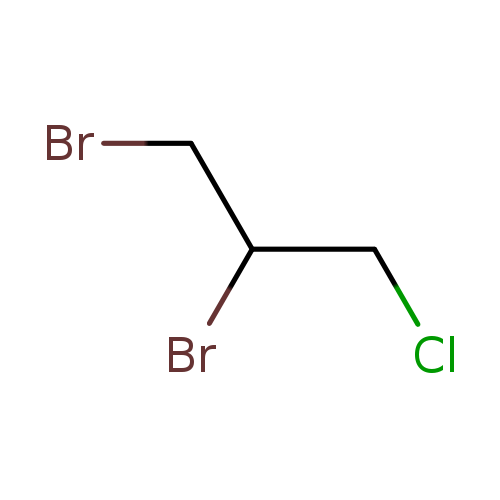
1,2-Dibromo-3-chloropropane is a manufactured chemical and the active ingredient in the nematicide Nemagon, also known as Fumazone. Nemagon is a soil fumigant formerly used in agriculture but banned to most areas today. (3)
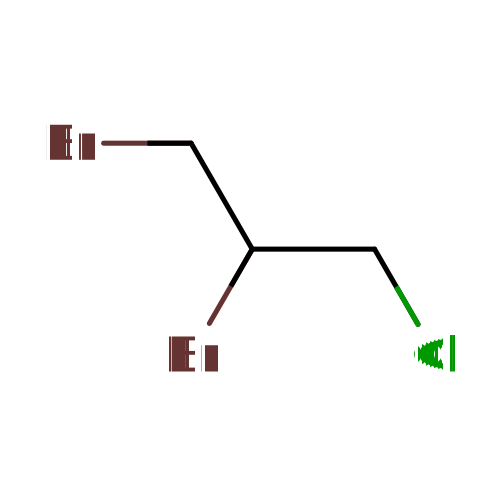
Structure for CHEM000040: 1,2-Dibromo-3-chloropropane
Synonyms
Value
Source
DBCP
Kegg
Fumazone
MeSH
Nemagon
MeSH
Dibromochloropropane
MeSH
Chemical Formula
C3H5Br2Cl
Average Molecular Mass
236.333 g/mol
Monoisotopic Mass
233.845 g/mol
CAS Registry Number
96-12-8
IUPAC Name
1,2-dibromo-3-chloropropane
Traditional Name
1,2-dibromo-3-chloropropane
SMILES
ClCC(Br)CBr
InChI Identifier
InChI=1S/C3H5Br2Cl/c4-1-3(5)2-6/h3H,1-2H2
InChI Key
WBEJYOJJBDISQU-UHFFFAOYSA-N
Chemical Taxonomy
Description
belongs to the class of organic compounds known as organochlorides. Organochlorides are compounds containing a chemical bond between a carbon atom and a chlorine atom.
The initial metabolism of 1,2-dibromo-3-chloropropane to reactive epoxide metabolites that bind to DNA and other macromolecules may be responsible for its hepatotoxicity and nephrotoxicity. The mechanism of 1,2-dibromo-3-chloropropane's testicular toxicity is believed to be due to either the inhibition of sperm carbohydrate metabolism, probably at the step of nicotinamide adenine dinucleotide (NADH) dehydrogenase activity in the mitochondrial electron transport chain, or drect DNA damage caused by its metabolites. (2, 1)
Metabolism
1,2-Dibromo-3-chloropropane is absorbed via oral, inhalation, and dermal routes. It accumulates mainly in the kidney, liver, and adipose tissues. 1,2-Dibromo-3-chloropropane is intially converted to epoxy derivatives, which are
further hydrolyzed and debrominated. Glutathione (GSH) conjugation of epoxide intermediates in the liver is believed to produce precursors to toxic intermediates. The metabolites are excreted mainly in the urine. (2)
1,2-Dibromo-3-chloropropane is the active ingredient in the nematicide Nemagon, also known as Fumazone. Nemagon is a soil fumigant formerly used in agriculture. (2)
Breathing high levels of 1,2-dibromo-3-chloropropane causes reproductive damage, including reduced sperm counts, birth defects, and infertility. It may also damage the stomach, liver, kidneys, brain, spleen, blood, and lungs, and cause skin and eye damage from direct contact. (2)
Symptoms
Symptoms of 1,2-dibromo-3-chloropropane exposure include headaches, nausea, lightheadedness, and weakness. (2)
Treatment
EYES: irrigate opened eyes for several minutes under running water.
INGESTION: do not induce vomiting. Rinse mouth with water (never give anything by mouth to an unconscious person). Seek immediate medical advice.
SKIN: should be treated immediately by rinsing the affected parts in cold running water for at least 15 minutes, followed by thorough washing with soap and water. If necessary, the person should shower and change contaminated clothing and shoes, and then must seek medical attention.
INHALATION: supply fresh air. If required provide artificial respiration.