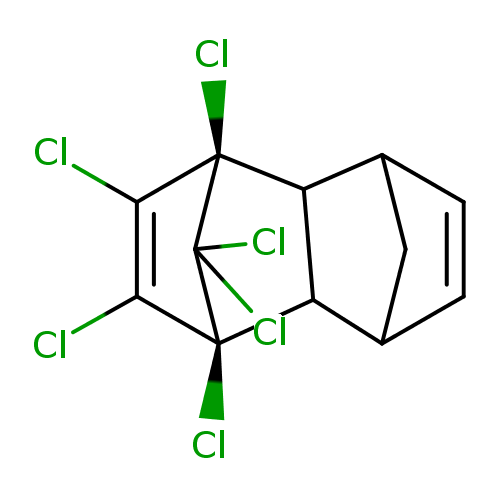
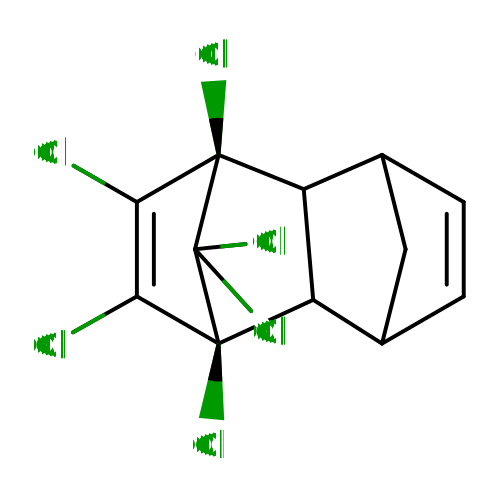
Aldrin is a chlorinated hydrocarbon used as an insecticide. Once in the insect, aldrin is oxidized into dieldrin, a neurotoxin. Due to the toxicity and ability of bioaccumulate of dieldrin, the use of aldrin is now banned in most parts of the world. (4)
belongs to the class of organic compounds known as vinyl chlorides. These are vinyl halides in which a chlorine atom is bonded to an sp2-hybridised carbon atom.
Aldrin antagonizes the action of the neurotransmitter gamma-aminobutyric acid (GABA) acting at the GABA-A receptors, effectively blocking the GABA-induced uptake of chloride ions. Aldrin also inhibits Na+ K+ ATPase and Ca2+ and Mg2+ ATPase which are essential for the transport of calcium across membranes. This results in the accumulation of intracellular free calcium ions, which promotes release of neurotransmitters from storage vesicles, the subsequent depolarization of adjacent neurons, and the propagation of stimuli throughout the CNS. This results in hyperexcitation and generalized seizures. (6, 1)
Metabolism
Aldrin is absorbed throught the gastrointestinal tract, lungs and skin. Following absorption, aldrin is redistributed primarily to fat via the lymphatic system. Once in the body, aldrin is readily converted to dieldrin, primarily in the liver by mixed-function oxidases of the cytochrome P-450 system, and to a lesser extent in the lung and skin. Aldrin may also be epoxidized to dieldrin by a prostaglandin synthetase-mediated pathway inextrahepatic tissues. Dieldrin is metabolized by liver microsomal monooxygenases and epoxide hydratases. Its metabolites, of which the primary one is 9-hydroxydieldrin, are excreted in the faeces. (1)
Aldrin is a neurotoxin and works by overstimulating the central nervous system. Ingestion of large amounts of aldrin causes convulsions and death. However, chronic exposure to lower amounts of aldrin also has adverse affects because it is oxidized to dieldrin, which accumulates in the body. Dieldrin is known to damage the nervous system, liver, and immune system. (1)
Symptoms
Exposure to aldrin results in headaches, dizziness, irritability, nausea and vomiting, cardiac arrhythmias, muscular weakness, uncontrolled muscle movements, hyperexcitability, seizures and coma. (1)
Treatment
Treatment is symptomatic, aimed at controlling convulsions, coma, and respiratory depression. If ingested, gastric lavage may be performed, followed by administering activated charcoal powder. (5)