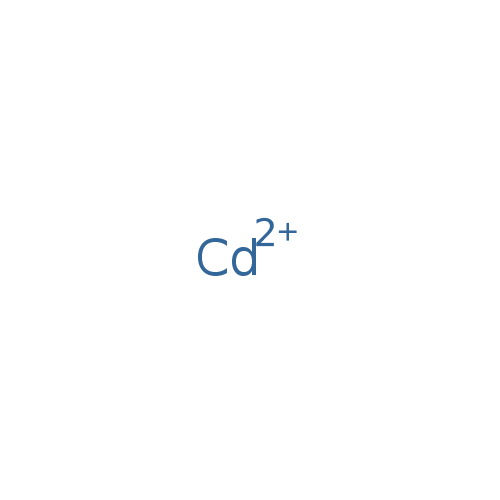
Cadmium (group IIB of the periodic table of elements) is a heavy metal. It is not a naturally occurring metal in biological systems. Cadmium poses severe risks to human health. Physiologically, it exists as an ion in the body. Up to this day, it has not been shown that cadmium has any physiological function within the human body. Interest has therefore risen in its biohazardous potential. As first described by Friedrich Stromeyer (Gottingen, Germany) in 1817, cadmium intoxication can lead to kidney, bone, and pulmonary damage. Cadmium is widely used in industrial processes, e.g as an anticorrosive agent, as a stabilizer in PVC products, as a colour pigment, a neutron absorber in nuclear power plants, and in the fabrication of nickel cadmium batteries. Phosphate fertilizers also show a big cadmium load. Although some cadmium containing products can be recycled, a large share of the general cadmium pollution is caused by dumping and incinerating cadmium polluted waste. In Scandinavia for example, cadmium concentration in agricultural soil increases by 0.2 percent per year. Total global emission of cadmium amounts to 7000 t/year. The maximum permissible value for workers according to German law is 15 ug/l. For comparison: Non-smokers show an average cadmium blood concentration of 0.5 ug/l. Basically there are three possible ways of cadmium resorption: Gastrointestinal, pulmonary and dermal. The uptake through the human gastrointestinal is approximately 5 percent of an ingested amount of cadmium, depending on the exact dose and nutritional composition. The major source of inhalative cadmium intoxication is cigarette smoke. The human lung resorbes 40 to 60 percent of the cadmium in tobacco smoke. Little research has been done on dermal absorption of cadmium. Two mechanisms facilitate cadmium absorption by the skin: binding of a free cadmium ion to sulfhydryl radicals of cysteine in epidermal keratins, or an induction and complexing with metallothionein. Once taken up by the blood, the majority of cadmium is transported bound to proteins, such as Albumin and Metallothionein. The first organ reached after cadmium uptake into the GI-blood is the liver. Here cadmium induces the production of Metallothionein. After consecutive hepatocyte necrosis and apoptosis, Cd-Metallothionein complexes are washed into sinusoidal blood. From here, parts of the absorbed cadmium enter the entero-hepatical cycle via secretion into the biliary tract in form of Cadmium-glutathione conjugates. Enzymatically degraded to cadmium-cysteine complexes in the biliary tree, cadmium reenters the small intestines. The main organ for long-term cadmium accumulation is the kidney. Here the half life period for cadmium is approximately 10 years. A life long intake can therefore lead to a cadmium accumulation in the kidney, consequently resulting in tubulus cell necrosis. The blood concentration of cadmium serves as a reliable indicator for a recent exposition, while the urinary concentration reflects past exposure, body burden and renal accumulation. Excretion of Cadmium takes place via faeces and urine. (5).
belongs to the class of inorganic compounds known as homogeneous transition metal compounds. These are inorganic compounds containing only metal atoms,with the largest atom being a transition metal atom.
Cadmium initially binds to metallothionein and is transported to the kidney. Toxic effects are observed once the concentration of cadmium exceeds that of available metallothionein, and it has also been shown that the cadmium-metallothionein complex may be damaging. Accumulation of cadmium in the kidney results in increased excretion of vital low and high molecular weight proteins. Cadmium is a high affinity zinc analog and can interfere in its biological processes. It also binds to and activates the estrogen receptor, likely stimulating the growth of certain types of cancer cells and causing other estrogenic effects, such as reproductive dysfunction. Cadmium causes cell apoptosis by activating mitogen-activated protein kinases. (7, 1, 2, 3)
Metabolism
Cadmium is absorbed from oral, inhalation, and dermal routes. Cadmium initially binds to metallothionein and albumin and is transported mainly to the kidney and liver. Toxic effects are observed once the concentration of cadmium exceeds that of available metallothionein, and it has also been shown that the cadmium-metallothionein complex may be damaging. Cadmium is not known to undergo any direct metabolic conversion and is excreted unchanged, mainly in the urine. (6)
Cadmium is used mainly in the electroplating of other metals and the production of metal alloys. It can be found in batteries, pigments, metal coatings, and plastics. Exposure usually occurs in an industrial setting, but can also result from breathing cigarette smoke and eating contaminated foods. (6)
Chronic exposure to cadmium fumes can cause chemical pneumonitis, pulmonary edema, and lung diseases such as bronchitis and emphysema. Cadmium also accumulates in the kidneys, causing permanent damage. Loss of bone density also occurs. (6)
Symptoms
Acute inhalation of cadmium fumes results in metal fume fever, which is characterized by chills, fever, headache, weakness, dryness of the nose and throat, chest pain, and coughing. Ingestion of cadmium causes vomiting and diarrhea. (6)
Treatment
Cadmium poisoning is treated by removal from exposure and supportive care. If ingested, induced vomiting or gastric lavage may be performed. (11)