Record Information
Version1.0
Creation Date2009-03-06 18:57:54 UTC
Update Date2026-03-31 17:59:12 UTC
Accession NumberCHEM000005
Identification
Common NameBenzene
ClassSmall Molecule
DescriptionBenzene is a toxic, volatile, flammable liquid hydrocarbon biproduct of coal distillation. Chronic benzene exposure produces hematotoxicity, bone marrow dysplasia (Displasia is a pre-neoplastic or pre-cancerous change). (2). It is used as an industrial solvent in paints, varnishes, lacquer thinners, gasoline, etc. Benzene causes central nervous system damage acutely and is carcinogenic. It was formerly used as parasiticide.
Contaminant Sources
  • Clean Air Act Chemicals
  • EAFUS Chemicals
  • FooDB Chemicals
  • HMDB Contaminants - Feces
  • HPV EPA Chemicals
  • IARC Carcinogens Group 1
  • OECD HPV Chemicals
  • STOFF IDENT Compounds
  • T3DB toxins
  • Tobacco Smoke Compounds
  • ToxCast & Tox21 Chemicals
Contaminant Type
  • Aromatic Hydrocarbon
  • Cigarette Toxin
  • Food Toxin
  • Gasoline Additive/Component
  • Household Toxin
  • Industrial Precursor/Intermediate
  • Industrial/Workplace Toxin
  • Metabolite
  • Natural Compound
  • Organic Compound
  • Pesticide
  • Pollutant
  • Solvent
Chemical Structure
Thumb
Synonyms
ValueSource
[6]AnnuleneChEBI
BenzenChEBI
BenzineChEBI
BenzolChEBI
BenzoleChEBI
Bicarburet OF hydrogenChEBI
Coal naphthaChEBI
CyclohexatrieneChEBI
Mineral naphthaChEBI
PheneChEBI
Phenyl hydrideChEBI
PyrobenzolChEBI
PyrobenzoleChEBI
(6)AnnuleneHMDB
AnnuleneHMDB
Aromatic alkaneHMDB
BenzeenHMDB
BenzinHMDB
BenzinumHMDB
Benzol 90HMDB
BenzoleneHMDB
BenzoloHMDB
BenzolumHMDB
BNZHMDB
Carbon oilHMDB
FenzenHMDB
Motor benzolHMDB
PolystreamHMDB
RNGHMDB
{[6]annulene}HMDB
Chemical FormulaC6H6
Average Molecular Mass78.112 g/mol
Monoisotopic Mass78.047 g/mol
CAS Registry Number71-43-2
IUPAC Namebenzene
Traditional Namebenzene
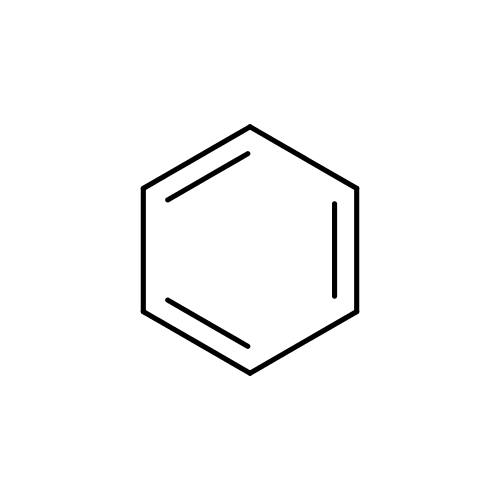
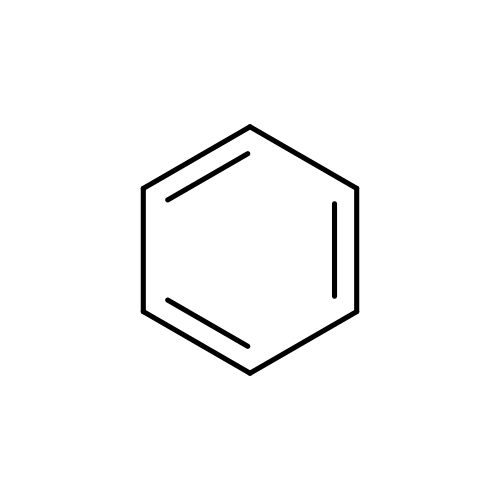
SMILESC1=CC=CC=C1
InChI IdentifierInChI=1S/C6H6/c1-2-4-6-5-3-1/h1-6H
InChI KeyUHOVQNZJYSORNB-UHFFFAOYSA-N
Chemical Taxonomy
Description belongs to the class of organic compounds known as benzene and substituted derivatives. These are aromatic compounds containing one monocyclic ring system consisting of benzene.
KingdomOrganic compounds
Super ClassBenzenoids
ClassBenzene and substituted derivatives
Sub ClassNot Available
Direct ParentBenzene and substituted derivatives
Alternative Parents
Substituents
  • Monocyclic benzene moiety
  • Aromatic hydrocarbon
  • Unsaturated hydrocarbon
  • Hydrocarbon
  • Aromatic homomonocyclic compound
Molecular FrameworkAromatic homomonocyclic compounds
External Descriptors
Biological Properties
StatusDetected and Not Quantified
OriginExogenous
Cellular Locations
  • Cytoplasm
  • Extracellular
Biofluid LocationsNot Available
Tissue Locations
  • Bone Marrow
  • Liver
  • Lymphocyte
  • Skin
PathwaysNot Available
Applications
Biological Roles
Chemical Roles
Physical Properties
StateLiquid
AppearanceColorless liquid.
Experimental Properties
PropertyValue
Melting Point5.5°C
Boiling Point80.1 °C
Solubility1.79 mg/mL at 25°C [MAY,WE et al. (1983)]
Predicted Properties
PropertyValueSource
Water Solubility1.11 g/LALOGPS
logP2.03ALOGPS
logP1.97ChemAxon
logS-1.8ALOGPS
Physiological Charge0ChemAxon
Hydrogen Acceptor Count0ChemAxon
Hydrogen Donor Count0ChemAxon
Polar Surface Area0 ŲChemAxon
Rotatable Bond Count0ChemAxon
Refractivity26.06 m³·mol⁻¹ChemAxon
Polarizability8.89 ųChemAxon
Number of Rings1ChemAxon
Bioavailability1ChemAxon
Rule of FiveYesChemAxon
Ghose FilterNoChemAxon
Veber's RuleYesChemAxon
MDDR-like RuleNoChemAxon
Spectra
Spectra
Spectrum TypeDescriptionSplash KeyView
GC-MSGC-MS Spectrum - EI-B (Non-derivatized)splash10-004i-9000000000-70967112fec69784847cSpectrum
GC-MSGC-MS Spectrum - EI-B (Non-derivatized)splash10-004i-9000000000-92ccc664b07cb6c56de9Spectrum
GC-MSGC-MS Spectrum - EI-B (Non-derivatized)splash10-0fb9-9000000000-2aae37aac9f2a02d5e8bSpectrum
GC-MSGC-MS Spectrum - CI-B (Non-derivatized)splash10-004i-9100000000-11f8463e7c6286637b1bSpectrum
GC-MSGC-MS Spectrum - EI-B (Non-derivatized)splash10-004i-9000000000-70967112fec69784847cSpectrum
GC-MSGC-MS Spectrum - EI-B (Non-derivatized)splash10-004i-9000000000-92ccc664b07cb6c56de9Spectrum
GC-MSGC-MS Spectrum - EI-B (Non-derivatized)splash10-0fb9-9000000000-2aae37aac9f2a02d5e8bSpectrum
GC-MSGC-MS Spectrum - CI-B (Non-derivatized)splash10-004i-9100000000-11f8463e7c6286637b1bSpectrum
Predicted GC-MSPredicted GC-MS Spectrum - GC-MS (Non-derivatized) - 70eV, Positivesplash10-004i-9000000000-c5901591488019f3ac5dSpectrum
Predicted GC-MSPredicted GC-MS Spectrum - GC-MS (Non-derivatized) - 70eV, PositiveNot AvailableSpectrum
LC-MS/MSLC-MS/MS Spectrum - EI-B (HITACHI RMU-7M) , Positivesplash10-004i-9000000000-70967112fec69784847cSpectrum
LC-MS/MSLC-MS/MS Spectrum - EI-B (JEOL JMS-D-3000) , Positivesplash10-004i-9000000000-92ccc664b07cb6c56de9Spectrum
LC-MS/MSLC-MS/MS Spectrum - EI-B (HP 5970) , Positivesplash10-0fb9-9000000000-2aae37aac9f2a02d5e8bSpectrum
LC-MS/MSLC-MS/MS Spectrum - CI-B (FINNIGAN-MAT 4500) , Positivesplash10-004i-9100000000-11f8463e7c6286637b1bSpectrum
Predicted LC-MS/MSPredicted LC-MS/MS Spectrum - 10V, Positivesplash10-004i-9000000000-45ac36cbb443a00d6a17Spectrum
Predicted LC-MS/MSPredicted LC-MS/MS Spectrum - 20V, Positivesplash10-004i-9000000000-9cad19d98e6420c7b6a3Spectrum
Predicted LC-MS/MSPredicted LC-MS/MS Spectrum - 40V, Positivesplash10-004i-9000000000-2dace4807cb04a7942deSpectrum
Predicted LC-MS/MSPredicted LC-MS/MS Spectrum - 10V, Negativesplash10-004i-9000000000-b9df9bb9660e1fc49a7fSpectrum
Predicted LC-MS/MSPredicted LC-MS/MS Spectrum - 20V, Negativesplash10-004i-9000000000-b9df9bb9660e1fc49a7fSpectrum
Predicted LC-MS/MSPredicted LC-MS/MS Spectrum - 40V, Negativesplash10-004i-9000000000-b4ff542394722302be43Spectrum
Predicted LC-MS/MSPredicted LC-MS/MS Spectrum - 10V, Negativesplash10-004i-9000000000-fc58e0949de9ca4842ffSpectrum
Predicted LC-MS/MSPredicted LC-MS/MS Spectrum - 20V, Negativesplash10-004i-9000000000-fc58e0949de9ca4842ffSpectrum
Predicted LC-MS/MSPredicted LC-MS/MS Spectrum - 40V, Negativesplash10-004i-9000000000-fc58e0949de9ca4842ffSpectrum
Predicted LC-MS/MSPredicted LC-MS/MS Spectrum - 10V, Positivesplash10-004i-9000000000-b961755486c61c33c1c7Spectrum
Predicted LC-MS/MSPredicted LC-MS/MS Spectrum - 20V, Positivesplash10-0fb9-9000000000-9a8a4f7775597a0e167eSpectrum
Predicted LC-MS/MSPredicted LC-MS/MS Spectrum - 40V, Positivesplash10-004i-9000000000-fd85b2b474c37c371a5aSpectrum
MSMass Spectrum (Electron Ionization)splash10-004i-9000000000-08f396d6cb4660e57caaSpectrum
1D NMR1H NMR SpectrumNot AvailableSpectrum
1D NMR13C NMR SpectrumNot AvailableSpectrum
1D NMR1H NMR SpectrumNot AvailableSpectrum
1D NMR13C NMR SpectrumNot AvailableSpectrum
1D NMR1H NMR SpectrumNot AvailableSpectrum
1D NMR13C NMR SpectrumNot AvailableSpectrum
1D NMR1H NMR SpectrumNot AvailableSpectrum
1D NMR13C NMR SpectrumNot AvailableSpectrum
1D NMR1H NMR SpectrumNot AvailableSpectrum
1D NMR13C NMR SpectrumNot AvailableSpectrum
1D NMR1H NMR SpectrumNot AvailableSpectrum
1D NMR13C NMR SpectrumNot AvailableSpectrum
1D NMR1H NMR SpectrumNot AvailableSpectrum
1D NMR13C NMR SpectrumNot AvailableSpectrum
1D NMR1H NMR SpectrumNot AvailableSpectrum
1D NMR13C NMR SpectrumNot AvailableSpectrum
1D NMR1H NMR SpectrumNot AvailableSpectrum
1D NMR13C NMR SpectrumNot AvailableSpectrum
1D NMR1H NMR SpectrumNot AvailableSpectrum
1D NMR13C NMR SpectrumNot AvailableSpectrum
1D NMR1H NMR SpectrumNot AvailableSpectrum
1D NMR13C NMR SpectrumNot AvailableSpectrum
2D NMR[1H,13C] 2D NMR SpectrumNot AvailableSpectrum
Toxicity Profile
Route of ExposureInhalation (21)
Mechanism of ToxicityThe toxic agents of benzene are its metabolites. Benzene is able increase its toxicity by inducing cytochrome P450 2E1, its main metabolic enzyme. Benzene's primary toxic effects are decreases in haematological cell counts and bone marrow cellularity. The decrease in blood cell count may be due to the binding of metabolites such as benzene oxide to the blood proteins albumin and haemoglobin. In the bone marrow, phenolic metabolites can be metabolized by bone marrow peroxidases to highly reactive semiquinone radicals and quinones that stimulate the production of reactive oxygen species. This and direct metabolite binding leads to damage to tubulin, histone proteins, and topoisomerase II. Some metabolites also exert mutagenic effects by inhibiting other DNA associated proteins, such as mitochondrial DNA polymerase and ribonucleotide reductase, as well as covalently binding to DNA itself, causing effects such as strand breakage, mitotic recombination, chromosome translocations, and aneuploidy. (21)
MetabolismBenzene is absorbed readily following inhalation or oral exposure. It enters the bloodstream and is rapidly distributed throughout the body, tending to accumulate in fatty tissues. Benzene is exhaled unchanged by the lungs, as well as metabolized in the liver to benzene oxide by cytochrome P450 enzymes. Benzene oxide is further converted into phenol, catechol, and hydroquinone, which are excreted in the urine as glucuronide or sulfate conjugates. (25)
Toxicity ValuesLD50: 3306 mg/kg (Oral, Rat) (27) LD50 340 mg/kg (Intraperitoneal, Mouse) (27) LC50: 9980 ppm (Inhalation, Mouse) (27)
Lethal Dose50-500 mg/kg (oral) or 20 000 ppm (inhaled) for an adult human. (24)
Carcinogenicity (IARC Classification)1, carcinogenic to humans. (23)
Uses/SourcesBenzene is often used as an intermediate to make chemicals needed for the production of plastics, resins, and nylon and other synthetic fibers. It is also used to make some types of rubbers, lubricants, dyes, detergents, drugs, and pesticides. Natural sources of benzene include emissions from volcanoes, forest fires, crude oil, gasoline, and cigarette smoke. (21)
Minimum Risk LevelAcute Inhalation: 0.009 ppm (22) Intermediate Inhalation: 0.006 ppm (22) Chronic Inhalation: 0.003 ppm (22) Chronic Oral: 0.0005 mg/kg/day (22)
Health EffectsBenzene causes harmful effects on the bone marrow and also decreases blood cell counts, leading to blood disorders such as anemia. It can also cause excessive bleeding and affect the immune system, increasing the chance for infection. Benzene is also a known carcinogen, as chronic exposure to high levels has been shown to cause leukemia, particularly acute myelogenous leukemia. (21)
SymptomsBreathing benzene can cause drowsiness, dizziness, rapid heart rate, headaches, tremors, confusion, and unconsciousness. Ingestion can result in vomiting, irritation of the stomach, dizziness, sleepiness, convulsions, and rapid heart rate. (21)
TreatmentThere is no known antidote for benzene and poisoning is first treated by preventing further exposure. If inhaled, respiratory assist may be necessary. If ingested, gastric lavage may be performed, or activated charcoal can be administered. (26)
Concentrations
Not Available
DrugBank IDNot Available
HMDB IDHMDB0001505
FooDB IDFDB012843
Phenol Explorer IDNot Available
KNApSAcK IDC00033435
BiGG IDNot Available
BioCyc IDNot Available
METLIN ID6285
PDB IDNot Available
Wikipedia LinkBenzene
Chemspider ID236
ChEBI ID16716
PubChem Compound ID241
Kegg Compound IDC01407
YMDB IDNot Available
ECMDB IDECMDB01505
References
Synthesis ReferenceCopisarow, Maurice; Long, Cyril N H. The Friedel-Crafts' reaction. II. Migration of halogen atoms in the benzene nucleus. Journal of the Chemical Society, Transactions (1921), 119 442-7.
MSDSLink
General References
1. https://www.ncbi.nlm.nih.gov/pubmed/?term=11684179
2. https://www.ncbi.nlm.nih.gov/pubmed/?term=11993966
3. https://www.ncbi.nlm.nih.gov/pubmed/?term=12857942
4. https://www.ncbi.nlm.nih.gov/pubmed/?term=14677922
5. https://www.ncbi.nlm.nih.gov/pubmed/?term=15468289
6. https://www.ncbi.nlm.nih.gov/pubmed/?term=15935818
7. https://www.ncbi.nlm.nih.gov/pubmed/?term=16161967
8. https://www.ncbi.nlm.nih.gov/pubmed/?term=17373369
9. https://www.ncbi.nlm.nih.gov/pubmed/?term=18072742
10. https://www.ncbi.nlm.nih.gov/pubmed/?term=18407866
11. https://www.ncbi.nlm.nih.gov/pubmed/?term=18409691
12. https://www.ncbi.nlm.nih.gov/pubmed/?term=18836923
13. https://www.ncbi.nlm.nih.gov/pubmed/?term=19228219
14. https://www.ncbi.nlm.nih.gov/pubmed/?term=21325737
15. https://www.ncbi.nlm.nih.gov/pubmed/?term=23088855
16. https://www.ncbi.nlm.nih.gov/pubmed/?term=23222815
17. https://www.ncbi.nlm.nih.gov/pubmed/?term=23534829
18. https://www.ncbi.nlm.nih.gov/pubmed/?term=6353911
19. https://www.ncbi.nlm.nih.gov/pubmed/?term=8124204
20. Copisarow, Maurice; Long, Cyril N H. The Friedel-Crafts' reaction. II. Migration of halogen atoms in the benzene nucleus. Journal of the Chemical Society, Transactions (1921), 119 442-7.
21. Wiwanitkit V, Soogarun S, Suwansaksri J: Urine phenol and myeloperoxidase index: an observation in benzene exposed subjects. Leuk Lymphoma. 2004 Aug;45(8):1643-5.
22. Wang S, Chen H, Wang X: [Studies on relationship between exposure to low concentration of mixed benzene and lower quality of semen and very early fetal loss]. Zhonghua Yu Fang Yi Xue Za Zhi. 2000 Sep;34(5):271-3.
23. Zhang L, Wang Y, Shang N, Smith MT: Benzene metabolites induce the loss and long arm deletion of chromosomes 5 and 7 in human lymphocytes. Leuk Res. 1998 Feb;22(2):105-13.
24. Fabiani R, De Bartolomeo A, Morozzi G: Involvement of oxygen free radicals in the serum-mediated increase of benzoquinone genotoxicity. Environ Mol Mutagen. 2005 Oct;46(3):156-63.
25. Turteltaub KW, Mani C: Benzene metabolism in rodents at doses relevant to human exposure from urban air. Res Rep Health Eff Inst. 2003 Feb;(113):1-26; discussion 27-35.
26. Irons RD, Stillman WS: Impact of benzene metabolites on differentiation of bone marrow progenitor cells. Environ Health Perspect. 1996 Dec;104 Suppl 6:1247-50.
27. Rothman N, Li GL, Dosemeci M, Bechtold WE, Marti GE, Wang YZ, Linet M, Xi LQ, Lu W, Smith MT, Titenko-Holland N, Zhang LP, Blot W, Yin SN, Hayes RB: Hematotoxicity among Chinese workers heavily exposed to benzene. Am J Ind Med. 1996 Mar;29(3):236-46.
28. Barbera N, Bulla G, Romano G: A fatal case of benzene poisoning. J Forensic Sci. 1998 Nov;43(6):1250-1.
29. Rolle-Kampczyk UE, Rehwagen M, Franck U, Weiss H, Krumbiegel P, Herbarth O: Bio-effect monitoring using a [(15)N]methacetin test as diagnostic tool to monitor remediation effects in an industrially polluted region. Toxicol Lett. 2006 Apr 10;162(2-3):234-8. Epub 2005 Oct 19.
30. Vermeulen R, Lan Q, Zhang L, Gunn L, McCarthy D, Woodbury RL, McGuire M, Podust VN, Li G, Chatterjee N, Mu R, Yin S, Rothman N, Smith MT: Decreased levels of CXC-chemokines in serum of benzene-exposed workers identified by array-based proteomics. Proc Natl Acad Sci U S A. 2005 Nov 22;102(47):17041-6. Epub 2005 Nov 14.
31. Mathews JM, De Costa KS: Absorption, metabolism, and disposition of 1,3-diphenyl-1-triazene in rats and mice after oral, i.v., and dermal administration. Drug Metab Dispos. 1999 Dec;27(12):1499-504.
32. Gut I, Nedelcheva V, Soucek P, Stopka P, Tichavska B: Cytochromes P450 in benzene metabolism and involvement of their metabolites and reactive oxygen species in toxicity. Environ Health Perspect. 1996 Dec;104 Suppl 6:1211-8.
33. Irons RD, Lv L, Gross SA, Ye X, Bao L, Wang XQ, Ryder J, Armstrong TW, Zhou Y, Miao L, Le AT, Kerzic PJ, Ni W, Fu H: Chronic exposure to benzene results in a unique form of dysplasia. Leuk Res. 2005 Dec;29(12):1371-80. Epub 2005 Sep 23.
34. Xiao G, Pan C, Cai Y, Lin H, Fu Z: Effect of benzene, toluene, xylene on the semen quality and the function of accessory gonad of exposed workers. Ind Health. 2001 Apr;39(2):206-10.
35. Dees C, Askari M, Henley D: Carcinogenic potential of benzene and toluene when evaluated using cyclin-dependent kinase activation and p53-DNA binding. Environ Health Perspect. 1996 Dec;104 Suppl 6:1289-92.
36. Ward E, Hornung R, Morris J, Rinsky R, Wild D, Halperin W, Guthrie W: Risk of low red or white blood cell count related to estimated benzene exposure in a rubberworker cohort (1940-1975) Am J Ind Med. 1996 Mar;29(3):247-57.
37. Seaton MJ, Schlosser P, Medinsky MA: In vitro conjugation of benzene metabolites by human liver: potential influence of interindividual variability on benzene toxicity. Carcinogenesis. 1995 Jul;16(7):1519-27.
38. Brugnone F, Perbellini L, Romeo L, Cerpelloni M, Bianchin M, Tonello A: Benzene in blood as a biomarker of low level occupational exposure. Sci Total Environ. 1999 Sep 1;235(1-3):247-52.
39. Ress NB: NTP Technical Report on the metabolism, toxicity and predicted carcinogenicity of diazoaminobenzene (CAS No. 136-35-6). Toxic Rep Ser. 2002 Sep;(73):1-23, A1-C6.
40. Surralles J, Autio K, Nylund L, Jarventaus H, Norppa H, Veidebaum T, Sorsa M, Peltonen K: Molecular cytogenetic analysis of buccal cells and lymphocytes from benzene-exposed workers. Carcinogenesis. 1997 Apr;18(4):817-23.